Filoirs
Les filoirs sont des accessoires de pont compacts utilisés pour guider le gréement courant vers des taquets, bloqueurs, taquets-freins, organiseurs de pont et winches avec le bon angle. Des filoirs de voilier correctement choisis réduisent le ragage, améliorent le contrôle des bouts et contribuent à maintenir un pont bien organisé. Le choix doit être fondé sur le diamètre du cordage, l’angle de guidage, le matériau, le nombre de bouts et le cas de charge de l’application. En savoir plus...


Filoirs pour un guidage précis des cordages et leur cheminement sur le pont
Les fairleads, ou filoirs, sont utilisés partout où un cordage doit être guidé, séparé ou aligné avant d’entrer dans un autre équipement de pont. Sur un voilier, cela inclut couramment les bouts de réglage allant vers des taquets coinceurs, les drisses arrivant vers des bloqueurs, les bosses de ris passant sur la roof, ou les bosses d’enrouleur ramenées vers l’arrière le long du pont ou des chandeliers. L’objectif est de créer un cheminement correct du bout : un parcours qui évite les angles latéraux prononcés, les frottements inutiles et le contact abrasif avec les arêtes du pont ou les accessoires voisins.
Bien que les filoirs soient de petits composants, ils ont un effet direct sur l’efficacité du gréement courant. Un bout mal aligné peut exercer une charge latérale sur un taquet, user la gaine du cordage, augmenter le frottement dans un système d’enroulement, ou rendre un bloqueur plus difficile à manœuvrer sous charge. Un filoir de pont correctement positionné aide le bout à arriver bien dans l’axe de l’accastillage, maintient les cordages séparés et réduit le risque de chevauchements, d’accrochages ou de mauvais guidage.
Comment choisir le bon filoir pour votre voilier
Le bon filoir dépend du diamètre du cordage, du nombre de bouts à guider, de l’angle de déviation et de l’agencement du pont alentour. Un filoir doit offrir un passage intérieur suffisant pour que le cordage circule proprement sans coincer. C’est particulièrement important avec des cordages anciens, des lignes gainées à haut module, des sections épissées ou des bouts de réglage susceptibles de gonfler lorsqu’ils sont mouillés ou chargés.
Pour des bouts de réglage faiblement chargés, un filoir simple type œillet ou un filoir composite pour cordage peut suffire. Pour des applications soumises à plus d’usure, les filoirs en aluminium ou avec insert inox sont souvent plus adaptés, car ils offrent une surface d’appui plus dure et une meilleure résistance à l’abrasion. Lorsque plusieurs bouts doivent rester parallèles avant d’entrer dans une rangée de bloqueurs ou de taquets, un filoir de pont double, triple ou multiple peut être utilisé pour maintenir l’espacement et réduire les croisements de cordages.
Diamètre du cordage et passage intérieur
Les filoirs doivent être adaptés à la taille réelle du cordage en service, et non simplement au diamètre nominal indiqué dans les spécifications de la ligne. Un cordage de 10 mm, par exemple, peut nécessiter plus de passage s’il possède une gaine souple, une épissure à proximité, ou s’il traverse le filoir avec un léger angle. Un passage trop réduit augmente le frottement et l’usure du cordage ; un passage trop important peut permettre au bout de bouger latéralement ou de mal se présenter par rapport au bloqueur, au taquet ou au winch.
Lors du choix de filoirs pour voilier, vérifiez le diamètre de cordage recommandé et demandez-vous si le bout sera statique, fréquemment réglé ou en mouvement sous charge. Les bosses d’enrouleur et les bouts de réglage en mouvement rapide nécessitent un guidage plus fluide qu’un dormant peu chargé utilisé seulement occasionnellement.
Filoirs simples, doubles et multiples
Un filoir simple convient lorsqu’un seul cordage doit être aligné vers un taquet, un bloqueur ou un point de renvoi. Les modèles doubles et filoirs triples sont utiles lorsque deux ou trois bouts doivent être guidés proprement dans la même zone du pont tout en restant séparés. Les filoirs multiples sont généralement utilisés autour des descentes, sur les hiloires de cockpit ou dans les configurations de commandes sur roof, où plusieurs drisses, bosses de ris ou commandes de réglage reviennent vers l’équipage.
Le nombre de passages doit refléter le cheminement réel des bouts à bord. Ajouter plus d’ouvertures que nécessaire peut créer un parcours de cordage désordonné, tandis qu’utiliser trop peu de filoirs peut forcer les bouts à se croiser, à raguer ou à entrer dans la rangée de bloqueurs sous de mauvais angles.
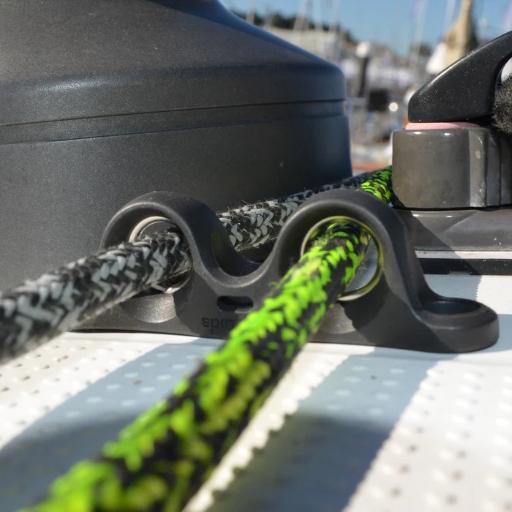
Filoir Spinlock
Filoirs en plastique, aluminium et avec insert inox
Le choix du matériau doit être fondé sur la charge, le niveau d’usure et l’environnement. Les filoirs en composite ou en acétal sont couramment utilisés pour les petits bouts de réglage lorsque les charges restent modérées et que le mouvement du cordage est limité. Ils sont légers, simples et normalement adaptés à de nombreuses applications sur dériveurs, quillards et voiliers de croisière.
Les filoirs en aluminium conviennent généralement mieux aux configurations de pont plus chargées ou plus exposées, en particulier lorsque le corps du filoir doit résister aux chocs ou aux mouvements répétés du cordage. Les filoirs avec insert inox ajoutent une surface intérieure plus dure et plus résistante à l’abrasion dans le passage du bout, ce qui les rend utiles lorsque le cordage circule fréquemment ou lorsque l’usure de la gaine est une préoccupation. Comme pour tout accastillage de pont, le filoir doit être contrôlé périodiquement afin de détecter les arêtes vives, les déformations ou l’usure de surface.
Filoirs pour taquets, bloqueurs, taquets-freins et winches
Les filoirs sont souvent montés juste avant les taquets coinceurs, les bloqueurs, les taquets-freins ou les winches pour contrôler l’angle d’entrée du cordage. C’est particulièrement important lorsque les bouts reviennent vers l’arrière depuis le mât, autour du roof ou à travers le cockpit. Si le bout arrive dans un bloqueur avec un angle latéral prononcé, le bloqueur peut se fermer de manière inégale, la gaine du cordage peut s’user plus vite, et l’utilisateur peut ressentir davantage de frottement lors du choqué ou du réglage.
Pour les taquets coinceurs, un filoir de taquet aide à guider le cordage de façon constante dans les mâchoires et peut améliorer l’engagement comme le largage. Pour les bloqueurs et taquets-freins, les filoirs aident à maintenir les drisses et bosses de ris alignées avant leur entrée dans le mécanisme de retenue de charge. Pour les winches, les filoirs peuvent aider à conserver un cheminement maîtrisé lorsqu’un bout libre doit rester dégagé des autres accessoires ou des déplacements de l’équipage.
Filoir vs poulie vs organiseur de pont
Un filoir est un guide fixe pour cordage. Il est normalement utilisé pour l’alignement, la séparation ou de petits changements de direction du bout. Une poulie utilise un réa et convient mieux lorsqu’un cordage change de direction avec un angle plus important ou supporte une charge de travail significative. Un organiseur de pont est généralement un accessoire à plusieurs réas utilisé pour dévier plusieurs bouts sur le roof vers des bloqueurs ou taquets-freins.
En règle générale, utilisez un filoir lorsque le bout n’a besoin que d’être guidé ou légèrement corrigé. Utilisez une poulie ou un organiseur de pont lorsque le cordage doit changer de direction avec un angle plus important, se déplacer fréquemment sous charge, ou lorsque la réduction du frottement est essentielle aux performances du système.
Filoirs de chandelier et routage des bosses d’enrouleur
Les bosses d’enrouleur sont souvent ramenées vers l’arrière le long du passavant à l’aide de filoirs de chandelier. Cela maintient la bosse d’enrouleur à l’extérieur et aide à conserver un pont de travail dégagé. Cependant, chaque point de déviation supplémentaire augmente le frottement ; le parcours du cordage doit donc être aussi direct que possible. Le filoir doit également être correctement dimensionné pour la bosse d’enrouleur et positionné de manière à ce que le cordage entre et sorte proprement sans frotter contre le chandelier, le filière ou l’accastillage de pont.
Lorsque le frottement de la bosse d’enrouleur est déjà élevé, vérifiez si le problème provient de filoirs sous-dimensionnés, d’angles de courbure excessifs, d’inserts usés, d’un mauvais angle d’arrivée sur le tambour ou de points de guidage inutiles.
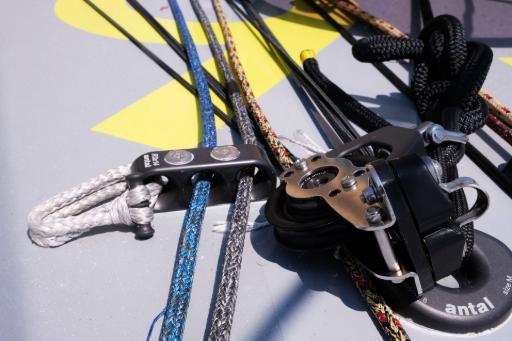
Filoir Antal
Principales marques de filoirs chez Upffront
Upffront propose des filoirs de marques reconnues d’accastillage voile, notamment Antal, Ronstan, Spinlock, LOOP Products, Allen Brothers et Kerl CNC. Ces gammes couvrent différents besoins techniques, des filoirs compacts type œillet pour les petits bouts de réglage aux filoirs de pont multiples en aluminium pour des agencements organisés de cockpit et de roof. Ronstan et Spinlock sont largement utilisés pour des solutions compactes de guidage de cordage, tandis qu’Antal, LOOP Products et Kerl CNC proposent des options robustes pour des configurations de pont plus structurées et des systèmes de commande multi-bouts.
FAQ sur les filoirs
Qu’est-ce qu’un filoir sur un voilier ?
Un filoir est un accessoire de pont utilisé pour guider un cordage afin qu’il arrive sur un autre équipement avec le bon angle. Sur un voilier, les filoirs sont couramment utilisés avant les taquets, bloqueurs, taquets-freins, winches et organiseurs de pont afin de réduire le ragage, améliorer l’alignement et garder le gréement courant bien organisé.
Comment choisir la bonne taille de filoir ?
Choisissez un filoir en fonction du diamètre de travail du cordage, du passage intérieur du filoir, de l’angle du bout et de l’application. Le cordage doit passer proprement sans coincer, mais ne doit pas non plus disposer d’un jeu excessif qui l’éloignerait de l’angle de guidage souhaité.
Quand faut-il utiliser un filoir plutôt qu’une poulie ?
Utilisez un filoir lorsque le cordage n’a besoin que d’être guidé, séparé ou légèrement corrigé en angle. Utilisez une poulie lorsque le bout change nettement de direction, se déplace régulièrement sous charge ou lorsque de faibles frottements sont essentiels.
Les filoirs avec insert inox valent-ils la peine ?
Les filoirs avec insert inox sont utiles là où la résistance à l’abrasion est importante, en particulier sur des bouts de réglage fréquemment manœuvrés ou sur des parcours de cordage sujets à une forte usure. Pour des bouts de réglage faiblement chargés, des filoirs composites ou plastiques peuvent suffire.
Peut-on utiliser des filoirs pour les bosses d’enrouleur ?
Oui. Les filoirs de chandelier sont couramment utilisés pour ramener les bosses d’enrouleur vers l’arrière le long du passavant. Le parcours du cordage doit rester aussi direct que possible, car des courbures excessives, des guides sous-dimensionnés ou des filoirs usés peuvent augmenter le frottement à l’enroulement.

To install this Web App in your iPhone/iPad press
 and then Add to Home Screen.
