Pièces détachées winch
Les pièces détachées winch sont essentielles pour maintenir le contrôle de charge, le rendement et la fiabilité des winchs de voilier. Cette catégorie comprend des kits d’entretien, cliquets, ressorts, roulements, circlips, rondelles, capots supérieurs, huile pour cliquets et graisse pour winch pour l’entretien courant et la réparation. Le choix correct des pièces dépend de la marque du winch, de sa taille, de son modèle et de sa génération de production, en particulier pour les winchs self-tailing et l’accastillage de pont plus ancien. En savoir plus...



Pièces détachées winch pour l’entretien, la réparation et les pièces de rechange à bord
Les winchs de voilier fonctionnent sous des charges de travail élevées, souvent avec des à-coups, en particulier sur les drisses, écoutes de génois, écoutes de spinnaker et bosses de ris. L’inspection régulière et l’entretien des pièces internes de winch permettent de conserver une rotation fluide, un encliquetage positif du cliquet et une bonne maîtrise de la charge. De petits composants tels que les cliquets, ressorts de cliquet, roulements, clips de retenue et rondelles peuvent avoir un effet important sur les performances du winch, en particulier lorsqu’ils sont contaminés par de la vieille graisse, des dépôts de sel ou des particules d’usure métallique.
Les pièces de winch les plus couramment remplacées sont les consommables d’entretien : cliquets, ressorts, roulements, joints toriques, rondelles, circlips et produits de lubrification. Selon la conception du winch, les pièces de rechange peuvent également inclure des capots supérieurs, mâchoires de self-tailing, anneaux dévieurs, bras d’alimentation, composants de transmission et pièces liées au tambour. Pour les voiliers de croisière, ces pièces sont généralement nécessaires lors de l’entretien programmé. Pour les bateaux hauturiers, de course ou de charter, emporter à bord une sélection de pièces de rechange de winch est une bonne pratique, en particulier des cliquets, ressorts, circlips et le lubrifiant adapté.
Choisir le bon kit d’entretien de winch
Les pièces de winch ne sont généralement pas universelles. Avant de commander un kit d’entretien de winch ou une pièce de rechange individuelle, identifiez le fabricant, la taille du winch, le type de modèle et, si possible, la période de production. Un winch Lewmar, Harken, Andersen ou Antal peut utiliser des cliquets, ressorts, roulements et composants de retenue différents selon sa génération. Les winchs self-tailing possèdent aussi des pièces supplémentaires dans l’ensemble supérieur, notamment des mâchoires, anneaux dévieurs et composants d’alimentation, qui sont généralement spécifiques au modèle.
La méthode de sélection la plus sûre consiste à comparer le modèle de winch avec la vue éclatée ou la liste de pièces du fabricant. Si les marquages du winch ne sont pas clairs, les points de repère utiles incluent le diamètre du tambour, le diamètre de base, le nombre de vitesses, la configuration self-tailing et les références visibles sur les composants démontés. Sur les anciens winchs, de petites évolutions de conception entre générations peuvent affecter la compatibilité, c’est pourquoi une comparaison visuelle est souvent importante.
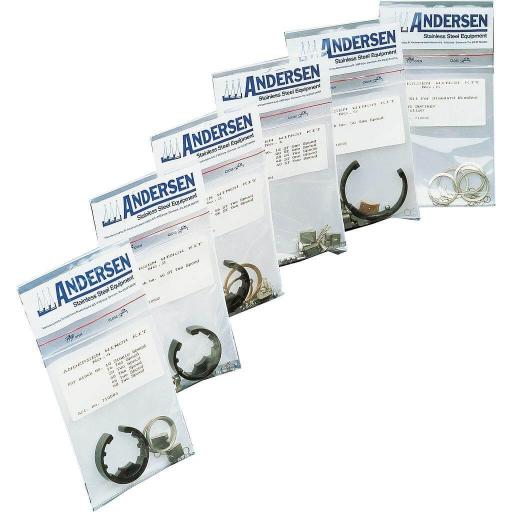
Kits d’entretien de winch Andersen
Cliquets et ressorts de cliquet
Les cliquets et ressorts de cliquet comptent parmi les pièces de winch les plus critiques. Les cliquets assurent l’encliquetage qui empêche le winch de tourner en arrière sous charge, tandis que les ressorts maintiennent les cliquets correctement en position. Si un winch patine, repart en arrière, clique de manière irrégulière ou tourne dans les deux sens alors qu’il devrait se bloquer, les cliquets et ressorts doivent être inspectés immédiatement.
Lors de l’entretien, les cliquets doivent bouger librement dans leurs logements et revenir franchement sous la tension du ressort. Les cliquets usés, arrondis, collants ou corrodés doivent être remplacés. Les ressorts sont petits et se perdent facilement pendant la maintenance, il est donc judicieux d’en avoir de rechange à bord. Les cliquets doivent normalement être lubrifiés avec une huile légère pour cliquets, et non avec de la graisse, car une graisse épaisse peut ralentir l’encliquetage et provoquer un fonctionnement peu fiable du cliquet.
Roulements, engrenages et pièces internes d’usure
Les roulements, engrenages et axes contrôlent le rendement mécanique du winch. Si un winch semble dur, irrégulier ou bruyant, la cause est souvent une vieille graisse, une contamination au sel, des roulements usés ou de la corrosion autour de l’axe et du train d’engrenages. Après démontage, les composants doivent être nettoyés, inspectés et relubrifiés conformément aux consignes d’entretien du fabricant du winch.
Une application fine et régulière de graisse pour winch est normalement utilisée sur les engrenages, roulements et surfaces internes supportant la charge. Il faut éviter l’excès de graisse, car elle peut retenir les saletés et migrer vers des zones où elle n’est pas nécessaire. Inspectez les dents d’engrenage, chemins de roulement, axes et zones de contact du tambour à la recherche de piqûres, déformations ou usure excessive avant le remontage.
Graisse pour winch, huile pour cliquets et lubrification
Une lubrification correcte est l’un des aspects les plus importants de l’entretien d’un winch. Les engrenages et roulements nécessitent une graisse pour winch adaptée afin de réduire le frottement et l’usure sous charge. Les cliquets et ressorts de cliquet nécessitent une huile légère afin de rester rapides et réactifs. Utiliser de la graisse sur les cliquets est une erreur d’entretien courante et peut entraîner un collage, un encliquetage faible ou le patinage du winch.
Lors de l’entretien des pièces de winch de voilier, éliminez l’ancien lubrifiant avant d’appliquer une graisse ou une huile neuve. Mélanger une vieille graisse contaminée avec un lubrifiant neuf réduit l’intérêt de l’entretien et peut laisser des particules abrasives dans le mécanisme. Un winch propre, avec le bon lubrifiant aux bons endroits, offrira généralement une sensation de fonctionnement plus fluide, un cliquetis plus net et moins de résistance interne.
Pièces détachées winch par marque
Upffront fournit des pièces de winch pour des fabricants reconnus d’accastillage de voile, notamment Andersen, Antal, Harken and Lewmar. Chaque marque utilise sa propre architecture de winch, ses propres kits d’entretien et composants de remplacement ; les pièces doivent donc être sélectionnées par fabricant et modèle, et non seulement par taille approximative. Les filtres par marque sont particulièrement utiles pour rechercher des cliquets, ressorts, kits d’entretien, roulements ou composants de winch self-tailing.
Pour les propriétaires qui entretiennent un accastillage mixte sur d’anciens voiliers, il vaut la peine de vérifier chaque winch individuellement. Il est fréquent de trouver différents modèles de winch sur le même bateau, en particulier lorsque les winchs primaires, winchs de drisse et winchs de roof ont été modernisés à des périodes différentes.
Problèmes courants de winch et pièces de rechange
| Symptôme du winch | Pièces à inspecter en premier |
|---|---|
| Le winch patine ou repart en arrière | Cliquets, ressorts de cliquet, logements de cliquet |
| Cliquetis faible ou irrégulier | Ressorts de cliquet, cliquets, contamination |
| Le winch semble dur | Vieille graisse, roulements, axe, engrenages |
| Rotation rugueuse ou grinçante | Roulements, dents d’engrenage, corrosion |
| Le self-tailer n’alimente pas correctement | Mâchoires, anneau dévieur, bras d’alimentation, capot supérieur |
| Pièces de retenue manquantes ou desserrées | Circlips, rondelles, vis, joints toriques |
FAQ sur les pièces de winch
Comment savoir quelles pièces de winch conviennent à mon winch de voilier ?
Identifiez la marque du winch, sa taille, son modèle et sa génération de production. Utilisez si possible le schéma de pièces du fabricant, surtout pour les kits d’entretien et les pièces de winch self-tailing.
Les cliquets et ressorts de winch sont-ils universels ?
Non. Les cliquets et ressorts sont généralement spécifiques à la marque et au modèle. Vérifiez toujours la compatibilité avant de monter des pièces de rechange.
Quelles pièces dois-je emporter à bord ?
Pour la navigation hauturière ou les longues croisières, les pièces utiles incluent des cliquets, ressorts de cliquet, circlips, rondelles, joints toriques, huile pour cliquets et une petite quantité de graisse pour winch.
Les cliquets doivent-ils être graissés ou huilés ?
Les cliquets doivent normalement être lubrifiés avec une huile légère pour cliquets. La graisse peut limiter le mouvement des cliquets et provoquer un encliquetage peu fiable.
Quand dois-je remplacer les pièces de winch plutôt que de les nettoyer ?
Remplacez toute pièce corrodée, déformée, fissurée, arrondie, desserrée, fortement usée ou qui ne bouge plus librement après nettoyage. Cela est particulièrement important pour les cliquets, ressorts, roulements et composants de retenue.

To install this Web App in your iPhone/iPad press
 and then Add to Home Screen.
