Pantallas marinas
Las pantallas marinas constituyen la interfaz principal entre los sensores de a bordo y el patrón, transformando los datos de instrumentos de viento, GPS, sondas de profundidad y sistemas de piloto automático en información útil. En aplicaciones de vela, la distinción entre pantallas de instrumentos dedicadas y pantallas multifunción (MFD) es fundamental. Leer más...
-
Sensores
-
Pantallas marinas
-
Conectividad
-
Brújulas náuticas
-
Antena
-
Transpondedores AIS
-
Chartplotters
|
|
|
|
|
|
|
|
|
|
|
|
|
|
  |
 |
Las pantallas de instrumentos dedicadas suelen estar optimizadas para la visualización continua de datos clave como el ángulo del viento, la velocidad del barco, la profundidad y el rumbo. Normalmente se montan en el mástil o en la bañera y priorizan pantallas de alto contraste, legibles a plena luz solar y con bajo consumo energético. En cambio, las pantallas multifunción o MFD combinan varias funciones —cartografía, AIS, radar y control del sistema— en una sola interfaz, a menudo con pantalla táctil o controles híbridos.
Tecnología y legibilidad de las pantallas marinas
Un requisito principal para cualquier pantalla de a bordo es la legibilidad diurna bajo luz solar directa. Las pantallas marinas modernas lo consiguen mediante un alto nivel de brillo (normalmente >800 nits), recubrimientos antirreflectantes y vidrio con unión óptica, reduciendo las reflexiones internas y mejorando el contraste. Para instalaciones offshore o en bañeras expuestas, las clasificaciones de estanqueidad IPX6/IPX7 son estándar, lo que garantiza resistencia a fuertes salpicaduras e inmersión.
La funcionalidad táctil es habitual en las MFD, pero para la navegación offshore muchos sistemas mantienen teclados o mandos giratorios, lo que permite su manejo con las manos mojadas o con guantes, una consideración importante que a menudo se pasa por alto en los sistemas exclusivamente táctiles.
Pantallas marinas e integración en red
La mayoría de las pantallas marinas contemporáneas funcionan dentro de una red NMEA 2000, lo que permite compartir datos entre sensores y dispositivos a través de un sistema de cableado backbone. Esto permite una integración fluida de:
- Sensores de viento (viento aparente y real)
- Transductores de velocidad y profundidad
- GPS y sensores de rumbo
- Sistemas de piloto automático
- AIS y radar (principalmente a través de MFD)
Es fundamental comprender si una pantalla es totalmente compatible con los sistemas existentes a bordo. Aunque muchos fabricantes son compatibles con NMEA 2000, a menudo se utilizan extensiones propietarias (p. ej., redes basadas en Ethernet) para datos de gran ancho de banda como radar o cartografía.
Pantallas marinas para datos de vela y métricas de rendimiento
Las pantallas marinas utilizadas en aplicaciones de vela deben mostrar más que datos básicos de navegación. Los parámetros clave incluyen:
- Velocidad/dirección del viento aparente y real
- Velocidad del barco sobre el agua (STW)
- Profundidad bajo el transductor
- Rumbo y curso sobre el fondo (COG)
- Velocity Made Good (VMG) para rendimiento en ceñida/popa
Los sistemas de gama alta permiten páginas de datos personalizables, lo que permite a los usuarios priorizar las métricas de rendimiento relevantes para la regata o la navegación de travesía. Este nivel de configurabilidad es especialmente relevante para propietarios con enfoque técnico que optimizan el trimado de las velas y la eficiencia.
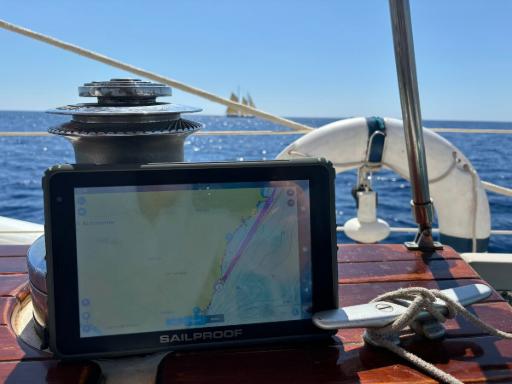
Pantalla marina SailProof
Consideraciones de instalación de pantallas marinas
La ubicación de la pantalla afecta directamente a la usabilidad. Las configuraciones habituales incluyen:
- Pantallas montadas en el mástil para visibilidad desde la bañera durante el trimado
- MFD montadas en la rueda o caña para navegación y control del sistema
- Repetidores en bañera que proporcionan datos duplicados en varias posiciones de gobierno
La instalación suele requerir conexión a la red NMEA backbone, una alimentación adecuada y soluciones de montaje diseñadas para soportar vibraciones y exposición a la intemperie. Las instalaciones de reequipamiento suelen ser viables, siempre que se mantenga la compatibilidad de red.
Sistemas de pantallas marinas nke y Sailproof
Esta categoría se centra en nke y Sailproof, ambos orientados a requisitos técnicos específicos dentro de la electrónica de vela.
electrónica marina nke se especifica ampliamente en aplicaciones de regata y navegación offshore, especialmente cuando se requieren datos de sensores de alta precisión y cálculos avanzados de rendimiento. Los sistemas nke están diseñados en torno a una arquitectura totalmente integrada, que combina procesadores, sensores y pantallas para ofrecer datos precisos de viento, velocidad del barco y valores calculados como el VMG. Sus pantallas suelen estar optimizadas para montaje en mástil, con un fuerte énfasis en la legibilidad y la claridad de los datos en condiciones de regata.
pantallas Sailproof adoptan un enfoque diferente, centrándose en tablets reforzadas y legibles a la luz solar, diseñadas para su uso en entornos de bañera expuestos. Estas unidades están diseñadas para ofrecer alto brillo y funcionamiento estanco, lo que las hace adecuadas como repetidores o interfaces tipo pantallas multifunción cuando se conectan a los sistemas de a bordo mediante WiFi o pasarelas de red. Esto aporta flexibilidad a los usuarios que desean integrar interfaces de estilo móvil en redes de instrumentación existentes.
La elección entre estos sistemas depende de si la prioridad es una instrumentación de rendimiento integrada (nke) o interfaces de visualización flexibles y conectadas en red (Sailproof).
Pantallas marinas – Preguntas frecuentes
¿Cuál es la diferencia entre una pantalla marina y una MFD?
Una pantalla marina suele referirse a un instrumento dedicado que muestra datos específicos (p. ej., viento o profundidad), mientras que una MFD o pantalla multifunción combina varias funciones como cartografía, AIS y control del sistema en una sola unidad.
¿Necesito NMEA 2000 para la pantalla de mi barco?
La mayoría de los sistemas modernos dependen de NMEA 2000 para compartir datos. Aunque algunos sistemas heredados usan NMEA 0183, NMEA 2000 ofrece una instalación más sencilla y mayor interoperabilidad.
¿Las pantallas marinas son estancas?
Sí, la mayoría cuentan con clasificación IPX6 o IPX7, lo que significa que están diseñadas para soportar fuertes salpicaduras e inmersión temporal.
¿Puedo usar una pantalla táctil en navegación offshore?
Las pantallas táctiles se utilizan ampliamente, pero para la navegación offshore, las pantallas con controles físicos ofrecen un funcionamiento más fiable en condiciones húmedas o duras.
¿Qué tamaño de pantalla marina debo elegir?
Esto depende de la posición de montaje y de la distancia de visualización. Las pantallas de mástil requieren pantallas más grandes y de alto contraste, mientras que las unidades montadas en la rueda o caña pueden variar según la distribución de la bañera.
¿Puedo actualizar mi sistema sin sustituirlo todo?
En muchos casos sí, siempre que las nuevas pantallas sean compatibles con su red existente (normalmente NMEA 2000). Sin embargo, la funcionalidad completa puede depender de la integración específica del fabricante.

To install this Web App in your iPhone/iPad press
 and then Add to Home Screen.
