Chalecos salvavidas
Los chalecos salvavidas para vela son sistemas de seguridad críticos diseñados para proporcionar flotabilidad, capacidad de autorrecolocación e integración con el equipo de seguridad de a bordo. Los chalecos salvavidas inflables modernos combinan niveles de flotabilidad certificados según ISO 12402 con mecanismos de inflado automático y compatibilidad con arnés. Esta categoría incluye soluciones técnicamente avanzadas para aplicaciones costeras, de altura y de regata, con un enfoque en diseños de perfil bajo, sistemas de activación fiables e integración con sistemas de amarre y seguridad hombre al agua. Leer más...
-
Líneas de vida
-
Velas de tormenta
-
Chalecos salvavidas
-
Líneas de vida (jacklines)
-
Líneas de vida para barco
-
Arneses de seguridad
-
Señalización
-
Accesorios para chalecos salvavidas
-
Repuestos para chalecos salvavidas
-
Equipo de rescate
-
Bolsas de abandono
-
Prismáticos
-
Ayudas de flotabilidad
|
|
|
|
|
|
|
|
|
|
  |
 |
Chalecos salvavidas vs ayudas a la flotabilidad en aplicaciones de vela
Una distinción fundamental en el equipo de seguridad para la navegación a vela es la existente entre las ayudas a la flotabilidad (50N) y los chalecos salvavidas (100N, 150N, 275N). Las ayudas a la flotabilidad están pensadas para uso costero y deportes acuáticos activos, proporcionando flotación pero sin garantía de autorrecolocación. En cambio, los chalecos salvavidas diseñados según las normas ISO 12402 proporcionan flotabilidad suficiente para girar a un usuario inconsciente boca arriba.
Para la mayoría de las aplicaciones de vela, especialmente en alta mar o de noche, los chalecos salvavidas de 150N se consideran la referencia básica. Los sistemas de 275N se especifican cuando se requiere flotabilidad adicional, como al llevar ropa de mal tiempo pesada o herramientas que puedan reducir la flotación efectiva.
Chalecos salvavidas inflables vs de espuma
Los chalecos salvavidas modernos para vela son predominantemente inflables y ofrecen una reducción significativa del volumen en comparación con los diseños tradicionales de espuma. Esto mejora la comodidad de uso, un factor clave para el cumplimiento real de las medidas de seguridad.
Los sistemas inflables dependen de una botella de CO₂ y de un mecanismo de activación, mientras que los chalecos salvavidas de espuma proporcionan flotabilidad inherente sin despliegue. Las soluciones de espuma se utilizan normalmente para formación, uso comercial o aplicaciones especializadas, mientras que los sistemas inflables dominan en crucero y regata gracias a su mejor ergonomía.
Sistemas de inflado automático vs manual
Una consideración técnica clave es el sistema de inflado:
- Los sistemas automáticos (activados por agua) se disparan al sumergirse
- Los sistemas hidrostáticos se activan por presión del agua, reduciendo el inflado accidental
- Los sistemas manuales requieren activación por parte del usuario mediante un cabo de tracción
Los infladores hidrostáticos se especifican habitualmente para navegación de altura por su resistencia al rociado y la humedad. Todos los sistemas requieren inspección periódica y rearme, incluida la sustitución de botellas y elementos de disparo después de su uso.
Arnés integrado y sistemas de seguridad en cubierta
Muchos chalecos salvavidas para alta mar incorporan un arnés de seguridad integrado (ISO 12401). Esto permite a los navegantes conectarse a las líneas de vida mediante un cabo de seguridad, evitando incidentes de hombre al agua.
Esta integración es esencial para la navegación de altura, donde el chaleco salvavidas forma parte de un sistema más amplio de seguridad en cubierta. Los puntos de anclaje pueden ser lazos textiles o herrajes metálicos, diseñados para soportar cargas dinámicas minimizando al mismo tiempo el peso y la interferencia.
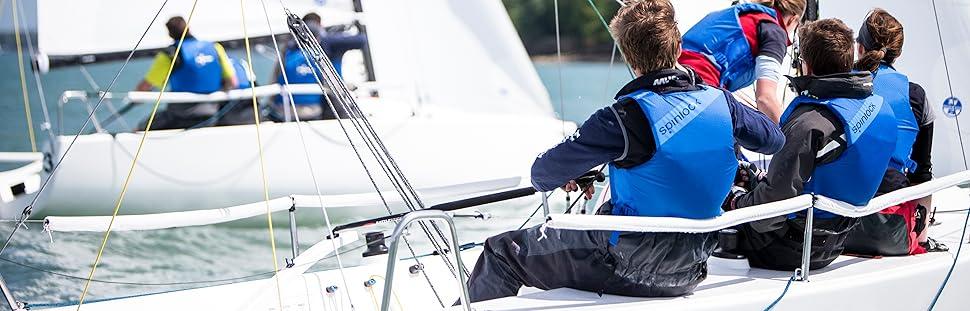
Chalecos salvavidas Spinlock
Características adicionales de los chalecos salvavidas
Los chalecos salvavidas modernos son modulares y pueden incluir:
- Capuchas antirrociones, que reducen la inhalación de agua entre las olas
- Luces automáticas, que mejoran la visibilidad en condiciones de poca luz
- Compatibilidad con balizas AIS MOB, que permite el seguimiento de la posición tras una caída al agua
- Correas subinguinales, fundamentales para mantener la posición correcta de flotación
Estas características se especifican cada vez más para yates de alta mar y de regata, donde los tiempos de recuperación pueden prolongarse.
Ajuste, ergonomía y comodidad de uso
El ajuste correcto es esencial para un rendimiento eficaz. Un chaleco salvavidas debe quedar firmemente ajustado al torso sin movimiento excesivo. Un mal ajuste puede comprometer la capacidad de autorrecolocación y la estabilidad en el agua.
Los diseños inflables de perfil bajo son preferibles para un uso prolongado, especialmente en regata o travesías de altura. El menor volumen favorece un uso constante, que es un factor principal de seguridad.
Mantenimiento y revisión
Los chalecos salvavidas inflables requieren mantenimiento periódico para garantizar su fiabilidad:
- Inspección visual antes del uso
- Revisión anual de los sistemas de inflado
- Sustitución de las botellas de CO₂ y de los componentes de activación después del inflado
Los usuarios deben asegurar la compatibilidad al seleccionar kits de rearme, ya que las especificaciones varían entre fabricantes y modelos.
Chalecos salvavidas Spinlock
Dentro de esta categoría, los sistemas Spinlock Deckvest se utilizan ampliamente en navegación de altura y vela de alto rendimiento. Los chalecos salvavidas Spinlock se centran en una construcción de perfil bajo, sistemas de arnés integrados y compatibilidad con módulos AIS y capucha antirrociones. Su diseño refleja las tendencias actuales hacia el uso continuo y la integración con los modernos sistemas de seguridad a bordo.
Cómo elegir el chaleco salvavidas adecuado
La selección debe basarse en el perfil de navegación:
- Navegación costera: sistemas inflables de 100N–150N
- Crucero de altura: 150N con arnés, luz y capucha antirrociones
- Alta mar extrema: configuraciones de 275N para máxima flotabilidad
Comprender la clasificación de flotabilidad, el tipo de inflado y las características de integración es esencial para especificar un sistema adecuado.

To install this Web App in your iPhone/iPad press
 and then Add to Home Screen.
