Aides à la flottabilité
A buoyancy aid is a 50N flotation vest certified to ISO 12402-5, intended for competent swimmers sailing in sheltered water with help close at hand. The choice turns on body weight, fit, zip position and how freely you can move when hiking or trapezing. This category covers Spinlock Wing, Foil and Aero Pro vests, the Spinlock ALTO belt pack and 1852 100N foam lifejackets. Read more...
-
Longes de sécurité
-
Voiles de tempête
-
Gilets de sauvetage
-
Lignes de vie
-
Filières de bateau
-
Harnais de sécurité
-
Signalisation
-
Accessoires de gilet de sauvetage
-
Pièces détachées pour gilets de sauvetage
-
Équipement de sauvetage
-
Sacs de survie
-
Binoculars
-
Aides à la flottabilité
|
|
|
  |
 |
What a buoyancy aid does on a sailing boat
A buoyancy aid keeps a conscious swimmer afloat long enough to recover the boat or be picked up. It is not designed to hold an unconscious wearer face-up. That is the price of mobility: the foam is spread thinly around the torso and cut high at the waist, so you can hike, tack under the boom and move across the boat freely.
For dinghies, sportboats, foilers and RIBs, where you expect to end up in the water and help is close by, 50N is the normal level. The figure is the minimum buoyancy in newtons for an adult size; roughly, 10N supports 1kg in water.
Buoyancy aid or lifejacket? 50N, 100N and above
Personal flotation is graded by buoyancy level in the ISO 12402 series.
| Level | Standard | Type | Intended use |
|---|---|---|---|
| 50N | ISO 12402-5 | Buoyancy aid | Competent swimmers, sheltered water, help close at hand. Does not turn the wearer face-up. |
| 100N | ISO 12402-4 | Lifejacket | Swimmers and non-swimmers in sheltered and inshore water. Not guaranteed to turn an unconscious wearer in heavy clothing. |
| 150N | ISO 12402-3 | Lifejacket | Coastal and offshore sailing; turns most wearers face-up. |
| 275N | ISO 12402-2 | Lifejacket | Offshore, severe conditions, heavy clothing or tools. |
On a cruising yacht, offshore or sailing alone, wear a 150N or 275N automatic lifejacket instead: see life jackets.
How to size and fit a buoyancy aid
Size by body weight first and chest second. A vest made for a lighter person may not give enough lift; one that is too large rides up over your chin in the water. Spinlock sizes from XS to XL; 1852 by weight band.
Fasten the waist first, then the sides, then the shoulders. Ask someone to lift you by the shoulder straps: the vest should lift you with it, not slide up to your ears. Then hike, crouch and reach across your chest as at the tiller, and check that it clears your trapeze hook and has no loose webbing to catch the mainsheet.
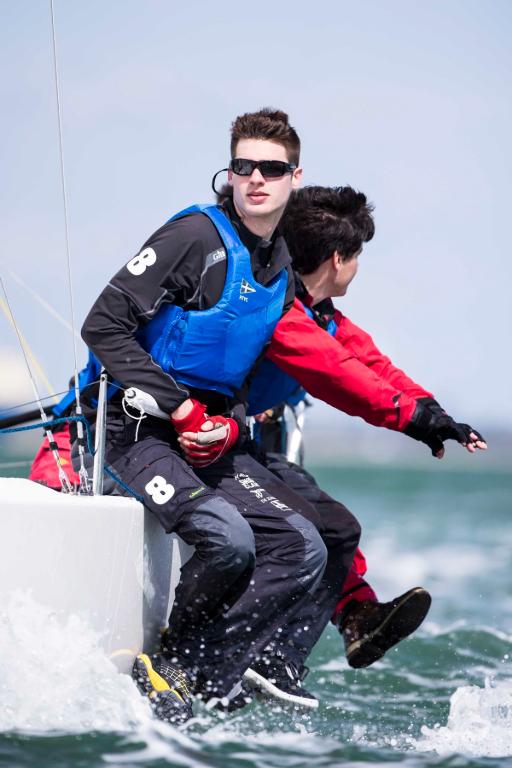
Spinlock Wing side-zip buoyancy aid
Front zip, side zip or vest: the Spinlock ranges
The Spinlock Wing PFD and Spinlock Foil PFD share one body: 50N to ISO 12402-5, a tapered high cut, articulated back panels, dry-coated elastic side panels that absorb less water, and an internal grip print that stops the vest riding up. Spinlock gives the Wing's weight as 470g. The difference is the entry. The Wing has a side zip, which leaves the front panel clean, with nothing to snag. The Foil has a front zip, which is quicker to put on and take off, particularly when wet.
The Spinlock Aero Pro is a 50N vest in stretch material with a close collar and short sleeves. Its long waist gaiter has an opening for a trapeze hook, and a back pocket takes a D3O impact protector or a hydration bladder. It suits trapeze dinghies, multihulls and foilers, where the vest has to move with you and stay in place.
Most of the Wing, Foil and Aero Pro sizes here are Spinlock clearance stock and will not be restocked, so check the size you need is still listed.
Waist-worn flotation: the Spinlock ALTO belt pack
The Spinlock ALTO is a waist belt pack holding an inflatable bladder of 75N, certified to ISO 12402-5 at level 50. You pull the toggle to fire a 16g CO2 cylinder, then the bladder goes over your head and supports you under the arms. Because it is manual, it only helps a conscious wearer. Spinlock limits it to users aged 16 or over and above 40kg, and the belt fits waists of 70 to 145cm. It suits paddleboarding, kayaking and small-boat use where a foam vest is too bulky. After firing it needs a rearming kit.
100N foam lifejackets for children and adults
The 1852 100N jackets here are lifejackets, not 50N aids. They have a foam collar, a crotch strap, reflective patches and a whistle, and come in weight bands from 10–20kg for children up to adults over 90kg. For children, a 100N jacket with collar and crotch strap is the usual choice: the collar supports the head and the strap stops the jacket riding up. 1852 Regatta vests in several weight bands complete the range.
Care, inspection and replacement
Rinse in fresh water after use and dry out of direct sun. Do not sit on it or use it as a fender: crushed foam does not recover and loses buoyancy. Retire it if the shell is torn, the zip or buckles no longer close securely, or the foam has gone hard or crumbly. Check an inflatable such as the ALTO at the intervals in its manual.
Buoyancy aid FAQ
What is the difference between a buoyancy aid and a life jacket?
A 50N aid helps a conscious swimmer stay afloat and leaves room to move. A lifejacket (100N and above) is designed to keep the wearer afloat without swimming, and the higher levels turn most wearers face-up.
What buoyancy aid do I need for dinghy sailing?
A 50N aid certified to ISO 12402-5, sized by body weight and fitted closely enough to pass the shoulder lift test. Choose a side zip if a clean front matters, a front zip for easier entry, or a vest such as the Aero Pro for trapezing.
Can a non-swimmer wear a buoyancy aid?
No. A 50N aid is intended for competent swimmers. Non-swimmers and children should wear a 100N lifejacket or higher.
Is the Spinlock ALTO a lifejacket?
No. It is a manually inflated 75N belt pack certified to ISO 12402-5 at level 50, and works only if the wearer is conscious and pulls the toggle.
How long does a buoyancy aid last?
There is no fixed life. Foam slowly loses buoyancy with age, crushing and UV, so inspect it every season and replace it if the foam has hardened, the shell is damaged or it no longer fits.

To install this Web App in your iPhone/iPad press
 and then Add to Home Screen.
