Furling Leinen
In der Segelbranche sind Furling Leinen ein entscheidendes Element für effizientes Segelmanagement. Hochwertige Furling Leinen sorgen für einen geschmeidigen und zuverlässigen Betrieb Ihrer Rollanlage und ermöglichen es, Segel bei wechselnden Windbedingungen einfach zu reffen oder einzurollen. Die Investition in die passenden Furling Leinen steigert nicht nur die Performance, sondern verbessert auch Sicherheit und Komfort an Bord. Ob Fahrtensegeln oder Regatta: Unsere Auswahl an robusten, dehnungsarmen Furling Leinen ist für die hohen Anforderungen moderner Segelyachten ausgelegt. Entdecken Sie unser Sortiment hochwertiger Furling Leinen und optimieren Sie Ihr Decks-Setup für maximale Kontrolle und Zuverlässigkeit.

Furling Leinen – Technischer Überblick, Auslegungskriterien und Anwendungen an Bord
Furling Leinen sind ein zentrales Bedienelement moderner Rollsysteme und übertragen das Drehmoment von der Rolltrommel kontrolliert und reproduzierbar auf das Segel. Sie werden in vielen Anwendungen eingesetzt, darunter Rollanlagen für Vorsegel, Code-Zero-Roller, Bottom-up-Rollsysteme für asymmetrische Segel sowie Endlos-Leinen-Systeme. Die richtige Auswahl der Furling Leine beeinflusst direkt die Effizienz des Systems, die Lebensdauer des Segels und die Sicherheit an Deck.
Im Gegensatz zu herkömmlichen Schoten oder Fallen sind Furling Leinen hoher Abrasion, wiederkehrenden Lastwechseln und lokaler Quetschung ausgesetzt, wenn sie sich eng um Rolltrommeln legen. Deshalb wird die Performance einer Furling Leine deutlich stärker von der Mantelkonstruktion und einer konstanten Seildicke bestimmt als von der reinen Bruchlast.
Funktionale Anforderungen an Furling Leinen
Aus technischer Sicht müssen Furling Leinen mehrere Kernanforderungen erfüllen:
- Hohe Abriebfestigkeit an Rolltrommeln, Umlenkern und Decksorganisern
- Konstante Griffigkeit auf Rolltrommeln aus Aluminium oder Composite
- Kontrollierte Dehnung, um Stöße zu dämpfen, ohne übermäßig zu längen
- Rundheit unter Last, um Durchrutschen und ungleichmäßige Trommelbelastung zu vermeiden
- UV- und Salzwasserbeständigkeit für dauerhafte Exposition an Deck
Während Fallen vor allem minimale Dehnung priorisieren, profitieren Furling Leinen von einem ausgewogenen Aufbau aus Robustheit und berechenbarer Elastizität – insbesondere beim Ausrollen unter hoher Last in stärkerer Brise.
Seilkonstruktion und Materialwahl
Kernaufbau
Die meisten Furling Leinen verwenden Kerne auf Polyesterbasis, teils mit Dyneema®-Anteil, um bei größeren Yachten ein besseres Verhältnis von Festigkeit zu Durchmesser zu erzielen. Vollständige Dyneema®-Kerne sind jedoch selten erforderlich, da Rollsysteme typischerweise eher durch Trommelreibung als durch reine Zuglast limitiert sind.
Ein leicht elastischer Kern kann vorteilhaft sein, da er Lastspitzen reduziert, die auf Rolltrommeln, Wirbel und Anschlagpunkte am Segel übertragen werden.
Mantelkonstruktion
Der Mantel ist das entscheidende Element einer Furling Leine. Typische Merkmale sind:
- Mäntel aus hochfestem Polyester für Haltbarkeit und Grip
- Technora®- oder Aramid-Mischmäntel für High-Load- und Performance-Anwendungen
- Dicht geflochtene Konstruktionen, um ein Abflachen unter Kompression zu verhindern
Ziel ist eine gleichmäßige Reibung ohne Verglasen (Glazing) – auch nach tausenden Rollzyklen.
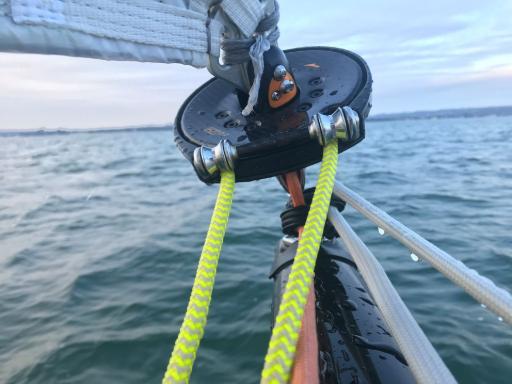
Endlos-Furling Leine
Endlos- vs. einseitige Furling Leinen
Moderne Rollsysteme nutzen zunehmend Endlos-Furling Leinen, insbesondere für Code Zero und asymmetrische Segel. Diese Systeme stellen zusätzliche Anforderungen an das Seil:
- Gleichmäßiger Durchmesser über die gesamte Länge
- Hochwertige Spleiße mit minimaler Profiländerung
- Außergewöhnliche Abriebfestigkeit, da dieselben Seilabschnitte wiederholt belastet werden
Einseitige Furling Leinen, die auf Vorsegelrollanlagen weiterhin verbreitet sind, müssen sauber mit Stoppern und Klemmen zusammenarbeiten und dabei gute Handlingeigenschaften beibehalten.
Typische Einsatzbereiche von Furling Leinen
Bei Fock und Genua müssen Furling Leinen häufige Trimm- und Reffzyklen aushalten. Die Durchmesserwahl wird oft eher durch die Geometrie der Rolltrommel und vorhandene Decksbeschläge als durch reine Lastberechnungen bestimmt.
Code Zero und Bottom-up-Rollsysteme
Diese Systeme erzeugen höhere Drehmomentlasten, besonders beim Ausrollen. Furling Leinen müssen zuverlässigen Grip und Abriebfestigkeit bieten, um ein plötzliches oder unkontrolliertes Setzen des Segels zu verhindern.
Asymmetrische und Raumwindsegel
Dynamische Lasten und schnelle Rollzyklen erfordern Furling Leinen mit robusten Mänteln und vorhersehbarem Verhalten – besonders auf Performance-Cruisern und regattaorientierten Yachten.
Wichtige Marken und technische Positionierung
Kohlhoff
Kohlhoff ist bekannt für technisch ausgereifte Seilkonstruktionen, insbesondere dort, wo Durchmesserstabilität und Langlebigkeit entscheidend sind. Kohlhoff Furling Leinen werden häufig für größere Yachten und individuelle Rigg-Lösungen gewählt, wenn berechenbare Performance unter Dauerlast gefragt ist.
Gottifredi Maffioli
Gottifredi Maffioli Furling Leinen greifen stark auf den Regatta- und Performance-Hintergrund des Unternehmens zurück und kombinieren hochwertige geflochtene Mäntel mit sorgfältig abgestimmten Kernen. Diese Seile werden häufig auf Code-Zero- und Performance-Rollsystemen eingesetzt, bei denen Grip, Verschleißfestigkeit und Konstanz entscheidend sind.
Robline
Robline bietet Furling Leinen, die auf Abriebfestigkeit und kontrollierte Elastizität ausgelegt sind – ideal für Endlos-Rollsysteme und stark genutzte Fahrtenanwendungen. Die Konstruktionen fokussieren auf langlebige Polyester-Mäntel, die ihren Grip über lange Einsatzintervalle halten.
Jeder Hersteller verfolgt bei der Auslegung von Furling Leinen einen eigenen Ansatz – im Mittelpunkt stehen jedoch immer Haltbarkeit, Mantelperformance und Systemkompatibilität statt marketinggetriebener Festigkeitsangaben.
Vergleich von Furling-Leinen-Konstruktionen
| Merkmal | Furling Leine für Fahrtensegeln | Performance- / Code-Zero-Furling Leine |
|---|---|---|
| Kernmaterial | Polyester oder Polyester-Mischung | Polyester mit Dyneema®-Verstärkung |
| Mantelmaterial | Hochfestes Polyester | Polyester / Aramid oder verstärkte Mischung |
| Dehnungsverhalten | Moderat, stoßdämpfend | Gering bis moderat, drehmomenteffizient |
| Abriebfestigkeit | Hoch | Sehr hoch |
| Typische Anwendung | Vorsegelrollanlagen, Fahrtenboote | Code Zero, Bottom-up-Rollen, Performance-Yachten |
Durchmesserwahl und Systemkompatibilität
Die korrekte Durchmesserwahl ist entscheidend für eine effiziente Drehmomentübertragung und eine lange Standzeit. Wichtige Punkte sind:
- Nutentiefe und -breite der Rolltrommel
- Einlaufwinkel durch Decksorganiser
- Kompatibilität mit Stoppern oder Klemmen
- Segelgröße und zu erwartende Roll-Lasten
Überdimensionierte Furling Leinen erhöhen die Reibung und reduzieren die Effizienz der Trommel; zu dünne Leinen können rutschen oder vorzeitig verschleißen. Herstellerempfehlungen für die jeweilige Rollanlage sollten stets beachtet werden, besonders bei Endlos-Systemen.
Montage, Inspektion und Lebensdauer
Die Lebensdauer von Furling Leinen hängt stark von korrekter Installation und Wartung ab. Bewährte Praxis umfasst:
- Saubere, fluchtende und leichtgängige Leinenführung
- Vermeiden scharfer Kanten und Querbelastung
- Regelmäßige Kontrolle auf Verglasen, Abflachung oder Mantelschäden
Selbst hochwertige Furling Leinen sind Verschleißteile und sollten auf Yachten, die stark auf Rollsysteme beim Segelhandling angewiesen sind, regelmäßig geprüft werden.
Zusammenfassung zu Furling Leinen
Furling Leinen sind eine spezialisierte Kategorie des laufenden Guts: Sie sind dafür konstruiert, kontrolliertes Drehmoment, hohe Haltbarkeit und vorhersehbares Segelhandling zu liefern. Mantelkonstruktion, Abriebfestigkeit und Durchmesser-Kompatibilität sind wichtiger als reine Bruchlastwerte. Für technisch orientierte Eigner ist die Auswahl einer Furling Leine, die zum jeweiligen Rollsystem und zum persönlichen Segelprofil passt, entscheidend für zuverlässigen und sicheren Betrieb.

To install this Web App in your iPhone/iPad press
 and then Add to Home Screen.
