Sets de enrollador estructural
Un enrollador estructural es un sistema de enrollado en el que el cable o la varilla de enrollado es un elemento portante principal del plan vélico, en lugar de un simple componente de transmisión de torsión. A diferencia de los enrolladores convencionales top-down o bottom-up que dependen de un aparejo firme independiente, un enrollador estructural sustituye a un estay fijo y está diseñado para soportar toda la carga del estay de proa o del estay interior, mientras transmite simultáneamente el par para el enrollado de la vela. Leer más...


Los enrolladores estructurales se utilizan con mayor frecuencia para velas code zero, velas de través pesado, staysails, velas solent y estays interiores desmontables, especialmente en yates de crucero modernos y diseños oceánicos orientados al rendimiento.
¿Qué define un enrollador estructural?
La característica que define a un enrollador estructural es que la carga axial y la carga de torsión son soportadas por el mismo elemento. Esto se consigue normalmente mediante:
- Sistemas de varilla maciza o cable/varilla trenzada
- Cables compuestos de alto módulo
- Conjuntos de cable de torsión optimizados para par con terminales integrados
El cable de enrollado se conecta directamente entre el herraje de cubierta y los puntos de fijación en el mástil, y debe cumplir los requisitos de carga del aparejo firme del yate. Como resultado, la selección de componentes, el diseño de las terminaciones y el rendimiento de los rodamientos son significativamente más críticos que en los sistemas de enrollado no estructurales.
Los requisitos clave de diseño incluyen:
- Alta rigidez axial para mantener la rectitud del grátil y la tensión del estay
- Alta rigidez torsional para garantizar un enrollado sincronizado desde el puño de amura hasta el puño de driza
- Elongación mínima bajo carga
- Terminaciones de extremo robustas y resistentes a la fatiga
- Rodamientos capaces de operar bajo cargas axiales y torsionales combinadas
Aplicaciones típicas de los enrolladores estructurales
Los enrolladores estructurales se eligen cuando una vela debe permanecer izada y cargada durante periodos prolongados, o cuando la distribución de cubierta y la eficiencia en el manejo de velas son prioritarias.
Las aplicaciones más comunes incluyen:
Velas Code Zero y velas de través pesado
Cuando se usa como vela principal de ceñida o de ceñida abierta, un code zero a menudo requiere una tensión de grátil similar a la de un estay. Los enrolladores estructurales permiten que la vela funcione como una vela verdaderamente portante, sin necesidad de un estay separado.
Estays interiores y estays Solent
En yates de crucero oceánico, los enrolladores estructurales se usan con frecuencia para staysails o velas solent, permitiendo un despliegue rápido sin sistemas manuales de enganche con garruchos.
Estays desmontables o textiles
Los yates modernos utilizan cada vez más estays textiles desmontables. Los enrolladores estructurales se integran de forma limpia con este enfoque, aportando enrollado y capacidad portante en un único sistema.
Crucero de rendimiento y navegación con tripulación reducida
Al eliminar cambios de vela y reducir el trabajo en proa, los enrolladores estructurales son muy adecuados para tripulaciones reducidas y configuraciones de crucero de larga distancia.
Componentes del sistema de enrollador estructural
Un sistema completo de enrollador estructural suele constar de:
- Tambor de enrollado homologado para carga con rodamientos de alta eficiencia
- Giro (swivel) estructural capaz de soportar cargas de estay
- Cable o varilla estructural, fabricado a medida a la longitud
- Terminales integrados (horquillas, ojos o herrajes a medida)
- Sistema de línea de control, a menudo con líneas de enrollado de baja elongación
Dado que la unidad de enrollado forma parte del aparejo firme, las tolerancias de instalación y la alineación son críticas para la fiabilidad a largo plazo.
Resumen de las principales marcas de enrolladores estructurales
Karver
Enrolladores estructurales Karver se especifican comúnmente para aplicaciones de estays textiles de alta carga. Sus diseños se centran en la construcción modular, sistemas de rodamientos eficientes y compatibilidad con cables compuestos. Las unidades Karver se combinan con frecuencia con estays interiores desmontables y distribuciones de cubierta modernas.
Ronstan
Soluciones de enrollado estructural Ronstan diseñadas para la fiabilidad y la eficiencia mecánica, con un fuerte enfoque en el rendimiento de los rodamientos bajo cargas axiales y torsionales combinadas. Sus sistemas suelen ser muy adecuados para crucero de rendimiento y aplicaciones oceánicas donde la robustez y la facilidad de mantenimiento son prioritarias.
Ubi Maior
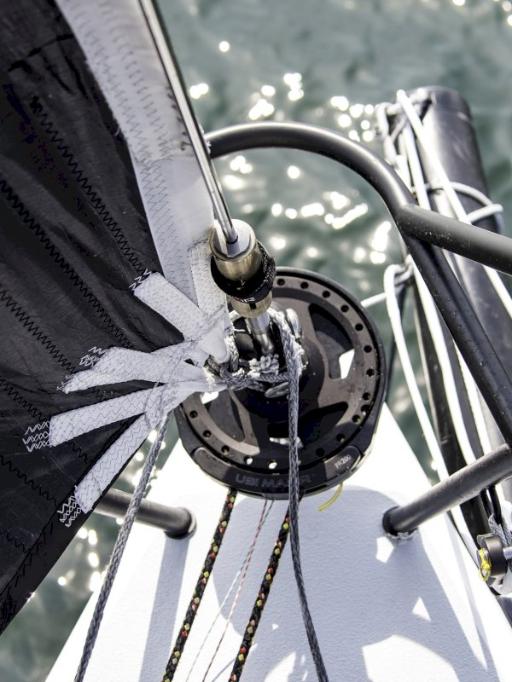
Enrolladores estructurales Ubi Maior se ven a menudo en instalaciones de crucero de alta gama y superyates. Sus sistemas están diseñados para soportar cargas de trabajo muy elevadas y se integran bien tanto con configuraciones de estay en varilla como con estays compuestos. La atención a los recorridos de carga y a la geometría de los terminales es una característica clave de sus diseños.
Harken
Enrolladores estructurales Harken combinan tecnología de rodamientos de precisión con una amplia gama de opciones de tamaño. Sus sistemas se especifican habitualmente en yates de rendimiento donde se requiere baja fricción y un enrollado constante bajo carga. Los enrolladores Harken se integran a menudo en sistemas complejos de maniobra de velas que implican múltiples enrolladores y estays.
Facnor
Facnor tiene una larga trayectoria en tecnología de enrollado y ofrece enrolladores estructurales diseñados para aplicaciones de code zero y staysail. Los enrolladores estructurales Facnor se utilizan ampliamente en yates de crucero que están pasando a inventarios de velas modernas con enrollado, ofreciendo compatibilidad tanto con varilla como con cables estructurales compuestos.
Enrollador estructural vs enrollador no estructural
| Característica | Enrollador estructural | Enrollador no estructural |
|---|---|---|
| Soporte de carga | Soporta toda la carga del estay | Solo transmisión de par |
| Velas típicas | Code zero, staysail, solent | Gennaker, asimétrica |
| Tipo de cable | Varilla o compuesto estructural | Cabo o cable de torsión |
| Instalación | Elemento de aparejo firme | Sistema añadido |
| Tensión de grátil | Alta | Baja a moderada |
Consideraciones de selección
Al especificar un enrollador estructural, es esencial evaluar:
- Cargas de diseño del estay de proa y factores de seguridad
- Tensión de grátil requerida para el control de la forma de la vela
- Material del cable y resistencia a la fatiga
- Intervalos de servicio de los rodamientos y accesibilidad
- Compatibilidad con herrajes del mástil y herrajes de cubierta
Dado que estos sistemas forman parte de la estructura principal del yate, el dimensionado correcto y la instalación profesional son críticos.
Resumen sobre el enrollador estructural
Un enrollador estructural es una solución técnicamente avanzada que combina el enrollado de la vela y el aparejo firme en un único sistema portante. Muy utilizados para velas code zero, staysails y estays interiores, los enrolladores estructurales mejoran la eficiencia en el manejo de velas, manteniendo una alta tensión de grátil y la integridad estructural. Marcas como Karver, Ronstan, Ubi Maior, Harken y Facnor ofrecen soluciones probadas para una amplia gama de tamaños de yate y aplicaciones, lo que convierte a los enrolladores estructurales en un componente central de los sistemas modernos de maniobra de velas.

To install this Web App in your iPhone/iPad press
 and then Add to Home Screen.
