
Navigation lights for boat installations are not there to help you see where you are going. Their primary job is to help other vessels understand who you are, what you are doing, and which way you are moving.
For sailing yachts, navigation lights become particularly important because the correct light configuration changes depending on whether the boat is sailing or motoring. A yacht under sail is treated differently under COLREGS from a yacht using her engine, even if the sails are still set.
This is why many yacht owners end up with several navigation light combinations on board. Understanding when to use each one is often more useful than simply memorising the regulations.
This guide follows the COLREGS size categories from small dinghies to larger sailing yachts, with a practical focus on the navigation light installations commonly found on modern sailing boats.
Understanding Navigation Lights for Boat Installations
Before looking at boat length, visibility ranges and light combinations, it is worth clarifying one of the most commonly misunderstood terms on sailing yachts: the masthead light.
Ask most sailors where their “masthead light” is located and they will probably point halfway up the mast.
That sounds wrong, but it is not.
Under COLREGS, a masthead light is a white light showing 225° forward. On sailing yachts, most owners refer to this as the steaming light because its purpose is to indicate that the vessel is operating as a power-driven vessel.
On most sailing yachts, the steaming light is mounted on the forward face of the mast, often around spreader height. This keeps it well above the sidelights, clear of deck obstructions and visible when the yacht is heeled.
Many cruising yachts combine the steaming light with a downward-facing deck light in a single fitting. This is why you often see a white lantern mounted on the front of the mast that both illuminates the foredeck and shows the required forward white light when motoring.
Throughout this guide, we will use the term steaming light because that is the wording most yacht owners recognise.

Navigation light requirements by boat length under COLREGS. * Optional light configuration.
Navigation Lights for Boats by Length
The correct navigation light setup depends heavily on boat length. COLREGS define different visibility requirements and permitted light arrangements depending on whether the vessel is under 7m, under 12m, under 20m, under 50m or over 50m.
For sailing yachts, the most important practical distinction is whether the boat is under sail or using the engine.
Navigation Lights for Boats Under 7m
Very small sailing vessels are given some flexibility under COLREGS. The rules recognise that fitting a complete navigation light installation to a dinghy, dayboat or small trailer sailer may not always be practical.
That said, modern LED navigation lights mean many boats in this category now carry proper lights despite the relaxed requirements.
For occasional night use, an all-round white light may be sufficient. For regular sailing after dark, however, proper sidelights and a sternlight make it significantly easier for other vessels to assess your course and identify you as a sailing vessel.
Many owners of small keelboats choose to install the same basic arrangement found on larger yachts because it improves visibility and avoids ambiguity.
Summary: Nav Lights for Boat Under 7m
When sailing:
- Sidelights: 112.5° each, visible 1NM
- Sternlight: 135°, visible 2NM
Alternative arrangement:
- All-round white light: 360°, visible 2NM
When motoring:
- Sidelights: 1NM
- Sternlight: 2NM
- Steaming light: 225°, visible 2NM
Navigation Lights for Boats from 7m to Under 12m
This is where navigation light installations become more interesting.
Many sailing yachts in this size range have two different legal configurations available depending on how they are used.
The traditional arrangement is straightforward: separate sidelights at deck level, a sternlight aft, and a steaming light on the mast for use when motoring. It is simple, easy to inspect and remains the most common setup on coastal cruising yachts.
However, COLREGS also permit a masthead tricolour.
A tricolour combines the red sidelight, green sidelight and white sternlight into a single lantern mounted at or near the masthead. Offshore sailors have long favoured this arrangement because it reduces power consumption and places the light source high above wave tops.
An increasingly popular variation is the combined tricolour and all-round white masthead fitting.
In sailing mode, the tricolour is illuminated.
When motoring, the tricolour switches off and the all-round white light is illuminated instead. Used together with deck-level sidelights, this provides a compliant alternative to a dedicated steaming light and sternlight arrangement on vessels under 12m.
For many cruising yachts between roughly 25ft and 38ft, this can be one of the neatest navigation light solutions available.
Summary: Nav Lights for Boat from 7m to Under 12m
Traditional sailing arrangement:
- Sidelights: 1NM
- Sternlight: 2NM
Alternative sailing arrangement:
- Masthead tricolour: 2NM
Traditional motoring arrangement:
- Steaming light: 225°, visible 2NM
- Sidelights: 1NM
- Sternlight: 2NM
Alternative motoring arrangement for boats under 12m:
- All-round white light: 360°, visible 2NM
- Sidelights: 1NM
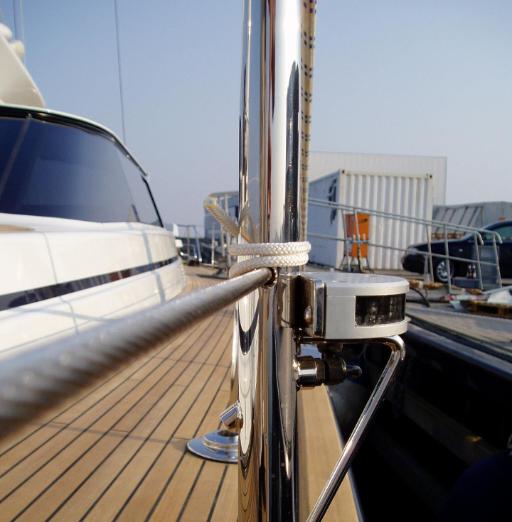
Lopolight Nav Lights
Navigation Lights for Boats from 12m to Under 20m
This category includes a large proportion of modern cruising yachts and performance cruisers.
The visibility requirement for sidelights increases to 2NM, but the most significant point is that sailing yachts in this size range still retain the option of using a masthead tricolour.
For offshore sailors, this remains one of the strongest arguments in favour of a tricolour installation. A single masthead lantern is highly visible at distance, unaffected by deck clutter and consumes very little power when fitted with modern LEDs.
Many serious cruising yachts carry both systems.
The deck-level navigation lights are used when motoring, manoeuvring in harbour approaches or sailing in busy coastal waters. The masthead tricolour is reserved for offshore passages.
The important point is that these are alternatives, not supplements. Displaying both simultaneously creates an incorrect light pattern and should be avoided.
Summary: Nav Lights for Boat from 12m to Under 20m
When sailing:
- Sidelights: 2NM
- Sternlight: 2NM
Alternative sailing arrangement:
- Masthead tricolour: 2NM
Optional:
- Red over green all-round sailing lights: 2NM
When motoring:
- Steaming light: 225°, visible 3NM
- Sidelights: 2NM
- Sternlight: 2NM
Navigation Lights for Boats from 20m to Under 50m
At 20m, the regulations become noticeably stricter.
The option to use a masthead tricolour disappears and the yacht must display separate sidelights and sternlight when sailing.
This makes sense in practice. As yachts become larger, deck-level lights provide a more accurate indication of the vessel’s heading and overall dimensions than a single lantern located tens of metres above the waterline.
This is also the size range where optional red-over-green sailing lights become more common. These all-round lights are mounted near the masthead and supplement the normal navigation lights.
They do not replace the sidelights or sternlight.
Their purpose is recognition. To a commercial bridge watchkeeper several miles away, the phrase remains memorable:
“Red over green, sailing machine.”
Summary: Nav Lights for Boat from 20m to Under 50m
When sailing:
- Sidelights: 2NM
- Sternlight: 2NM
Optional:
- Red over green all-round lights: 2NM
When motoring:
- Steaming light: 225°, visible 5NM
- Sidelights: 2NM
- Sternlight: 2NM

Hella Marine Nav Lights
Navigation Lights for Boats Over 50m
Above 50m, navigation lights become less of a chandlery decision and more of a systems engineering exercise.
Visibility ranges increase, cable runs become substantial, redundancy becomes important, and installations often need to satisfy classification requirements as well as COLREGS.
At this scale, the challenge is not simply choosing a fitting. It is ensuring that every light remains visible through the required arcs while avoiding interference from sails, spreaders, radar scanners and other mast-mounted equipment.
The principles remain similar to those of a 30ft cruiser. The complexity of implementation is what changes.
Summary: Nav Lights for Boat Over 50m
When sailing:
- Sidelights: 3NM
- Sternlight: 3NM
Optional:
- Red over green all-round lights: 3NM
When motoring:
- Steaming light: 225°, visible 6NM
- Sidelights: 3NM
- Sternlight: 3NM
Common Navigation Light Mistakes on Sailing Yachts
Most navigation light problems are not caused by owners deliberately ignoring COLREGS. They usually come from misunderstanding how the different light configurations are meant to be used, or from installation details that seem minor until the boat is viewed from another vessel at night.
Showing the Tricolour and Deck-Level Lights Together
A masthead tricolour is an alternative to sidelights and sternlight, not an addition to them.
On sailing yachts under 20m, it is common to have both systems installed: deck-level lights for close quarters and a masthead tricolour for offshore sailing. The mistake is turning both on at the same time.
This creates a confusing light pattern, with two sets of red, green and white sectors visible from different heights. Another vessel may struggle to interpret your heading correctly, especially at close range.
The rule is simple: when sailing, use either the tricolour or the deck-level sidelights and sternlight, not both.
Leaving the Tricolour On When Motoring
A tricolour indicates a sailing vessel under sail. If the engine is being used for propulsion, the yacht is treated as a power-driven vessel and the light configuration must change.
For most sailing yachts, that means switching off the tricolour and showing sidelights, sternlight and the white 225° steaming light.
For some vessels under 12m, an all-round white light may be used with sidelights instead. This is why many masthead fittings combine a tricolour with a separate 360° white light. The two are not intended to be used together; they are different modes for different situations.
Poor Light Arcs Caused by Installation Position
A navigation light is only compliant if it can be seen through the correct arc.
This is especially important on modern yachts, where pulpits, furling drums, bowsprits, radar posts, solar arches, dinghies and davits can all obstruct visibility.
Before assuming a light is correctly installed, look at it from the perspective of another vessel. Can the red and green sectors be seen cleanly from ahead? Is the sternlight visible from astern? Is the steaming light clear of the headsail and rigging?
A technically compliant light fitting can still produce a poor installation if the mounting position is wrong.
LED Bulbs in Old Navigation Light Housings
Replacing an incandescent bulb with an LED bulb may look like a simple upgrade, but it is not always straightforward.
Navigation lights are certified as a complete optical system: lens, housing, bulb position and light source. Changing the bulb can alter the light output, colour, cut-off angles and visibility range.
For critical navigation lights, the safest approach is to use a complete LED lantern designed and approved as a navigation light, rather than assuming any LED replacement bulb will preserve the original certification.
Ignoring Voltage Drop in Navigation Light Circuits
Long cable runs up a mast or to the stern can suffer from voltage drop, particularly on older boats with undersized wiring or corroded connections.
With incandescent lights, voltage drop usually shows up as a visibly dim light. With LED navigation lights, the symptoms can be less obvious: flickering, intermittent operation, electronic driver failure or reduced output.
When upgrading navigation lights, it is worth checking the full circuit, not just the lantern. Cable size, switch panels, connectors, deck plugs and mast wiring all affect reliability.
No Redundancy for Offshore Sailing
A single masthead tricolour is an efficient offshore solution, but if it fails it can leave the yacht with no legal sailing light configuration.
For coastal sailing this may be manageable. For offshore passages, many skippers prefer to retain deck-level sidelights and sternlight as a backup, even if the tricolour is normally used at sea.
Redundancy does not need to be complicated. It simply means having a second legal way to show your vessel’s status if the primary system fails.
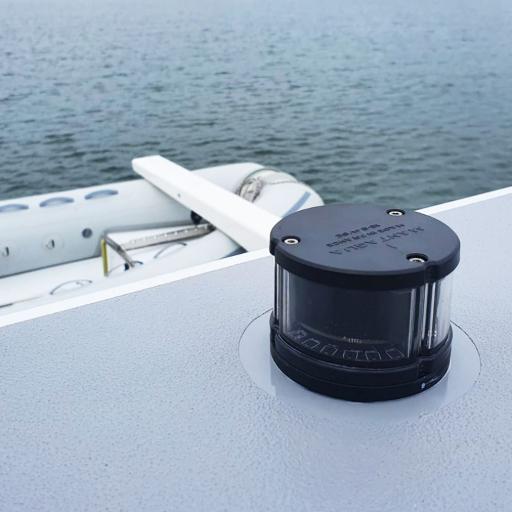
Mantagua Nav Lights
The Three Nav Light Configurations Every Sailor Should Know
Despite the apparent complexity of COLREGS, most yacht owners only need to understand three lighting configurations.
Sailing Coastal
- Sidelights
- Sternlight
Sailing Offshore (Under 20m)
- Masthead tricolour
Motoring
- Steaming light (or all-round white light on some vessels under 12m)
- Sidelights
- Sternlight
Everything else is essentially a variation on these themes.
Choosing Navigation Lights for a Boat
When choosing navigation lights for a boat, the first question is not which fitting looks best on the pulpit or mast. The first question is what light configuration the boat needs to show in each operating mode.
A coastal cruising yacht may prioritise robust deck-level sidelights, a clear sternlight and a reliable steaming light. An offshore sailing yacht under 20m may also benefit from a masthead tricolour. A larger yacht may need separate sidelights and sternlight at all times, with optional red-over-green sailing lights for improved recognition.
The important points are:
- Match the lights to the vessel length.
- Use the correct configuration for sailing or motoring.
- Do not show alternative sailing light systems at the same time.
- Check that each light is visible through the required arc.
- Treat the wiring and installation as part of the navigation light system.
- Consider redundancy for offshore use.
The purpose of navigation lights is not just to satisfy a regulation. It is to communicate clearly with other vessels. If another skipper can identify your vessel type, heading and operating status from your lights alone, your navigation light system is doing exactly what COLREGS intended.
If you have any questions about navigation lights for your boat, please feel free to contact us and talk to one of our sailing experts or click below to see our full range:

 and then Add to Home Screen.

Navigation Lights for Boat Owners: A Practical COLREGS Guide for Sailing Yachts from 0 to 50m