
Most sailors tune their rig before leaving the dock.
A Loos gauge, tape measure and a few turns on the bottlescrews are often enough to establish a baseline setup. From there, experience and instinct usually take over. As conditions change throughout the day, the backstay is adjusted, the mainsheet is trimmed, headsails are changed and the rig works much harder than it ever does alongside the pontoon.
The problem is simple: traditional rig tuning only tells you where the rig started.
It does not tell you what happens once the boat is sailing.
That is where modern rig monitoring becomes valuable.
By combining wireless load sensors with intelligent gateways and the new smartrig manager platform, Cyclops Marine allows sailors to move beyond simple static rig tension measurement and start actively monitoring their rig in real time. The result is a more measurable, repeatable and technically informed way to tune, sail and protect the rig.
Whether you are installing your first load sensor or already own Cyclops Marine products, this guide explains how to build a practical rig monitoring system, where to start, and why the latest gateways and smartrig manager represent an important step forward.
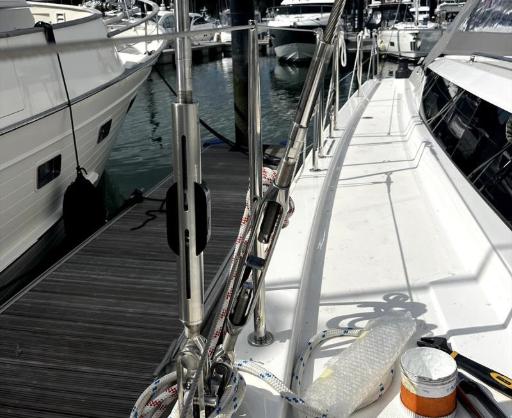
smarttune² sensors
Why Rig Monitoring Matters
Modern yachts carry increasingly sophisticated rigs capable of generating significant loads.
Understanding those loads provides benefits far beyond curiosity. Real-time rig monitoring gives sailors access to measured information while the boat is actually under sail, not just while it is stationary at the dock.
A well-planned rig monitoring system allows you to:
- Build a repeatable dock tune.
- Return to known fast settings.
- Optimise sail shape in changing conditions.
- Understand how the rig behaves under load.
- Detect excessive loading before damage occurs.
- Compare performance between race days.
- Give more crew members access to objective rig data.
Instead of relying purely on feel, you begin making decisions using measured load data. For race teams, this supports repeatability and performance analysis. For performance cruisers and offshore sailors, it improves rig awareness and helps reduce the risk of unknowingly overloading critical components.
How to Start a Cyclops Marine Rig Monitoring System
If you are building your first Cyclops Marine rig monitoring system, our recommendation is simple:
Start with a pair of smarttune² sensors on your cap shrouds.
The cap shrouds carry the primary standing rig loads on virtually every keelboat, making them one of the most useful places to begin. By monitoring both port and starboard cap shrouds, you immediately gain a clear view of how the rig is balanced, both during dock tuning and while sailing.
Installing smarttune² sensors on the cap shrouds provides:
- Accurate dock tuning.
- Repeatable rig settings.
- Live sailing load data.
- A clear indication of overall rig behaviour.
- A strong foundation for expanding the system later.
Replacing existing turnbuckles with smarttune² sensors is also one of the simpler installations within the Cyclops Marine range. For many owners, this makes cap shroud monitoring the logical first step into active rig monitoring.
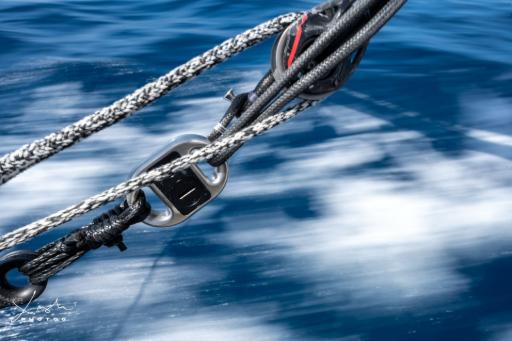
smartlink² sensors
Expanding Rig Monitoring Beyond the Cap Shrouds
Once the cap shrouds are monitored, expanding the system becomes straightforward. The best next step depends on the boat, the rig configuration and the type of sailing you do.
Forestay Load Monitoring
Monitoring forestay tension allows sailors to understand how forestay load changes across the wind range. This is particularly useful for headsail shape, pointing ability and repeatability.
Instead of relying only on backstay position or visual sag, forestay load monitoring gives the crew a measurable reference point that can be compared between conditions, sails and race days.
Backstay Load Monitoring
Backstay load is often adjusted frequently, especially on performance yachts. However, hydraulic pressure or line position does not always tell the complete story.
A load sensor on the backstay allows the crew to monitor the actual load being applied to the rig. This makes backstay settings easier to repeat and helps avoid relying on estimated positions alone.
Mainsheet Load Monitoring
For performance catamarans, mainsheet load can be one of the most valuable parameters to monitor.
Because mainsheet tension is closely linked to righting moment, real-time load data helps crews trim consistently while reducing the risk of overloading the rig or sailing beyond the boat’s safe operating envelope.
Whether racing or performance cruising, objective mainsheet load monitoring provides valuable feedback that can help minimise the risk of capsize in gusty conditions.
Flying Sail Furler Load Monitoring
Flying sail furlers are another highly useful application.
Adding a smarttoggle allows crews to reproduce the same luff tension every time they furl a Code Zero or asymmetric sail. This supports tighter, more reliable furling and can help reduce unnecessary sail wear.
For boats using furling downwind or reaching sails, this is a practical example of how rig monitoring can improve repeatability in real sailing situations.
Choosing the Right Cyclops Marine Load Sensor
Cyclops Marine offers several sensor families, each designed around different attachment methods and rigging applications.
smarttune² replaces traditional turnbuckles in standing rigging.
It is commonly used for shrouds and stays where direct standing rigging load measurement is required. For many boats, a pair of smarttune² sensors on the cap shrouds is the best starting point for a rig monitoring system.
smartlink² is designed for versatile installations using lashings, shackles or pins where turnbuckle replacement is not appropriate.
This makes it suitable for a wide range of applications across standing rigging, running rigging and load measurement points where installation flexibility is important.
smartlink² ee provides the same measurement technology but with pinned end fittings for applications that already use conventional pinned connections.
It is useful where a more direct pinned installation is preferred or where lashings are not the right solution.
smarttoggle has been developed specifically for flying sail furlers.
It measures luff tension directly between the furler and sail, helping crews repeat correct furling loads and improve furling consistency.
All four product families operate within the same wireless Cyclops Marine ecosystem and can be combined as your rig monitoring system grows.
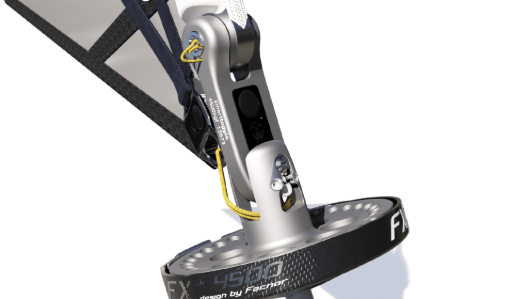
smarttoggle sensors
Viewing Your Rig Monitoring Data
Every Cyclops Marine load sensor can communicate directly with the free Cyclops mobile app via Bluetooth.
For many owners, this provides an excellent introduction to wireless load monitoring. It allows individual loads to be checked quickly from a phone or tablet, which is useful during installation, dock tuning and system checks.
However, the real benefit of rig monitoring comes from adding a gateway.
A gateway continuously receives data from the sensors and sends that information to the yacht’s onboard electronics network. This allows live load data to be viewed on compatible multifunction displays and instruments, making the information available to the crew while sailing.
This is an important step. Load data becomes much more useful when it is visible at the helm, at the nav station or on the displays the crew already use.
Micro Gateway or multigateway?
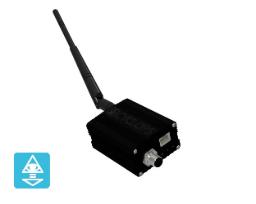
Cyclops Marine now offers two gateway options: the compact Micro gateway and the more advanced multigateway.
Both can form part of a Cyclops Marine rig monitoring system, but they are designed for different levels of functionality.
Cyclops Marine Micro gateway
The Micro gateway is the simplest option for owners who want to display live Cyclops Marine load data on existing NMEA 2000 instruments.
It is compact, waterproof and easy to configure. It supports up to 30 wireless sensors and installs directly onto the boat’s NMEA 2000 backbone.
For many sportsboats, cruiser-racers and performance cruising yachts, the Micro gateway will be enough. It gives the crew access to live rig monitoring data on compatible onboard displays without needing the full advanced functionality of smartrig manager.
Choose the Micro gateway if your main goal is to bring Cyclops Marine load data onto your NMEA 2000 network in a clean and cost-effective way.
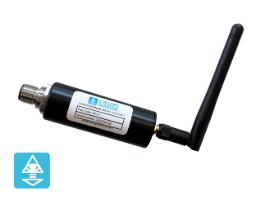
Cyclops Marine multigateway
The multigateway is the more advanced option.
It supports up to 34 sensors and offers broader system integration, onboard data logging, analogue inputs, programmable alarms and the hardware required to unlock smartrig manager.
The onboard data logging capability is particularly useful for teams and owners who want to analyse rig loads over time. With capacity for up to 500 days of continuous data logging, the multigateway makes it possible to compare settings, review sailing loads and understand how the rig behaves across different conditions.
The multigateway can also convert analogue 0–5V signals from other equipment into digital values displayed on the boat’s instruments. It can also be used to trigger external alarms or emergency systems when user-defined load limits are reached.
For owners who want a complete rig monitoring platform rather than basic load display, the multigateway is the correct choice.
Connecting Rig Monitoring to Your Boat
One of the most common concerns we hear is:
“How difficult is it to connect the gateway?”
In most cases, the answer is more straightforward than owners expect.
Many modern yachts already have a NMEA 2000 backbone installed behind the instrument panel. This network may already connect GPS receivers, wind instruments, autopilots, multifunction displays and other onboard electronics.
Adding the Micro gateway is much like installing another instrument. It plugs into an available NMEA 2000 connection and begins distributing Cyclops Marine load data across the network.
The multigateway connects in a similar way, while adding Ethernet connectivity for displaying smartrig manager on compatible multifunction displays.
For yachts with modern electronics, adding rig monitoring is often considerably simpler than many owners initially assume.
Installing smartrig manager in 5 Simple Steps
Should You Add the Cyclops Dome Antenna?
The standard gateway antenna performs well on many fibreglass yachts.
However, we strongly recommend fitting the Cyclops Dome Antenna if:
- Your yacht is built from carbon fibre.
- The gateway is installed more than approximately 8 metres from the sensors.
- The gateway is mounted deep below deck.
- You want the strongest possible wireless connection.
The Dome Antenna mounts on deck, where it has a clearer line of sight to the sensors. This helps maximise communication reliability throughout the boat, especially on larger yachts or boats with more challenging installation environments.
For a simple fibreglass yacht with the gateway close to the sensors, the standard antenna may be sufficient. For more demanding installations, the Dome Antenna is a sensible addition.
Why smartrig manager Is Important for Rig Monitoring
This is one of the most significant developments in the Cyclops Marine ecosystem.
Traditionally, load monitoring meant displaying numbers.
smartrig manager helps turn those numbers into useful rig information.
Target rig tensions, acceptable operating ranges, warning limits and danger thresholds can all be configured. This allows crews to understand immediately whether the rig is correctly tuned, operating within the desired range or approaching a limit.
Instead of asking:
“What does 1,700 kg mean?”
The crew can see whether that load is inside the target range, above the preferred range or approaching a warning threshold.
That distinction matters.
Raw load numbers are useful, but they still require interpretation. smartrig manager adds context, making rig monitoring more intuitive, more repeatable and easier for the entire crew to understand.
During dock tuning, this helps owners return to known settings. Under sail, it helps the crew understand how the rig responds to wind speed, sea state, sail trim and boat speed.
For race boats, smartrig manager supports repeatable performance. For offshore and performance cruising yachts, it supports awareness and better decision-making.
Already Own Cyclops Marine Sensors?
This is where the new gateways become particularly interesting.
If you already own smarttune², smartlink², smartlink² ee or smarttoggle sensors, you do not need to replace them.
Adding one of the new gateways unlocks additional functionality from your existing sensors.
Choose the Micro Gateway if you want compact NMEA 2000 integration and live load data on compatible onboard displays.
Choose the multigateway if you want to unlock smartrig Manager, advanced data logging, programmable alarms and a more complete rig monitoring platform.
This creates a clear upgrade path for existing Cyclops Marine customers. A system that may have started with one or two load sensors can now be expanded into a more capable connected rig monitoring setup.
Building a Complete Rig Monitoring System
Cyclops Marine has helped make rig load measurement more practical for performance cruisers, offshore sailors and race teams.
Whether you start with a pair of cap shroud sensors or build a complete system covering standing rigging, running rigging and flying sail furlers, the key advantage is that the system can grow with the boat.
A typical development path might look like this:
- Start with smarttune² sensors on the cap shrouds.
- Add forestay or backstay load monitoring.
- Monitor high-load running rigging or mainsheet loads where relevant.
- Add smarttoggle sensors for flying sail furlers.
- Connect the system to onboard displays using a Micro Gateway.
- Upgrade to the multigateway when you want smartrig Manager, data logging and advanced alarms.
This modular approach makes Cyclops Marine rig monitoring suitable for a wide range of boats, from smaller performance yachts to larger offshore racing and cruising programmes.
Final Thoughts on Rig Monitoring with Cyclops Marine
Rig monitoring is not just about collecting more data.
The value comes from making that data useful.
Cyclops Marine load sensors provide the measurement. The Micro gateway and multigateway make that data available across the yacht’s electronics network. smartrig manager then adds the context needed to understand whether the rig is operating inside the desired range.
For racers, that means more repeatable fast settings. For performance cruisers, it means better rig awareness and more confidence in the boat. For existing Cyclops Marine customers, it means the sensors already on board can become part of a much more capable system.
If you are unsure which sensors, gateway or accessories are right for your boat, please feel free to contact us and our technical team can help specify a complete Cyclops Marine rig monitoring system tailored to your rig, sailing style and onboard electronics or click below to see our full range:

 and then Add to Home Screen.

Rig Monitoring with Cyclops Marine: Sensors, Gateways and smartrig manager Explained