Ropeye
Ropeye was founded by Estonian sailor and engineer Jaanus Tamme, driven by the need for lightweight, versatile rigging solutions during offshore racing, particularly in the Mini Transat series. Frustrated with the weight and complexity of traditional metal hardware, Tamme innovated with carbon fiber and Dyneema rope, creating products that quickly gained recognition among top-tier racing yachts, including America's Cup and Volvo Ocean Race teams. Read more below...
|
|
|
|
|
|
|
|
|
|
|
|
|
|
|
|
|
|
|
|
|
|
|
|
|
Ropeye – Lightweight Composite and Textile Deck Hardware for Modern Sailing
Ropeye develops lightweight marine hardware based on composite structures and textile attachment systems. Instead of traditional stainless steel padeyes or deck fittings, Ropeye components typically combine carbon fibre structures with Dyneema® loops or soft attachments, creating strong yet lightweight load points for modern rigging systems. These solutions are widely used on performance sailing yachts where weight reduction, efficient load transfer, and flexible rigging configurations are priorities.
Ropeye Deck Hardware and Textile Attachment Systems
Ropeye hardware is designed to create high-strength attachment points for running rigging, blocks, and control systems without the weight or installation complexity associated with metal deck fittings.
Traditional deck hardware such as stainless padeyes or through-bolted fittings can add significant weight high in the boat. Ropeye alternatives utilise carbon composite load structures and high-modulus textile loops, allowing the load to be distributed efficiently while reducing overall hardware mass.
The system works by combining a structural base fitting with a soft attachment loop, typically made from Dyneema or other HMPE fibres. This approach provides several advantages for modern deck layouts:
- Reduced hardware weight
- Flexible load alignment
- Compatibility with soft shackles and textile rigging
- Lower deck penetration requirements in some installations
Because of these characteristics, Ropeye fittings are increasingly used in performance-oriented rigging layouts and modern lightweight sailing yachts.
Key Ropeye Product Categories
The Ropeye product range focuses on structural attachment points designed to integrate with textile rigging systems.
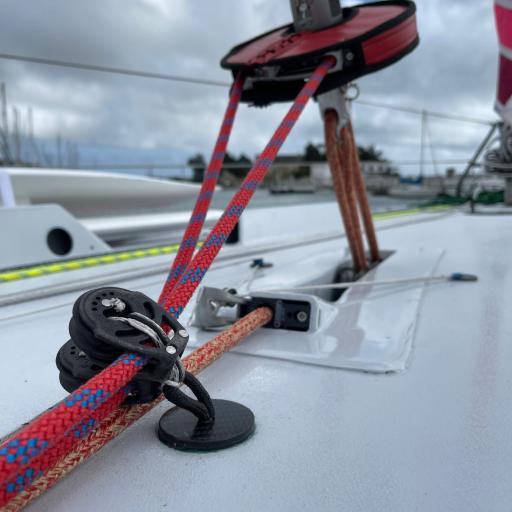
The Ropeye X provides strong, lightweight attachment points without drilling, made from carbon fiber or glass fiber. With a pad diameter of 50 mm and loop diameter of 40 mm, it supports up to 300 kg, depending on adhesive and surface preparation. The Ropeye XS is more compact, with a pad diameter of 40 mm, loop diameter of 30 mm, and a safe working load of 100 kg, ideal for both interior and exterior applications. The Ropeye XXS is the smallest in the range, featuring a 30 mm pad diameter and 20 mm loop diameter, with a safe working load of 75 kg, perfect for securing small equipment in confined spaces. All stick-on loops use marine-grade adhesives for reliable bonds without compromising structural integrity.
The Ropeye Pro Loop series offers high-load deck attachment points with models like the PRO50, PRO60, and PRO70. The PRO50 features a pad diameter of 50 mm, installation hole of 12 mm, and a maximum breaking load of 1.1 tons. The PRO60 has a 60 mm pad, 14 mm hole, and a 2.2-ton breaking load, while the PRO70 offers a 70 mm pad, 16 mm hole, and a breaking load of 3.5 tons. These loops are installed using Ropeye’s Double TDP (Through-Deck Pad) and Self-Locking Ring (SLR), ensuring watertight, secure fittings suitable for demanding sailing conditions.
Ropeye Self-Locking Rings (SLR)
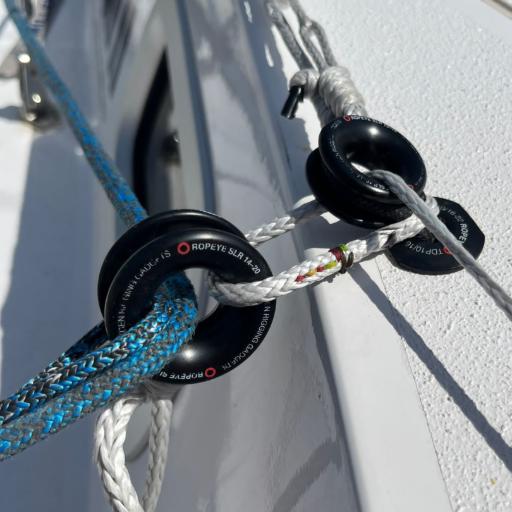
Ropeye Self-Locking Rings are designed to secure ropes naturally within their channels, eliminating additional locking mechanisms. Made from anodized aluminum for corrosion resistance, they come in sizes like the SLR 7-10 with a 10 mm inner hole and 7 mm channel width, the SLR 10-14 with a 14 mm hole and 10 mm channel, and the SLR 14-20 with a 20 mm hole and 14 mm channel. SLRs provide efficient line security while minimizing weight and hardware complexity.
Ropeye Through-Deck Pads (TDP)
Ropeye Through-Deck Pads reinforce deck structures for high-load applications, offering models such as the TDP 10 with a 9 mm inner diameter and 16 mm installation hole, adjustable from 10 to 50 mm in length. The TDP 14 has a 12 mm inner diameter, 20 mm hole, and the TDP 18 offers a 14 mm inner diameter with a 24 mm hole, both adjustable to 50 mm. TDPs are waterproof and essential for installing Ropeye Pro Loops, distributing loads effectively and protecting against abrasion.
Integration with Modern Dyneema Rigging Systems
One of the main reasons Ropeye hardware is widely adopted on modern sailing yachts is its compatibility with textile rigging systems.
Over the past decade, Dyneema-based rigging components such as:
- soft shackles
- low-friction rings
- textile lashings
- soft blocks
have become common in both racing and high-performance cruising applications.
Ropeye fittings are designed specifically to interface with these systems. The combination of textile attachment points and composite structures allows sailors to build highly adaptable rigging layouts with fewer rigid metal components.
This approach is particularly effective for:
- cascading control systems
- adjustable sheet leads
- temporary rigging points
- lightweight block attachments
Because textile loops can be easily replaced, the system can also simplify maintenance compared with permanently fixed metal hardware.
Typical Applications on Sailing Yachts
Ropeye hardware is most frequently used on performance sailing yachts where weight reduction and rigging flexibility are priorities.
Typical installations include:
| Application | Example Use |
|---|---|
| Deck control systems | vang and cunningham cascades |
| Sheet lead systems | barber haulers or tweakers |
| Block attachments | mainsheet and control line blocks |
| Interior rigging | lightweight structural anchor points |
These applications are common on:
- racing yachts
- shorthanded offshore boats
- performance cruisers
- modern lightweight composite yachts
However, the technology is increasingly used on cruising boats seeking to reduce deck hardware weight and simplify rigging layouts.
Why Lightweight Deck Hardware Matters
Weight located on deck has a disproportionate effect on sailing performance, particularly on racing yachts.
Reducing hardware weight in areas such as:
- mast bases
- cockpit control zones
- foredeck rigging points
can contribute to improved stability and reduced pitching motion in waves.
Composite and textile deck hardware systems such as those developed by Ropeye allow sailors to minimise hardware mass while maintaining structural strength and reliability.
This is why soft attachment systems have become common across many modern performance sailing platforms.
Ropeye Hardware for Modern Sailing Systems
Ropeye components represent a shift toward textile-based rigging architecture, where high-strength fibres replace many traditional metal components.
For technically minded sailors and boat owners, these systems offer a practical way to:
- reduce deck hardware weight
- integrate Dyneema rigging solutions
- simplify complex control systems
- improve load alignment in running rigging setups
As sailing technology continues to evolve, lightweight composite fittings and textile attachments are becoming an increasingly common part of modern yacht rigging.

To install this Web App in your iPhone/iPad press
 and then Add to Home Screen.
