
Spinlock buoyancy aids have been a familiar sight on dinghies, keelboats and RIBs for years, and three of the most popular ranges are now available at excellent prices. Spinlock is developing a new range, so we are clearing the remaining supplier stock of the Foil PFD, Wing PFD and Aero Pro while it lasts.
All three are 50N buoyancy aids, but they suit different sailors. This guide explains what a 50N rating means, how the three compare, and how to choose.
Buoyancy aids vs lifejackets: what 50N means
The two are tested to different parts of the same standard, ISO 12402, and they do different jobs.
Rating | Standard | Type | Designed for |
|---|---|---|---|
50N | ISO 12402-5 | Buoyancy aid | Swimmers in sheltered water, with help close at hand |
100N | ISO 12402-4 | Lifejacket | Sheltered and calm water |
150N | ISO 12402-3 | Lifejacket | Offshore and coastal sailing; designed to turn most wearers face-up |
275N | ISO 12402-2 | Lifejacket | Offshore, extreme conditions and heavy clothing |
A 50N buoyancy aid uses foam rather than an inflating bladder. It keeps you afloat without any action from you, and it never needs re-arming. The trade-off is that it is not designed to turn an unconscious wearer face-up. That makes them the right tool for active sailing close to shore or rescue cover, where you expect to end up in the water and need freedom to move: dinghies, sportsboats, foiling and RIB work.
If you sail offshore, on your own or without rescue cover, an automatic lifejacket is the better choice. Our guides to choosing a Spinlock lifejacket and to the Spinlock Deckvest range cover those.
Spinlock buoyancy aids compared: Foil, Wing and Aero Pro
Foil PFD | Wing PFD | Aero Pro | |
|---|---|---|---|
Buoyancy | 50N | 50N | 50N |
Entry | Front zip | Side zip | Overhead |
Weight (g) | 470 | 470 | 614 |
Sizes | S to XL | XS to XL | Size 1 and 2 |
Best for | Dinghy, keelboat, RIB, watersports | Dinghy, keelboat, RIB, watersports | Foiling and high-performance dinghy, multihull and keelboat sailing |
All three are CE approved and certified to ISO 12402-5. Remaining sizes and colours are limited, so check availability on the product pages.
Foil vs Wing: front zip or side zip
Spinlock developed the Foil and Wing together, and they share almost everything: 50N of foam, a weight of 470 g, a low-profile, low-snag cut that is tapered high at the sides for movement, and dry-coated elastic side panels that limit how much water the vest absorbs. Both also have an internal grip print on the inside.
The difference is how you get in.
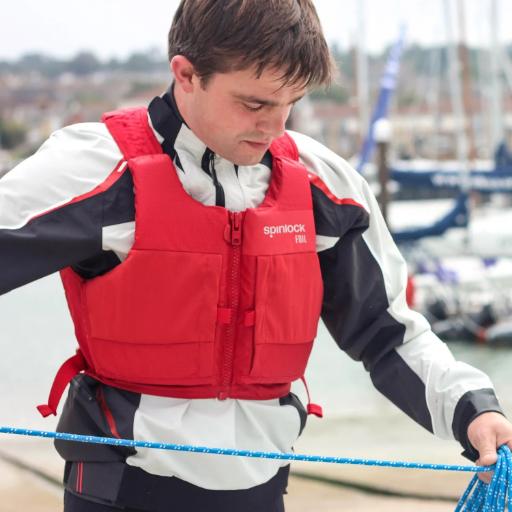
Foil PFD: front zip
The Foil opens fully at the front like a jacket. It is quicker to put on and take off, especially over a wetsuit or spray top. It suits sailors who change layers often or share kit.
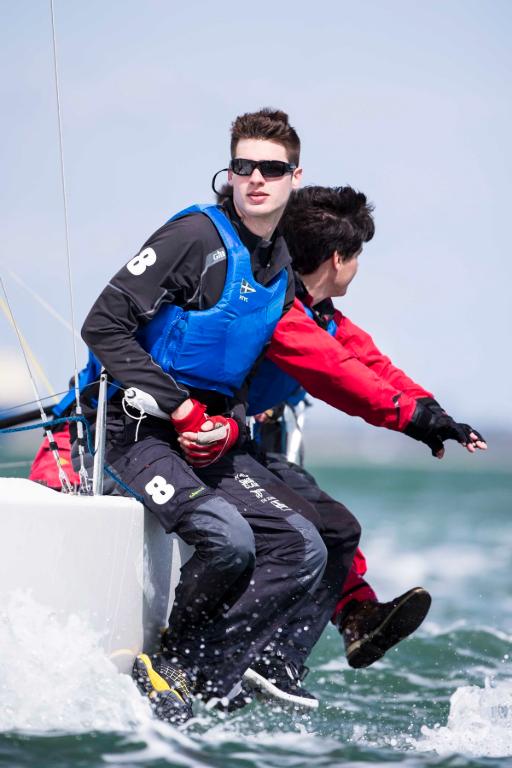
Wing PFD: side zip
The Wing has a side zip, leaving a clean, uninterrupted front. There is nothing on the chest to catch on lines, booms or toe straps, which suits crews who move across the boat a lot. It also has a stretch mesh outer pocket with an internal security pocket.
Aero Pro: developed from an America's Cup vest
The Aero Pro has a racing pedigree. According to Sailing World, it grew out of the T2 vest Spinlock designed for the Land Rover BAR America's Cup team, and was launched in early 2017. Spinlock positions it for foiling and high-agility dinghy, multihull and keelboat sailing, and the RYA used it when filming its introduction to foiling courses.
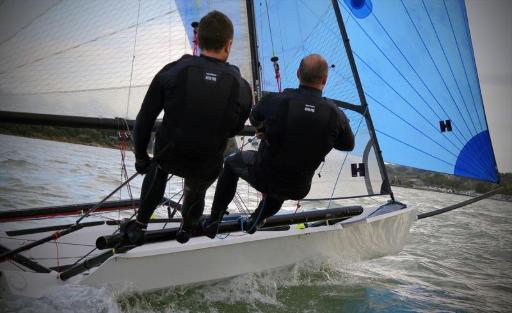
It is built more like a close-fitting top than a vest. You pull it on overhead, and a close-fitting collar, sleeves and an over-length waist gaiter hold it in place. Spinlock designed that fit to cut wind and water drag and to reduce snag points, both of which matter when you are moving fast and crashing hard. It is heavier than the Foil and Wing at 614 g, a reasonable trade for more coverage.
Choosing between Spinlock buoyancy aids
Which one suits your sailing?
- Club racing, training or family dinghy sailing: the Foil. The front zip makes it the easiest to live with.
- Crewing on a busy boat, or anyone who hates chest clutter: the Wing.
- Foiling, skiffs, fast multihulls or sportsboats: the Aero Pro, for its close fit and low drag.
- RIB driving and coach boats: the Foil or Wing.
Get the fit right whichever you choose. A buoyancy aid should be snug: lift it by the shoulders and it should not ride up past your chin. Spinlock's size guide on the product pages gives chest measurements for each size.
Buoyancy aids FAQ
Is a 50N buoyancy aid enough for coastal cruising? For offshore or coastal passage-making, an automatic lifejacket of 150N or more is the usual choice, because it is designed to turn you face-up. A buoyancy aid suits active sailing with help close at hand.
Do buoyancy aids need servicing? No gas or inflation system is involved. Rinse with fresh water, dry away from direct sunlight and check the zip, stitching and foam for damage.
Why are these on clearance? Spinlock is working on a new range. These are current, certified products; we are clearing supplier stock ahead of the change.
If you are unsure which suits your sailing, or whether you need a buoyancy aid or a lifejacket, contact our team and we will help you choose.
Browse the remaining Spinlock buoyancy aidswhile stock lasts, or see our full range of buoyancy aids for dinghy and watersports by clicking below:

 and then Add to Home Screen.

Spinlock Buoyancy Aids: Foil, Wing and Aero Pro on Clearance