Snap shackle
Explore our Snap Shackle category, offering durable and reliable snap shackles from leading brands like Tylaska, Wichard, and Ronstan. These quick-release shackles are essential for fast and secure rigging adjustments, ideal for halyards, spinnaker sheets, and more. Choose from a variety of designs to suit your sailing needs. Read more...



In this category we provide a comprehensive range of high-quality snap shackles designed for ease of use and reliable performance in sailing applications. Snap shackles are critical rigging components that enable quick, secure, and controlled-release connections in running rigging systems. They are widely used where fast operation and repeatable attachment are required. Our selection includes established manufacturers such as Tylaska, Wichard, and Ronstan, known for consistent engineering standards and load-rated hardware.
Key Features and Technical Function of Snap Shackles
A snap shackle is a quick-release mechanical connector using a spring-loaded jaw to engage and secure a fitting such as a ring, rope loop, or sail attachment point. Unlike conventional shackles, snap shackles are designed for rapid one-handed operation, which is particularly relevant in dynamic sailing conditions.
The release mechanism typically consists of a pull-pin (trigger) or push-button system. Trigger-operated designs allow remote release via a lanyard, making them suitable for applications such as spinnaker systems or control lines where the shackle may be under partial load.
It is important to clarify a common misconception:
not all snap shackles can be safely released under load. Release capability depends on the design, load direction, and friction within the mechanism. High-load applications require appropriately engineered trigger systems, and even then, release under full load may be limited.
Most snap shackles are manufactured from marine-grade 316 stainless steel, providing good corrosion resistance and mechanical strength in offshore environments. However, the internal spring and plunger remain wear components and require periodic inspection.
Types of Snap Shackles
Snap shackles are primarily defined by their attachment interface (bail or clevis pin), movement (fixed or swivel), and release mechanism (trigger or plunger). Selecting the correct configuration depends on how the shackle integrates into the rigging system and whether rotation or controlled release is required.
Bail Snap Shackles (Rope Attachment)
Bail snap shackles are designed for direct rope or soft attachment, making them suitable for sheets, control lines, and adjustable systems where flexibility is required.
- Fixed bail snap shackles provide a stable, non-rotating connection. They are typically used where the line alignment is controlled and twisting is not a concern.
- Small swivel bail snap shackle and large incorporate a rotating eye to prevent torsional loading and line twist. These are widely used on spinnaker sheets and trimming systems where the lead angle changes dynamically.
The choice between small and large variants should be based on load requirements and line diameter, rather than physical size alone.
Clevis Pin Snap Shackles (Hardware Attachment)
Clevis-based snap shackles use a removable pin connection, allowing integration with deck fittings, blocks, tangs, or articulated systems where a more defined mechanical interface is required.
- Fixed clevis bail snap shackles provide a secure, non-rotating attachment, suitable for applications where the shackle remains aligned under load.
- Swivel clevis bail snap shackles allow rotation between the attachment point and the working load, reducing side loading and improving alignment in dynamic systems.
These configurations are commonly used where hardware-to-hardware connections are preferred over rope attachment, particularly in higher-load or more structured rigging layouts.
Trigger Snap Shackle Mechanism
Trigger snap shackles operate using a lanyard-actuated plunger system, where the opening of the shackle is achieved by pulling a trigger line (lanyard) attached to the internal release pin. When the lanyard is pulled, the spring-loaded plunger retracts, allowing the jaw to open and release the load. This mechanism enables remote or extended-reach operation, which is particularly useful in applications such as spinnaker sheets, guys, or control systems where direct access to the shackle may be difficult. The ability to release under load depends on the specific design and load alignment, as friction within the mechanism increases with load. This mechanism used by most performance-oriented snap shackles, including designs from Tylaska, Wichard, and Ronstan.
Selecting the correct type depends on movement requirements, load direction, and whether controlled release is required.
Load Ratings and Safety Considerations
Choosing the correct snap shackle requires careful consideration of Safe Working Load (SWL) rather than breaking load. Sailing systems are subject to dynamic and shock loading, particularly in sheets, halyards, and downwind setups.
Key considerations:
- Always size based on maximum expected working load with a safety margin
- Avoid using snap shackles in standing rigging or structural load paths
- Be aware that side loading and misalignment reduce effective strength
A frequent question is: what size snap shackle should I use?
The answer depends on the line load, not rope diameter alone, and should be aligned with block and system load ratings.
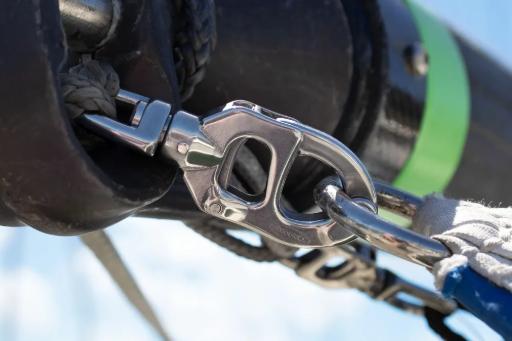
Ronstan Triggersnap Shackle
Applications on Halyards, Spinnaker Sheets, and Control Systems
Snap shackles are widely used where speed and operational efficiency are critical:
Forward halyards
Enable faster sail changes, particularly for headsails and downwind sails. However, for permanently loaded halyards, careful consideration of load and release behaviour is required.
Spinnaker sheets and guys
One of the most common applications. Snap shackles allow rapid connection and disconnection during hoists, gybes, and drops. Swivel versions help prevent twist in loaded systems.
Control lines and barber haulers
Used where adjustable lead positions are required and hardware must be reconfigured quickly.
Furling and outhaul systems
Provide convenient detachable connections in systems requiring periodic adjustment or removal.
Snap Shackles vs Soft Shackles
A common comparison is between snap shackles and soft shackles:
- Snap shackles offer fast mechanical release and ease of handling, particularly under load transitions
- Soft shackles provide weight reduction and flexibility, but lack instant mechanical release
The choice is application-specific, with snap shackles remaining preferred where controlled disengagement and repeatability are required.
Snap Shackle Durability, Maintenance, and Reliability
Although stainless steel construction offers strong corrosion resistance, snap shackles require regular maintenance to ensure reliable operation:
- Rinse with fresh water after saltwater use
- Periodically lubricate the spring and trigger mechanism
- Inspect for wear in the jaw, pin, and release system
- Check that the shackle closes fully and does not stick under light load
A common issue is jamming under load or contamination, which reinforces the importance of maintenance and correct specification.
Snap Shackle Brand Overview and Engineering Differences
Different manufacturers approach snap shackle design with varying priorities:
- Tylaska Snap Shackles: Known for trigger-operated designs optimised for higher-load and controlled-release applications
- Wichard Snap Shackles: Forged stainless steel construction with consistent quality control and broad application range
- Ronstan Snap Shackles: Wide product range covering both cruising and performance use cases
Selection should be based on mechanical design, release system, and load rating, rather than brand alone.
Conclusion on Snap Shackles
Snap shackles are an essential component in modern sailing systems, enabling efficient rig handling and rapid reconfiguration of loaded lines. Correct selection depends on understanding load requirements, release behaviour, and application context. When properly specified and maintained, they provide a reliable solution for halyards, sheets, and control systems where speed and safety are critical.

To install this Web App in your iPhone/iPad press
 and then Add to Home Screen.
