
Ronstan cam cleats have become a common sight on everything from high-performance dinghies to offshore cruising yachts. Their appeal is not simply branding or aesthetics — the range has been engineered around low friction, consistent holding power, corrosion resistance and modular customisation.
For sailors comparing different Ronstan cam cleats, the important point is that this is not a single product family with minor cosmetic variations. The range includes different cam materials, different base constructions and different performance priorities.
The current Ronstan cam cleat range is divided into three distinct families:
- C-Cleats™ — premium carbon fibre composite cam cleats
- T-Cleats™ — glass fibre reinforced composite cam cleats designed as a cost-effective alternative
- Alloy Cam Cleats — hard anodised aluminium cam cleats designed for high wear and higher-load applications
All three share the same overall design philosophy, but differ in cam material, base construction, wear characteristics and intended applications.
What Makes Ronstan Cam Cleats Different?
Cam cleats are mechanically simple products, but their real-world performance depends heavily on small design details:
- Cam geometry
- Bearing friction
- Spring consistency
- Surface hardness
- Rope entry profile
- Base stiffness
Ronstan’s design focus has clearly been on reducing friction while maintaining secure holding under static and dynamic loads.
According to Ronstan, the range was developed to provide strong holding power while still allowing easy cleating and releasing of control lines and sheets.
For a sailor, that balance matters. A cam cleat that holds well but releases unpredictably is tiring to use. A cam cleat that releases easily but lacks reliable grip is worse. The useful performance range sits between those two extremes.
Carbon Fibre Composite Ronstan C-Cleats™
The headline feature of the Ronstan C-Cleat™ cam cleat range is the carbon fibre reinforced composite cam material.
Unlike aluminium cam cleats, composite cams are:
- Corrosion free
- Lightweight
- Resistant to surface wear
- Less abrasive on rope covers
This matters particularly with modern high-performance ropes using Dyneema® or Technora® blends, where aggressive metal teeth can prematurely damage covers.
Ronstan also highlights the material’s resistance to heat and abrasion, which becomes important on fast-running control lines where repeated slipping can generate localised heat buildup.
The more economical T-Cleat™ range uses glass fibre reinforced composite cams instead of carbon composite, making them a sensible option for cruising and moderately loaded applications.
Understanding Ronstan’s Slotted Bearing System
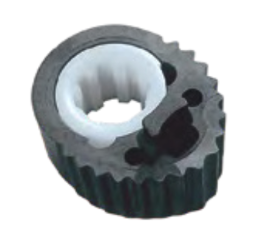
One of the more technically interesting aspects of the Ronstan cam cleat range is the use of “slotted bearings” rather than conventional ball bearings.
Most sailors are familiar with ball bearings — tiny stainless balls rolling between two surfaces to minimise friction. That works extremely well in applications such as blocks and traveller cars where components rotate continuously and loads are constantly moving.
Cam cleats operate differently.
A cam cleat spends much of its life:
- Sitting under static load
- Exposed to salt and sand
- Frequently shock loaded
- Operating through very small movements rather than continuous rotation
This creates a problem for traditional ball bearing systems. Sand or salt contamination can jam between the balls, increasing friction and making the cleat feel gritty or inconsistent over time.
Ronstan’s solution appears to use engineered low-friction polymer bearing surfaces with moulded lubrication and debris-relief slots.
The practical difference between the two systems is best summarised below:
| Conventional Ball Bearings | Ronstan Slotted Bearings |
|---|---|
| Extremely free-running when clean | Smooth but more controlled feel |
| More sensitive to contamination | Less affected by salt and sand |
| Small particles can jam the bearing path | Open slots help clear debris |
| Higher contact stress under static load | Load spread across larger surfaces |
| Can feel rough as contamination builds | More consistent long-term performance |
A useful analogy is this:
A ball-bearing system is like a precision road bike hub — extremely smooth, but sensitive to contamination. Ronstan’s slotted bearing system is closer to a heavy-duty marine bushing — slightly less delicate, but far more tolerant of harsh marine environments.
The real advantage is probably not lower friction in laboratory conditions, but long-term consistency after months or years in real sailing conditions.
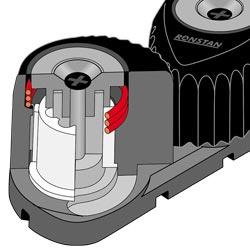
Multi-Coil Spring Design
The multi-coil spring system is recessed into the upper section of the cam.
Its purpose is to maintain near-constant cam torque throughout the opening range.
In practice, this improves:
- Cleating consistency
- Holding security on smaller diameter lines
- Release smoothness
- Reduced rope abrasion
Many lower-cost cam cleats struggle with very small diameter lines because spring pressure becomes inconsistent near the minimum rope size.
Ronstan’s design specifically targets this problem.
Cam Entry Geometry
The tooth profile and line entry geometry have been designed to minimise effort during both engagement and release.
This is particularly noticeable on:
- Spinnaker sheet systems
- Cunningham controls
- Vang adjustments
- Traveller controls
- Continuous control lines
A Ronstan cam cleat that grips securely but releases predictably can make a major difference on control systems that are adjusted repeatedly during active sailing.
Ronstan C-Cleat™ vs T-Cleat™
The C-Cleat™ and T-Cleat™ ranges look very similar externally, but they target slightly different use cases.
| Feature | C-Cleat™ | T-Cleat™ |
|---|---|---|
| Cam Material | Carbon fibre composite | Glass fibre reinforced composite |
| Heat Resistance | Higher | Moderate |
| Wear Resistance | Higher | Good |
| Performance Focus | Racing / high-load controls | General sailing |
| Colour Options | Multiple colours | Red only |
| Price Position | Premium | Value-oriented |
The T-Cleat™ range is not a “cheap” cleat — it simply uses a more economical cam material while retaining the same overall base architecture.
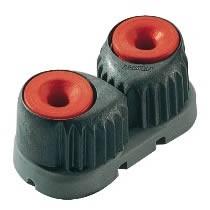
Ronstan T-Cleat™
For cruising boats or moderately loaded control systems, T-Cleats™ can be an extremely sensible option.
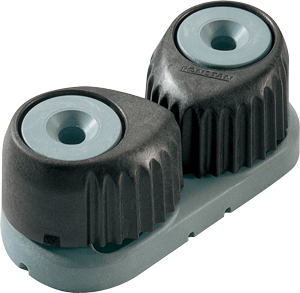
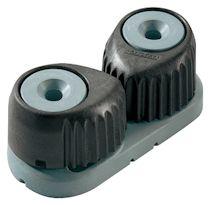
Ronstan C-Cleat™
Where Ronstan Alloy Cam Cleats Fit In
The Alloy Cam Cleat range fills a different role.
Rather than focusing on minimum rope abrasion or lowest weight, Ronstan alloy cam cleats are intended for situations where wear resistance, rigidity and durability are the main priorities.
The cams are made from hard anodised aluminium. This gives the cleat a harder working surface than the composite C-Cleat™ and T-Cleat™ models, making it well suited to high-use applications where the cleat may see repeated loading, shock loading or abrasive line movement.
This can be useful on:
- High-load control systems
- Frequently used purchase systems
- Swivel cleat bases
- Mainsheet or vang controls on dinghies and sportsboats
- Applications where long-term cam wear is a bigger concern than maximum rope softness
- There is, however, a trade-off.
Harder aluminium cam teeth can be less kind to rope covers than carbon composite cams, particularly where the line is constantly adjusted under load. For fast-trimmed controls using expensive modern rope, the C-Cleat™ may still be the better choice. For more demanding wear environments, the Alloy Cam Cleat becomes more relevant.
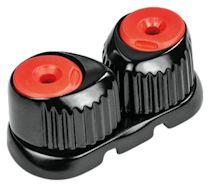
Ronstan Alloy Cam Cleat™
The construction also differs by size:
- Small Alloy Cam Cleat — aluminium cams with a long-strand glass fibre reinforced polymer base
- Medium Alloy Cam Cleat — aluminium cams with a hard anodised aluminium base for maximum rigidity
This makes the small version a lighter-duty alloy option, while the medium version is the more structurally rigid choice for higher-load installations.
Ronstan Cam Cleat Material Comparison
| Feature | C-Cleat™ | T-Cleat™ | Alloy Cam Cleat |
|---|---|---|---|
| Cam Material | Carbon fibre composite | Glass fibre reinforced composite | Hard anodised aluminium |
| Base Material | Reinforced polymer | Reinforced polymer | Composite base on small size, aluminium base on medium size |
| Rope Abrasion | Lowest | Moderate | Highest of the three |
| Wear Resistance | High | Good | Very high |
| Corrosion Resistance | Excellent | Excellent | Good, helped by hard anodising |
| Best Use | Performance controls, frequent trimming | General sailing and cruising | High-wear, higher-load applications |
| Available Sizes | Small, medium, large | Small, medium | Small, medium |
The important point is that the Alloy Cam Cleat is not simply a “better” version of the C-Cleat™ or T-Cleat™. It is a different material choice for a different application.
For control lines that are adjusted constantly, especially with premium rope covers, the carbon composite C-Cleat™ remains the more rope-friendly option. For systems where the cleat is exposed to higher wear, higher load or repeated shock loading, the Alloy Cam Cleat may be the more robust choice.
Ronstan Swivel Cam Cleat Setups
A Ronstan swivel cam cleat setup is useful where the crew needs to trim or release a control line from changing positions around the boat.
In practical terms, a Ronstan swivel cam cleat usually combines a cam cleat with a swivel base, allowing the cleat assembly to rotate towards the working angle of the line. This can make line handling more natural, especially on controls that are operated from both sides of the cockpit or from variable crew positions.
Typical applications include:
- Mainsheet systems on dinghies and sportsboats
- Vang controls
- Traveller controls
- Jib or spinnaker sheet controls on smaller boats
- Control lines led to central cockpit positions
The choice of cam cleat material still matters. A swivel base improves the lead angle and handling position, but the cleat itself still needs to be selected according to load, rope diameter, wear pattern and adjustment frequency.
For example, a frequently adjusted Ronstan swivel cam cleat system using high-performance rope may benefit from the rope-friendly characteristics of the C-Cleat™. A higher-wear setup, or one where the cleat sees repeated shock loading, may justify the Alloy Cam Cleat instead.
Ronstan Cam Cleat Size Guide
Ronstan cam cleats are available in three core size categories, although not every material family is available in every size.
| Size | Rope Range | MWL | Available In | Typical Applications |
|---|---|---|---|---|
| Small | 2–8mm | 75kg | C-Cleat™, T-Cleat™, Alloy | Cunninghams, outhauls, barber haulers, dinghy controls, lightweight traveller systems |
| Medium | 3–12mm | 125kg | C-Cleat™, T-Cleat™, Alloy | Halyard controls, reefing lines, traveller systems, performance cruiser controls |
| Large | 6–16mm | 230kg | C-Cleat™ only | Heavily loaded control lines, mainsheet fine tune systems, larger yacht controls |
The C-Cleat™ range offers the broadest choice, with small, medium and large models and multiple colour options.
The T-Cleat™ range is available in:
- Small: 2–8mm
- Medium: 3–12mm
Both T-Cleat™ models are supplied in red only.
The Alloy Cam Cleat range is available in:
- Small: 2–8mm
- Medium: 3–12mm
The medium Alloy Cam Cleat is the more rigid option because of its aluminium base construction.
Choosing the Right Ronstan Cam Cleat
Choosing the right Ronstan cam cleat is mainly a question of load, rope diameter, adjustment frequency and rope wear.
Small Cam Cleats
Best suited to:
- Dinghies and sportsboats
- Lightweight control lines
- Compact deck layouts
- Applications where low weight matters
Small cam cleats are often used on highly adjustable dinghy and sportsboat systems, where compact size and low friction matter more than ultimate holding power.
Medium Cam Cleats
The medium size is probably the default choice for many keelboats and performance cruisers.
Suitable for:
- Most halyard controls
- Reefing systems
- Traveller controls
- Medium-load trimming systems
- Mainsheet and vang purchases on smaller boats
The medium size also has the widest accessory range and is available across all three Ronstan cam cleat families.
Large Cam Cleats
Designed for:
- Higher line loads
- Larger rope diameters
- Offshore yachts
- Frequently adjusted loaded controls
Large Ronstan cam cleats are available in the C-Cleat™ range only. At higher loads, the controlled release characteristics of the bearing and spring system become increasingly noticeable.
Ronstan Cam Cleat Accessories
One of the strongest aspects of the Ronstan system is the accessory ecosystem.
Many sailors underestimate how much cleat performance depends on lead angle and line approach geometry. Ronstan’s accessories allow the cleat to be tuned for the application rather than simply bolted flat onto a surface.
This is particularly relevant when setting up a Ronstan swivel cam cleat, because the swivel base may solve the broad line approach angle, but fairleads, saddles, wedges and risers still determine how cleanly the rope enters and exits the cam.
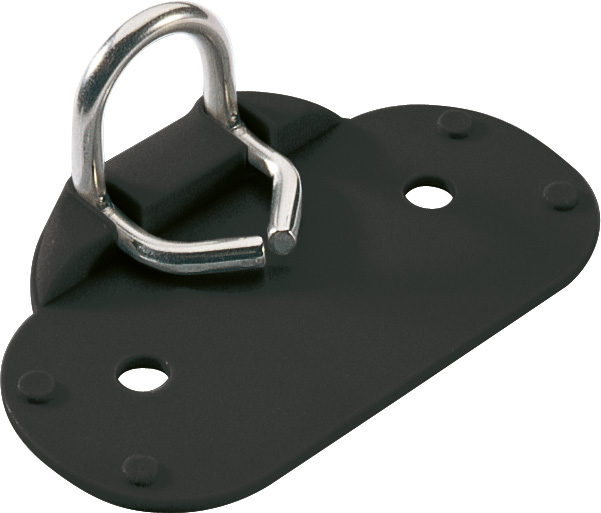
Wedge kits adjust the cleating angle and are one of the most overlooked setup improvements in many control systems.
A poorly angled cleat can:
- Increase release effort
- Cause accidental uncleating
- Create rope chafe
- Reduce holding reliability
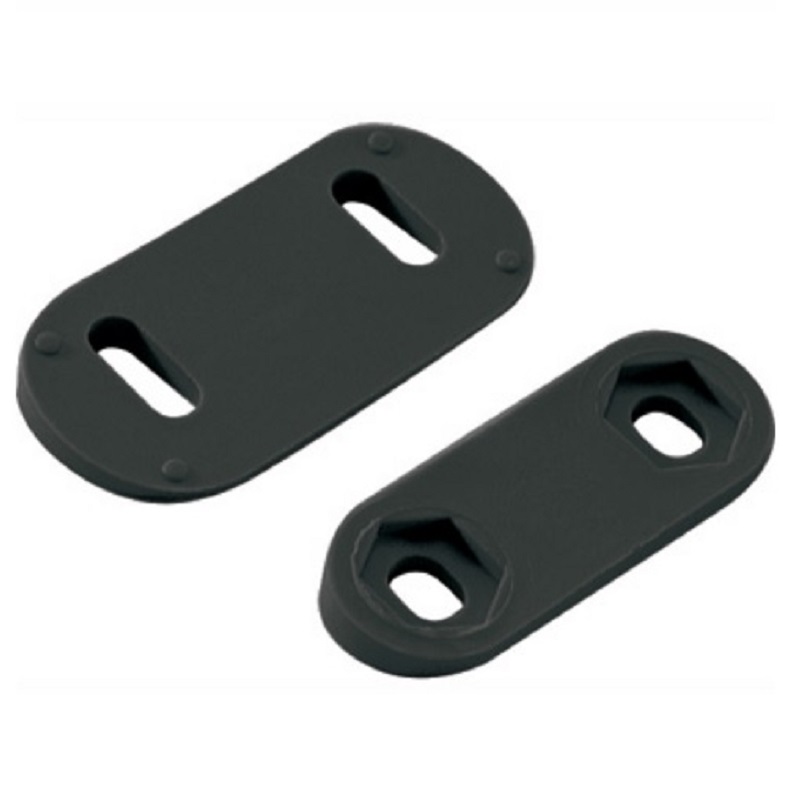
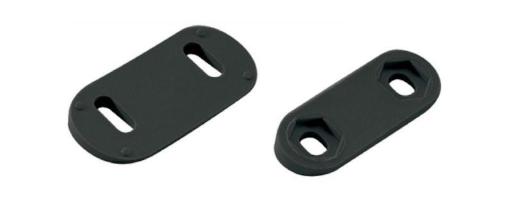
Ronstan wedge kits are stackable, allowing further adjustment or use as risers.
The medium range additionally offers dedicated riser accessories to improve ergonomics and line handling.
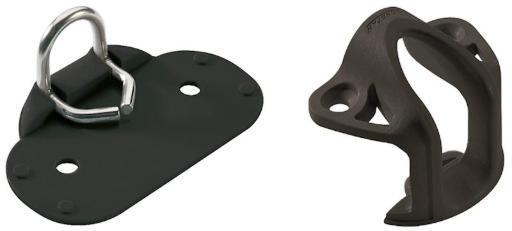
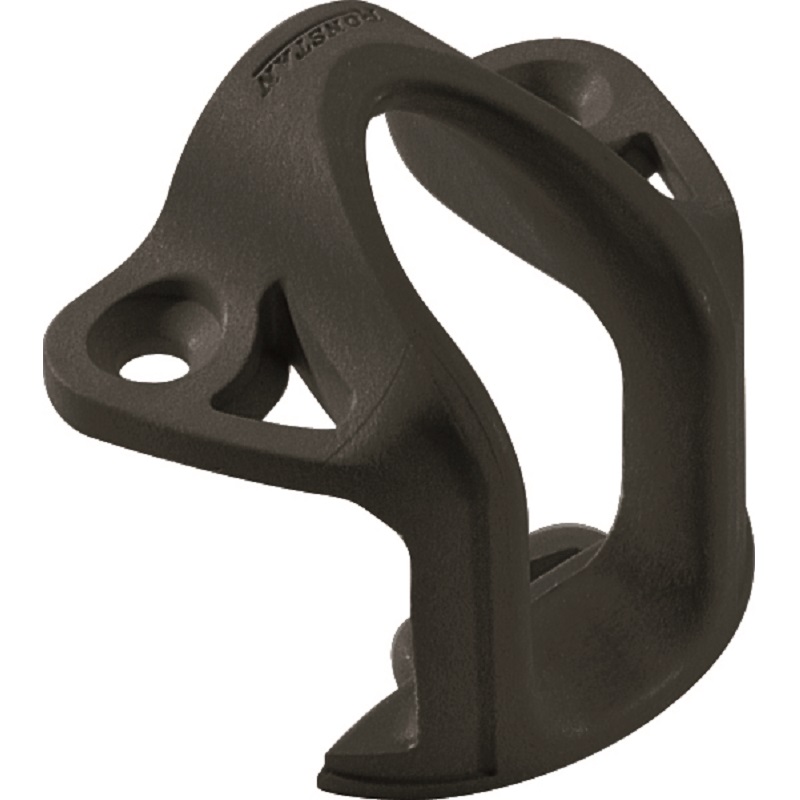
Rope guides help control line entry into the loaded side of the cleat.
This improves:
- Cleating consistency
- Load alignment
- Reduced accidental release
They are particularly useful where deck geometry creates awkward lead angles.
Fairleads
Fairleads assist cleating and uncleating from different angles.
This becomes important when:
- The sailor cannot pull directly inline
- The cleat is mounted low
- Multiple crew positions are involved
The medium range also offers heavy-duty fairlead options for higher-load systems.
Saddles
Saddles retain the rope close to the cleat and help prevent accidental disengagement during slack-line conditions.
Particularly useful for:
- Dinghy hiking controls
- Traveller systems
- Vibrating control lines
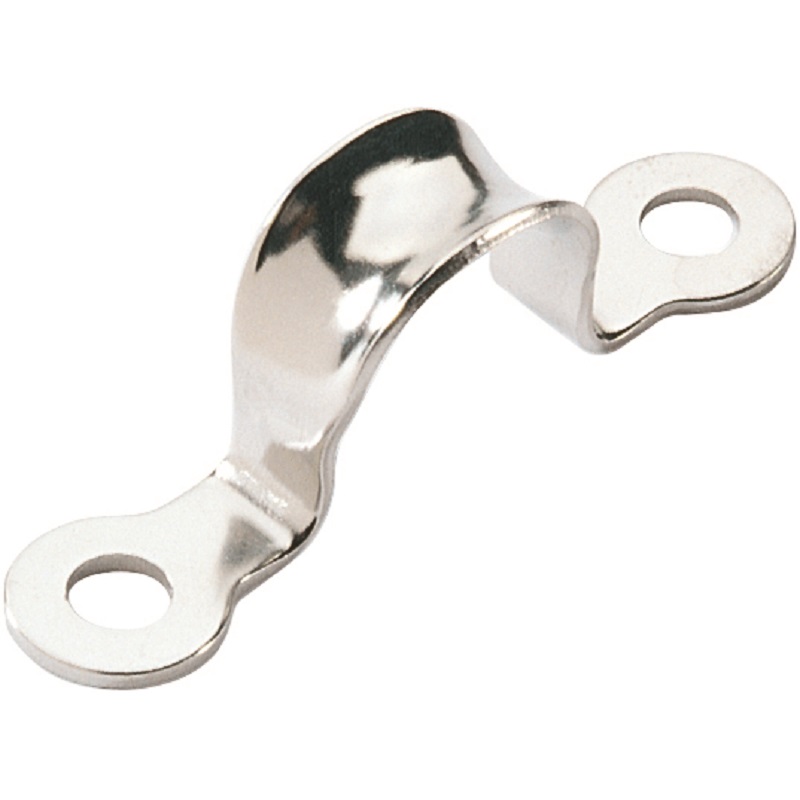
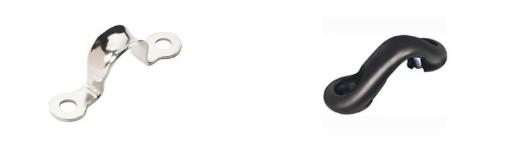
Small and large cleats use simple stainless saddles, while the medium range offers additional shaped saddle options.
Final Thoughts: Which Ronstan Cam Cleat Should You Choose?
Ronstan cam cleats stand out because the engineering effort appears focused on real functional improvements rather than cosmetic differentiation.
The most technically significant aspects are probably:
- The slotted bearing system
- The multi-coil spring consistency
- The choice between composite and alloy cam materials
- The extensive accessory ecosystem
- The key is choosing the right Ronstan cam cleat for the job.
For frequently adjusted performance controls, the carbon composite C-Cleat™ is usually the most rope-friendly option.
For general cruising and moderate control loads, the T-Cleat™ offers much of the same functional geometry at a lower price point.
For high-wear or higher-load applications where long-term cam durability is the priority, the Alloy Cam Cleat is the more robust option, accepting the trade-off that aluminium cams can be harder on rope covers.
For systems where crew position changes or the line lead angle varies, a Ronstan swivel cam cleat setup may improve ergonomics and make the control easier to use under load.
For sailors optimising control layouts, accessory compatibility is arguably just as important as the cleat itself. A correctly angled medium cam cleat with the proper fairlead or wedge kit will usually outperform a poorly installed premium cleat. That is often the difference between a control system that merely works and one that feels genuinely refined under load.
If you have any questions about Ronstan Cam Cleats please feel free to contact us and talk to one of our sailing experts or click below to see our full range:

 and then Add to Home Screen.

Ronstan Cam Cleats: Lighter, Stronger and Kinder to Ropes