
In 2025, Antal introduced an innovative addition to their deck hardware range: the DS series Folding Deck Shackles. At first glance, the name may seem unusual — but it becomes clear once you look closely at the design.
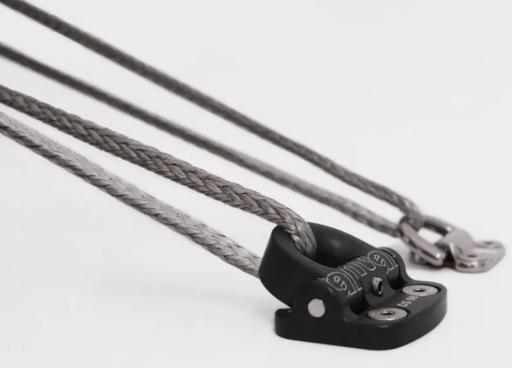
Rather than a conventional padeye, these fittings use a U-shaped aluminium “shackle” loop mounted on a fixed base. The loop rotates under load and folds flat when not in use. In practical terms, this creates a folding padeye that is purpose-built for modern soft attachments.
These fittings can be best understood as Antal folding padeyes with articulated geometry — combining the functionality of a padeye with the alignment advantages of a shackle.
What Makes This Folding Padeye Design Different
Traditional folding padeyes — typically manufactured in stainless steel — are widely used where attachment points are only required intermittently. When unloaded, they sit flush to the deck, reducing snagging risks and keeping deck layouts clean.
Antal has taken a different route.
Rather than producing a conventional stainless folding padeye, they have developed a system specifically optimised for Dyneema™ loops and soft rigging. This reflects a broader shift in deck hardware design, where soft connections are increasingly replacing fixed metal interfaces.
A Folding Padeye Designed for Soft Attachments
The DS06, DS08 and DS10 models are engineered from aluminium and designed to integrate directly with soft lashings.
The defining feature is the articulated loop:
- Rotates under load, behaving like a shackle
- Folds flat when unloaded, like a folding padeye
This dual functionality delivers two key advantages:
- Aligned load transfer under tension
- Low-profile deck hardware when not in use
For sailors already working with Dyneema™ systems, this type of folding padeye removes the need for additional connectors or intermediate hardware.
Improved Load Alignment – A Key Advantage
Soft attachments are already known for their ability to align naturally with the load, reducing stress concentrations and improving system efficiency.
The Antal Folding Padeye DS range takes this a step further.
Because the loop itself rotates, the folding padeye actively follows the load path, rather than forcing the line to adapt to a fixed geometry. This results in cleaner load transfer into the deck structure.
To achieve maximum performance, Antal defines a clear working envelope:
- Vertical plane: 10° to 100°
- Horizontal plane: ±40°
Within this range, the Deck Shackle Padeye delivers optimal strength and resistance — making it particularly effective for applications such as furlers, textile forestays, and runners.
Key Benefits of Antal Folding Padeyes
Folding, Low-Profile Design
Like traditional folding padeyes, the loop sits flush when not loaded, reducing snagging risk for sheets, control lines and sails.
Optimised for Vertical Loads
Unlike general-purpose padeyes, these fittings are clearly engineered for primarily vertical load cases, such as furlers or stays. This targeted approach improves efficiency in real-world rigging scenarios.
Articulated Load Path
The rotating loop works with soft attachments to minimise side loading and reduce stress concentrations.
Purpose-Built for Dyneema™
The design eliminates unnecessary hardware interfaces, simplifying installation and reducing system complexity.
Lightweight, High Strength
Aluminium construction provides a strong strength-to-weight ratio:
- DS06: 1500kg SWL / 77g
- DS08: 3000kg SWL / 176g
- DS10: 4500kg SWL / 280g
Where These Folding Padeyes Sit in the Antal Range
Antal already offers a broad selection of deck attachment points. The DS series complements rather than replaces existing solutions.
Soft Attach Padeyes – Baseline Option
Antal’s soft attach padeyes are a proven, widely used option for Dyneema™ connections:
- Simple, fixed, and lightweight
- Cost-effective and reliable
- Ideal for general-purpose soft attachments
The DS range builds on this by adding articulation and improved load alignment.
Stainless Steel Padeyes – Maximum Strength
Antal’s stainless steel padeyes are an industry benchmark, with SWLs from 800kg up to 9000kg:
- Extremely robust and durable
- Suitable for a wide range of deck hardware
- Fixed and non-articulating
Compared to these, the DS range is more specialised — focused on soft connections and weight saving rather than maximum absolute strength.
Removable Padeyes – Clean Deck Solutions
For those prioritising aesthetics and flexibility, Antal’s removable padeyes offer:
- Flush deck finishes when not in use
- Temporary or reconfigurable attachment points
The DS Deck Shackle Padeyes achieve a similar clean deck effect, but through a folding mechanism rather than full removal — making them faster and simpler to deploy.
A New Category of Folding Padeye
What makes the Antal Deck Shackle Padeyes particularly interesting is that they effectively create a new category.
They are not:
- A traditional fixed padeye
- A classic stainless folding padeye
- Or a standard shackle
Instead, they combine aspects of all three into a modern folding padeye solution optimised for soft rigging systems.
The Right Folding Padeye for Modern Yachts
This type of folding padeye is particularly suited to:
- Yachts using Dyneema™ loops and soft lashings
- Systems with predominantly vertical load paths
- Deck layouts where low profile and safety are important
- Performance-oriented setups where weight and efficiency matter
Conclusion on Antal Folding Padeyes
With the DS series, Antal has not simply introduced another fitting — they have reworked the folding padeye concept around the requirements of modern rigging.
By combining articulation, folding geometry, and optimisation for soft attachments, these folding padeyes offer a technically coherent solution for today’s deck layouts.
For sailors moving towards lighter, cleaner and more efficient systems, this represents a logical step forward in deck hardware design.
If you have any questions about folding padeyes, please feel free to contact us and talk to one of our sailing experts or click below to see our full range:

 and then Add to Home Screen.

Antal Folding Padeye Concept – A New Evolution in Soft Deck Attachments