
The Harken Reflex system is Harken’s answer to modern Code Zero and asymmetric furling. While it arrived later than most competing solutions, the Harken Reflex 1, 2 and 3 range shows a very deliberate engineering direction: build a fully integrated system rather than a collection of individual components.
For technically minded sailors, the Harken Reflex approach is worth understanding in detail—particularly how it balances modularity, torsional stiffness, and evolving sail design trends.
The Harken Reflex Range: Unit 1, 2 and 3
The Harken Reflex system is structured around three core sizes:
- Harken Reflex 1 for smaller yachts (approx. 7.5–11m)
- Harken Reflex 2 for mid-size cruising and performance yachts
- Harken Reflex 3 for larger yachts up to ~17m
Each unit is designed to handle both asymmetric spinnakers (gennakers) and Code Zero sails, although the load cases differ significantly. Code Zero setups impose higher luff loads, and the Harken Reflex sizing reflects this with more conservative sail area limits.
This separation is important. It highlights that the Harken Reflex system is not a one-size-fits-all solution—it is engineered with specific load cases in mind.
Supplied as a Complete Harken Reflex System
A key characteristic of the Harken Reflex range is that it is typically supplied as a complete system rather than a standalone furler.
Each Harken Reflex kit generally includes:
- Drive unit (drum)
- Head swivel
- Tack fitting (swivel or fixed)
- Torsional cable (depending on configuration)
Cable lengths are pre-defined across the range, which simplifies specification but also reinforces the idea that Harken expects users to adopt the full Harken Reflex ecosystem.
For many owners, this reduces setup complexity. For others—particularly those with existing torsion cables or mixed hardware setups—it can feel less flexible.
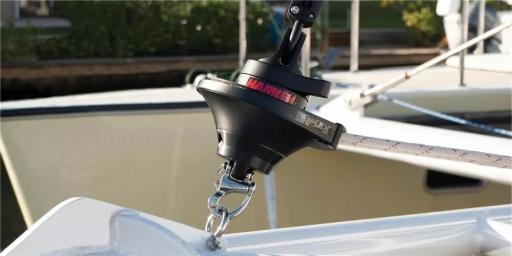
Harken Reflex Furler Unit 3
Modularity and Interchangeability
Where the Harken Reflex system stands out is in its modular interface.
The drive unit uses interchangeable threaded adapters, allowing quick changes between:
- Soft attachments (2:1 systems, lashings, etc.)
On top of the furling drum, the T-slot connection allows the tack assembly to be removed and replaced quickly. In practice, this enables fast switching between:
- Asymmetric spinnaker setups (with tack swivel)
- Code Zero setups (fixed tack)
- Fork fittings for third-party cables
- Cable-less configurations
For owners running multiple sails, this is one of the strongest features of the Harken Reflex system. A single base unit can support several sail configurations without significant re-rigging.
The Harken Reflex Cable: Maximum Torsional Stiffness
The defining feature of the original Harken Reflex system is the torsional cable.
Harken took a different approach from many competitors by prioritising stiffness over weight. The Reflex cable uses braided stainless steel filaments over a synthetic core, producing a very torsionally rigid structure.
From a mechanical perspective, this has clear advantages:
- Efficient torque transmission from drum to head swivel
- Reduced reliance on high halyard tension
- Predictable furling behaviour
In use, the Harken Reflex cable can feel very direct and positive compared to softer textile torsion ropes.
However, there is an obvious trade-off.
The cable is relatively heavy compared to modern fibre-based torsion lines. On performance-oriented boats, or where weight forward and aloft matters, this becomes a consideration.
It is also worth noting that this weight is not typically emphasised in product literature, but it is inherent in the construction.
Evolution of the Harken Reflex System: Cable vs Cable-less
One of the more interesting aspects of the Harken Reflex range is how it has evolved over time.
While the original system centred around the torsion cable, Harken has since developed cable-less solutions. These use:
- A low-profile head swivel attached directly to the sail
- A webbed or integrated tack plate
This removes the need for an external torsion cable entirely.
From a technical standpoint, the cable-less Harken Reflex configuration aligns closely with modern sail design, particularly structured luff Code Zero sails.
The benefits are clear:
- Reduced system weight
- Lower windage
- Cleaner sail integration
- Simplified handling
For many newer sails, the cable-less setup is arguably the more refined expression of the Harken Reflex system.
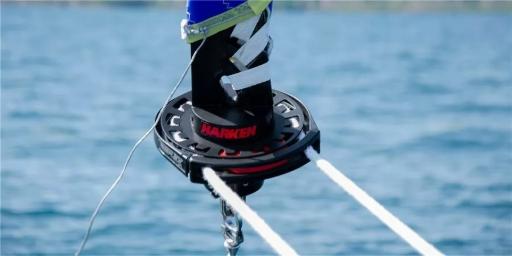
Harken Reflex Cable-less Code Zero Furler
Installation and Operation
The Harken Reflex system uses a continuous furling line (not included in the base kit), typically led aft via stanchion-mounted fairleads. This allows furling and deployment from the cockpit, consistent with most modern furling systems.
Furling behaviour depends on the sail type:
- Asymmetric sails furl top-down, driven from the head swivel
- Code Zero sails furl along the luff with a fixed tack
One detail that stands out is halyard tension.
Because the Harken Reflex cable is highly torsionally stiff, excessive halyard tension can actually make furling less efficient and increase loads in the system. This differs from softer torsion ropes, where higher tension is often required to maintain control.
For sailors transitioning between systems, this is worth noting.
Where the Harken Reflex System Fits
The Harken Reflex 1, 2 and 3 range is best suited to sailors who value:
- A fully integrated system with matched components
- High build quality and engineering consistency
- Flexibility across multiple sail types
- Compatibility within a broader Harken deck hardware setup
For cable-based furling, the Harken Reflex system delivers very high torsional stiffness and reliable performance, albeit with a weight penalty.
For modern Code Zero sails, the cable-less configuration is often the more relevant solution and reflects current sailmaking trends.
Final Thoughts on Harken Reflex
The Harken Reflex system is a comprehensive and technically coherent approach to furling asymmetric and Code Zero sails.
It is not the lightest system available, and it assumes a degree of commitment to a Harken-based setup. However, in terms of modularity, interchangeability, and engineering detail, the Harken Reflex 1, 2 and 3 range remains one of the more complete furling platforms on the market.
For many cruising and performance sailors, particularly those already aligned with Harken hardware, it is a logical and well-integrated choice. If you have any questions about Harken Reflex Furler please feel free to contact us or click below to see our full range:

 and then Add to Home Screen.

Harken Reflex: A Complete Ecosystem for Code Zero and Gennaker Furling