
For many sailors, Allen Blocks are a default choice for control line systems. Within that range, the 30mm Dynamic Blocks sit at the core of the offering—covering everything from dinghy layouts to more complex keelboat control systems.
This is not just a popular range. It is a well-defined platform built around a consistent bearing system, then developed through material and structural evolution to suit a wide range of rigging approaches.
What Defines the 30mm Dynamic Allen Blocks
At the centre of all 30mm Dynamic Allen Blocks is a consistent bearing system:
- twin rows of stainless steel ball bearings
- stainless steel axle
- acetal sheave (standard models)
This configuration is designed for:
- fast-running control lines
- low friction under working load
- long-term durability without maintenance
Compared to polymer bearing alternatives, stainless balls on a stainless axle reduce deformation and maintain more consistent rolling performance over time.
As Ben Harden from Allen explains:
“Our 30mm Block range is probably our most popular and largest range.”
And more specifically:
“Dynamic is our ‘standard’ bearing. Best for most fast running systems which are not subject to high static loads.”
This Dynamic bearing system is the foundation of the entire 30mm range.
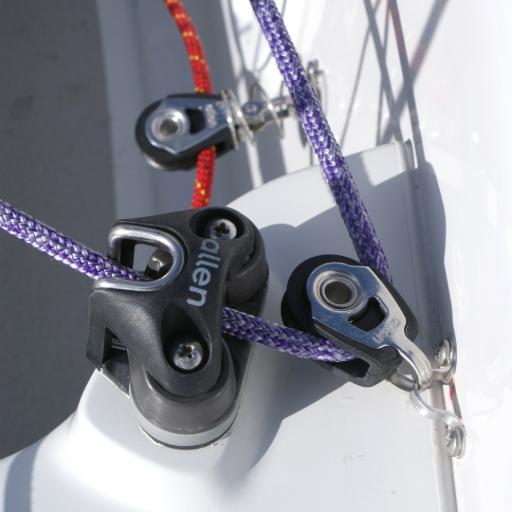
The Becket: A Core Feature of Allen Blocks
One feature that remains consistent across both older and newer Allen Blocks in this range is the central becket.
The through-hole design allows:
- direct line termination within the block
- compact purchase systems
- fewer additional fittings
In practical applications—kickers, cunninghams, outhauls—this helps keep systems clean and space-efficient.
While materials and construction methods have evolved, the becket remains a defining and highly functional part of the 30mm Dynamic platform.
Structural Evolution of Allen Blocks
From Stainless Attachments to Modular Systems
The original 30mm Dynamic Allen Blocks were built around a clear attachment philosophy:
- stainless Ultra-Strap construction
- wide range of metallic attachment options
- shackles, hooks, forks and clevis fittings
This made the range extremely versatile and is still widely used today.
However, more recent developments show a shift towards a different rigging approach.
Transition to Soft Attachment Allen Blocks
The introduction of the Tii-on Allen block range marked the move towards soft attachment systems.
These Allen blocks:
- use acetal cheeks
- are designed for Dyneema® lashings
- retain the standard Dynamic bearing system
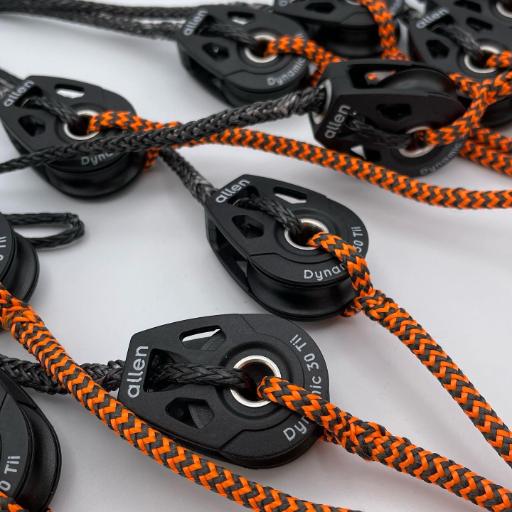
The advantage is not just reduced weight, but improved articulation. A soft attachment allows the block to align naturally under load, reducing side-loading and improving efficiency.
High-Load Evolution: XHL Allen Blocks
More recent designs, such as the A2030XHL, build on this approach by combining:
- CNC machined aluminium cheeks
- compatibility with soft attachments
- enhanced bearing behaviour for higher loads
This reflects a broader rigging trend:
- moving away from fixed metallic geometry
- towards flexible, load-sharing attachment systems
The result is a Allen block that can handle higher loads while still benefiting from the alignment and efficiency advantages of soft connections.
How the Range Develops from the Dynamic Platform
The key to understanding Allen Blocks in this category is that the bearing system remains the starting point, with variations introduced through materials and additional bearing behaviour.
Standard Dynamic Allen Blocks
- acetal sheave
- twin rows of stainless ball bearings
- stainless axle
This is the baseline and suits most control line applications.
High Load (HL) Allen Blocks
- stainless steel sheave
- same Dynamic bearing system
The stainless sheave:
- resists deformation under higher loads
- maintains consistent performance at increased line tension
This is a material upgrade rather than a change in bearing design.
XHL is where the bearing system evolves further:
- twin rows of stainless steel ball bearings
- stainless steel axle
- additional plain bearing PEEK washer
This creates a hybrid system:
- low load → operates as a ball bearing block
- high or static load → transitions towards plain bearing behaviour
The goal is to:
- protect the bearings under extreme load
- maintain long-term performance in demanding systems
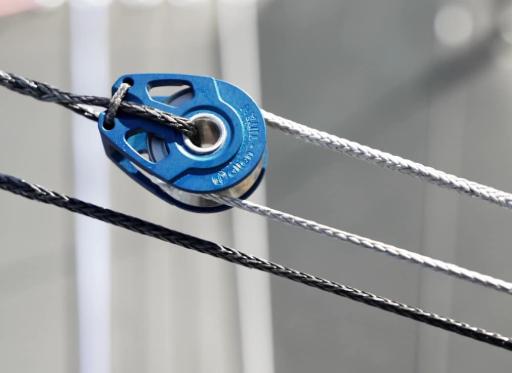
Allen Dynamic XHL Block
Range Depth: One Platform, Many Configurations
A major strength of the 30mm Dynamic Allen block range is the breadth of configurations available.
Across the range, you’ll find:
- single, double and triple blocks
- becket and non-becket versions
- fiddle blocks
- cam-cleat integrated options
- multiple attachment formats (hook, shackle, fork, soft tie-on)
This allows a consistent block size and performance profile to be used across an entire boat’s control systems.
Choosing the Right Allen Blocks for Your System
The Allen 30mm Dynamic range is best understood as a single, consistent platform that has evolved over time.
At its core:
- twin rows of stainless steel ball bearings on a stainless axle define performance
From there:
- HL improves load handling through sheave material
- XHL adds hybrid bearing behaviour for extreme conditions
- structural designs have moved from metal attachments towards soft systems
For most sailors, the standard Dynamic version remains the correct starting point. Moving to HL or XHL should be based on load profile and system demands—not assumption.
That clarity is what makes Allen Blocks in this range so widely used: a predictable, scalable system that can be adapted to suit almost any control line application. If you have any questions about Allen Blocks, please feel free to contact us and talk to one of our sailing experts or click below to see our full range:

 and then Add to Home Screen.

Allen Blocks: A Technical Guide to the 30mm Dynamic Range