Horn cleats and deck cleats
Horn cleats are simple, reliable fittings for securing lines on sailing yachts, dinghies and larger cruising boats. This range includes compact nylon horn cleats, stainless steel deck cleats, bow cleats and low-profile roller cleats for mooring, fender lines, halyards and general deck line management. Select by rope diameter, total length, fixing pattern, material and safe working load to match the cleat to the application. Read more...
-
Cam cleats
-
Horn cleats
-
V-cleats
|
|
|
|
|
|
|
|
|
|
|
|
|
|
|
|
|
|
  |
 |
Choosing the Right Horn Cleats for Sailing Applications
Horn cleats are one of the most mechanically straightforward ways to secure a line onboard. A correctly sized cleat gives the rope enough bearing area around the horns to hold a proper cleat hitch, while still allowing the line to be made fast, adjusted or removed without excessive friction or awkward handling. For sailing applications, horn cleats are commonly used on the deck, mast, boom, cockpit, foredeck and mooring areas, depending on the line being controlled.
The main selection points are rope diameter, cleat length, expected load, material, fastening method and where the cleat will be installed. A cleat used for a small flag halyard or fender line has very different requirements from bow cleats used for berthing loads or deck cleats used with spring lines. Before choosing, check the rope size, the direction of load, the available mounting area and whether the structure below the deck can take the load.
For category selection, it is useful to separate horn cleats into three broad groups: small line cleats for halyards, control lines and fender lines; general deck cleats for everyday line handling; and larger bow cleats or mooring cleats where higher working loads and more robust installation are required.
| Application | Typical cleat type | Selection priority | Notes |
|---|---|---|---|
| Fender lines | Small horn cleats / deck cleats | Rope diameter, compact size | Usually lower load, but position should avoid snagging |
| Mast halyards | Horn cleats or cam/clam cleats | Rope size, access, release method | Horn cleats work for simpler mast-mounted arrangements |
| Dock lines / spring lines | Deck cleats | SWL, fixing method, backing plate | Installation strength matters as much as cleat strength |
| Bow mooring lines | Bow cleats | SWL, line size, fairlead angle, backing plate | Usually the most critical cleat installation |
| Clean deck mooring layout | Folding / roller cleats | SWL, low profile, reduced snagging | Relevant for Antal-style roller cleats |
Horn Cleat Size and Rope Diameter
Horn cleats should be sized around the rope diameter and the job the line is doing. A cleat that is too short may not allow enough turns around the horns, which can reduce grip and make the cleat hitch less secure. A cleat that is too large can make handling inefficient, especially with smaller lines, because the rope will not sit cleanly around the horns.
As a practical guide, check the manufacturer’s recommended rope diameter where available. Product data such as total length, rope diameter, fastener diameter and hole centres is especially important when replacing an existing fitting. If the cleat is being fitted to a new position, also check whether there is enough space for the line to lead onto the cleat without rubbing against stanchions, toerails, fairleads or deck hardware.
For mooring and berthing, bow cleats normally need to accept larger dock lines or mooring pendants than small mast or cockpit cleats. This is not only a question of cleat length. The deck structure, backing plate, bolts and line lead all form part of the load path, so the installation must be considered together with the cleat rating.
Deck Cleats and Bow Cleats: Where They Are Used
Deck cleats are general-purpose cleats mounted on the deck for securing lines such as fender lines, spring lines, temporary control lines or utility tie-offs. On a sailing yacht, deck cleats should be positioned so the line approaches the cleat at a clean angle and can be handled safely by crew. Avoid placing deck cleats where they create trip hazards or where loaded lines will chafe across sharp deck edges.
Bow cleats are usually more heavily loaded than small control-line cleats. They are used for bow lines, mooring lines and sometimes dock-line arrangements where the boat may surge, snatch or yaw against the berth. For this reason, bow cleats should be selected with particular attention to SWL, fastener size, backing plate area and the condition of the laminate or deck core below the fitting.
Where possible, bow cleats should work together with fairleads or chocks so that the line loads the cleat in a predictable direction. A poor lead angle can twist the cleat, overload one horn or introduce unnecessary chafe into the mooring line.
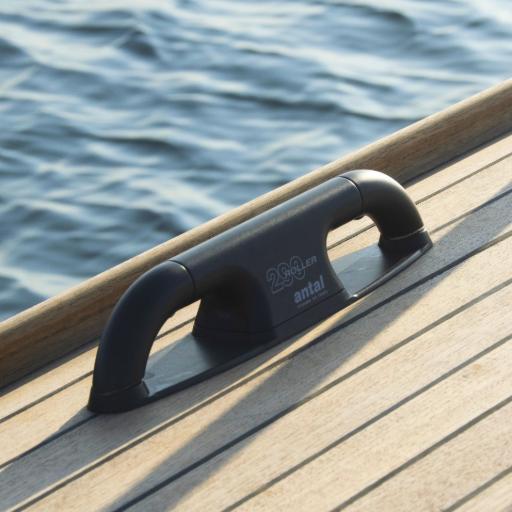
Antal Roller Cleat
Horn Cleats Material Selection: Nylon, Aluminium and Stainless Steel
Material choice should reflect the load case, environment and installation position. Nylon horn cleats are light, corrosion-resistant and suitable for many lower-load applications such as dinghies, small yachts, fender lines, halyards and light deck duties. They are easy to fit and cost-effective, but they should not be treated as a universal substitute for metal cleats in high-load mooring applications.
Aluminium horn cleats and roller cleats are often selected where weight matters and where the cleat must still provide a strong, stiff line attachment point. Aluminium fittings should be installed carefully, particularly where stainless steel fasteners are used, because isolation and bedding can help reduce corrosion issues in a marine environment.
Stainless steel deck cleats and bow cleats are commonly used where durability, surface wear resistance and saltwater exposure are important. They are heavier than nylon or aluminium options, but the added robustness can be useful for mooring and exposed deck positions. When selecting stainless deck cleats, check both the fitting dimensions and the fastener arrangement, not just the overall length.
Key Brands: Antal, Ronstan and ForSail
This category includes horn cleats, deck cleats and bow cleats from established sailing hardware brands covering different installation needs. Ronstan nylon horn cleats are well suited to lighter line-control applications, with product data typically focused on rope diameter, fastener size, hole centres and overall cleat length.
Antal cleats are relevant where higher-spec deck hardware or low-profile mooring solutions are required, including roller cleats with rotating horns designed to reduce snagging when closed. ForSail stainless steel deck cleats provide a straightforward AISI 316 option for general deck and mooring-line use, with multiple lengths available for matching the cleat size to the boat, rope diameter and fixing position. As always, the brand should be selected alongside the technical requirements of the installation: SWL, material, fastening method, backing plate and line lead angle.
Horn Cleat Installation: Fasteners, Backing Plates and Load Path
A cleat is only as strong as its installation. For lightly loaded applications, the fixing method may be relatively simple, but any deck cleat or bow cleat expected to take substantial mooring or berthing loads should be through-bolted wherever possible. A backing plate or large load-spreading washers help distribute the load into the deck structure and reduce the risk of local crushing or pull-out.
On cored decks, the core should be protected from water ingress. This normally means drilling, sealing the exposed core, bedding the cleat correctly and using appropriate marine sealant around the fasteners. If the deck laminate is thin, damaged or not designed for point loading, the installation should be reinforced before a highly loaded cleat is fitted.
When replacing existing horn cleats, measure the total length, bolt spacing, fastener diameter and base footprint before ordering. Matching the hole centres can reduce deck modification, but do not reuse old holes without checking for moisture, compression damage or poor previous sealing.
Fixed Horn Cleats vs Roller Cleats
Traditional horn cleats are fixed, simple and easy to inspect. They have no moving parts and are well suited to many sailing hardware applications where a line needs to be made fast with a conventional cleat hitch. They are often the right choice for mast lines, boom fittings, small deck positions and general-purpose rope handling.
Roller cleats or folding cleats are used where a cleaner deck layout is required. Their main advantage is that the horns can be reduced in profile when not in use, helping to limit snagging and reduce the chance of loose lines catching on the cleat. This can be useful on modern yachts where clean deck movement, mooring efficiency and reduced line clutter are priorities. As with fixed cleats, selection should still be based on SWL, boat size, mounting structure and the intended line diameter.
When to Use Horn Cleats Instead of Cam Cleats or Rope Clutches
Horn cleats are best suited to lines that are made fast and do not need constant trimming under load. For example, they work well for mooring lines, fender lines, utility lines, some mast-mounted halyards and temporary tie-offs. They are not always the best option for control lines that need rapid adjustment, frequent release or precise trimming from the cockpit.
For high-frequency sail controls, cam cleats, V-cleats or rope clutches may be more appropriate. A rope clutch allows a loaded halyard or control line to be held while still leading back to a winch. A cam cleat is faster to release and trim, but it is more specialised than a basic horn cleat. The correct choice depends on how often the line is adjusted, how much load it carries and whether controlled release is required.
Horn Cleat Replacement Checklist
Before replacing horn cleats, deck cleats or bow cleats, check the following:
- Existing cleat length and base footprint
- Rope diameter and line type
- Fastener diameter and hole centres
- Expected working load and SWL requirement
- Deck thickness and access to the underside
- Need for backing plates or reinforcement
- Material compatibility with the deck and fasteners
- Lead angle from fairlead, chock or line route
Selecting the correct cleat is not only about the fitting itself. The rope, cleat, bolts, backing plate and deck structure must work together as one system.
FAQ - Horn Cleats
What size horn cleat do I need?
Choose horn cleats based on rope diameter, expected load and the available mounting area. The rope should sit cleanly around the horns with enough space for a secure cleat hitch. For replacement cleats, check the original length, hole centres and fastener size before ordering.
What is the difference between horn cleats, deck cleats and bow cleats?
Horn cleats describe the cleat shape: two opposing horns used to secure a line. Deck cleats are cleats mounted on deck for general line handling. Bow cleats are usually larger, more heavily loaded cleats positioned forward for bow lines, mooring lines or dock-line use.
Are nylon horn cleats strong enough?
Nylon horn cleats are suitable for many light and medium-duty applications, including small boats, fender lines, halyards and low-load deck fittings. For higher mooring loads, stainless steel, aluminium or larger reinforced fittings may be more appropriate.
Do deck cleats need backing plates?
For substantial loads, deck cleats and bow cleats should normally be through-bolted with a backing plate or suitable load-spreading arrangement. The installation should be matched to the load, deck structure and line direction.
Can horn cleats be used for halyards?
Yes, horn cleats can be used for some halyards, especially on smaller boats or mast-mounted arrangements. For higher-load halyards led aft to the cockpit, rope clutches or cam cleats may provide better control and easier adjustment.

To install this Web App in your iPhone/iPad press
 and then Add to Home Screen.
