Deck organisers
Deck organisers are used to route halyards, reefing lines and control lines cleanly from the mast base back to the cockpit. A well-specified organiser reduces friction, controls line angles and keeps multiple ropes separated across the coachroof. For cruising yachts, offshore boats and performance sailing, the correct deck organisers improve rope handling efficiency and make lines-led-aft systems easier to use under load. Read more...



Deck Organisers for Efficient Line Management
On most modern sailing yachts, more running rigging is led aft than on older deck layouts. Main halyards, jib halyards, reefing lines, vang controls, Cunningham systems, outhauls and furling controls often need to pass from the mast base, across the coachroof and into clutches or jammers before reaching a winch. Deck organisers are the hardware that makes this routing possible without allowing lines to cross, chafe or run at poor angles.
The basic job of a deck organiser is simple: it changes the direction of a rope while keeping the line under control. The technical detail is in how efficiently it does this. Every turn in a loaded rope system adds friction. If the sheave diameter is too small, the line angle is too aggressive or the organiser is misaligned with the clutch, the result is higher winch loads, more wear on the rope cover and heavier handling at the cockpit.
This is why choosing deck organisers should not only be based on the number of sheaves. Rope diameter, expected working load, bearing type, mounting height, fastener layout and alignment with the clutch bank all matter. A good installation should create a smooth load path from mast base block to organiser, from organiser to clutch, and from clutch to winch.
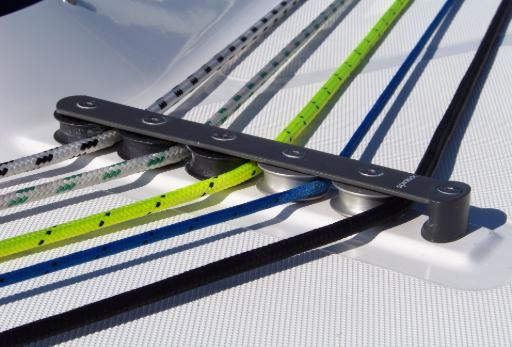
Spinlock Deck Organiser
Choosing the Right Deck Organiser
The first question is how many lines need to be led aft. Deck organisers are commonly available in 2, 3, 4, 5 and 6-sheave versions, depending on brand and range. A two-sheave deck organiser may be sufficient for a simple halyard and reefing line layout, while a cruising yacht with multiple reefing lines and additional control systems may need four or more sheaves per side.
Where deck space is limited, stackable organisers can be useful. Stacking allows additional lines to be routed through the same general footprint, although the vertical lead angle into the upper sheaves must still be checked. Poor stacking geometry can introduce friction or side loading if the lines do not enter the sheaves cleanly.
Rope diameter is another key specification. The organiser must accept the largest line in the system, not just the average line size. For example, a halyard or reefing line may require a larger sheave and higher load rating than a lower-load control line. Matching the organiser to the highest load and largest rope diameter gives a safer and more efficient layout.
| Application | Recommended Deck Organiser Type | Key Specification to Check |
|---|---|---|
| Simple cruising layout | 2 or 3-sheave deck organiser | Rope diameter and mounting footprint |
| Lines led aft to cockpit | 3 to 6-sheave deck organiser | Sheave count, lead angle and clutch alignment |
| Reefing line systems | Higher-load organiser | Working load and sheave diameter |
| Performance control lines | Ball bearing deck organiser | Bearing type and low-friction performance |
| Offshore cruising | Aluminium or high-load organiser | Safe working load, fastener size and backing plate |
| Limited coachroof space | Stackable deck organiser | Vertical line angle and fastener compatibility |
Bearing Type, Sheave Design and Friction
The difference between a plain bearing organiser and a ball bearing organiser is most noticeable when lines are adjusted frequently or under moderate dynamic load. Ball bearing sheaves generally roll more freely under adjustment, which can be useful for performance applications, control lines and halyards that are trimmed or eased often. Plain bearing designs are commonly used where simplicity, durability and high static load capacity are more important than very low rolling friction.
Sheave diameter also matters. A larger sheave creates a gentler bend radius, which can help reduce rope compression and cover wear. This is particularly relevant when using modern low-stretch halyards or high-performance running rigging, where the rope construction may be less tolerant of tight turns under high load.
For heavier cruising yachts and offshore boats, the organiser should be assessed as part of the complete line system. A low-friction mast base block will not help much if the deck organiser is too small, poorly aligned or overloaded. Likewise, a high-quality clutch installation can still feel inefficient if the organiser introduces unnecessary friction before the rope reaches the clutch.
Deck Organiser Ranges and Brands
Upffront supplies deck organisers from Antal, Karver, Ronstan, Spinlock, Ubi Maior and Barton, covering a broad range of cruising, offshore and performance applications.
Antal deck organisers are commonly used where robust aluminium construction, multiple sheave configurations and high-load capability are required. Antal Tulip-style organisers are often selected for more demanding coachroof layouts where efficient sheave geometry and load capacity are important.
Karver deck organisers are particularly relevant for performance-focused layouts where low friction, compact routing and custom deck planning are important. Karver’s KSO/KORG-style organiser concepts are often seen in more technical rope-handling systems where efficient line paths are a priority.
Ronstan deck organisers are practical options for keelboat and cruising layouts where static load capacity, clean rope deflection and serviceability are important. Ronstan organiser designs are often selected for straightforward halyard and control line routing to clutches, cleats and winches.
Spinlock deck organisers cover a wide range of rope-control layouts, including T25, T38, T50, TC50 and TSR-style organiser solutions. They are especially relevant where organisers need to work as part of a wider Spinlock rope clutch and line-handling system.
Ubi Maior deck organisers are relevant for higher-load and more customised deck layouts. Their organiser and fairlead hardware is often used in performance and semi-custom applications where compact engineering and load control are important.
Barton deck organisers are well suited to cruising yachts and refit projects. Barton offers organisers in multiple sheave counts and sheave sizes, including 2, 3, 4, 5 and 6-sheave models designed for leading halyards and control lines across the coachroof and back to the cockpit.
Deck Organiser Installation and Layout Considerations
Before replacing or upgrading deck organisers, check the existing deck structure, fastener spacing and backing plate arrangement. Organisers take significant side and vertical loads, especially when used for halyards and reefing lines. On older boats, the mounting area may need reinforcement if additional lines are being added or if higher-load running rigging is being installed.
The organiser should be positioned so the line enters and exits each sheave as straight as possible. A small angular error is usually acceptable, but excessive side loading increases friction and can damage both the sheave and rope. The organiser should also align cleanly with the clutch bank. If a line exits the organiser too far above, below or to one side of the rope clutch, it may rub on the clutch housing or load the clutch at a poor angle.
When planning a new cockpit control system, it is useful to map the entire rope path before drilling. Start at the mast base, then check organiser position, clutch spacing, winch lead and rope tail storage. The most efficient layout is usually the one with the fewest unnecessary direction changes.
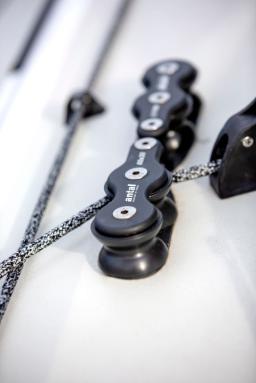
Antal Deck Organiser
FAQs: Deck Organisers
What do deck organisers do?
Deck organisers redirect halyards and control lines from the mast base towards the cockpit while keeping the lines separated and correctly aligned.
How many sheaves do I need?
Count the number of lines you want to lead aft on each side of the coachroof, then allow for future additions if deck space permits. Many refits benefit from adding one spare sheave position.
Are ball bearing deck organisers worth it?
They are useful where lines are adjusted often or where lower friction is important. For high static loads or less frequently adjusted lines, a plain bearing organiser may be more appropriate.
Can deck organisers be stacked?
Yes, many organiser systems can be stacked, but the vertical line angle must be checked carefully to avoid side loading and friction.
What lines normally run through deck organisers?
Typical lines include halyards, reefing lines, vang controls, outhauls, Cunningham systems, furling lines and other control lines led aft to the cockpit.
What is the difference between a deck organiser and a turning block?
A turning block usually redirects a single line through a larger angle. A deck organiser routes several lines through a compact, fixed sheave assembly, usually across the coachroof towards clutches and winches.

To install this Web App in your iPhone/iPad press
 and then Add to Home Screen.
