Sika
Sika marine adhesives and sealants are used across yacht maintenance, refit and installation work where watertight sealing, elastic bonding and correct substrate preparation are critical. The Sika Sikaflex range covers deck fittings, hardware bedding, teak deck caulking, glazing, panel bonding and marine surface preparation. Selecting the correct Sika product depends on substrate type, UV exposure, joint movement, mechanical load and serviceability. Read more below.
|
|
|
|
|
|
|
|
|
|
|
|
|
|
|
|
|
|
Sika marine products for yacht sealing, bonding and refit work
Sika is widely used in the sailing and marine sector for adhesive sealing, elastic bonding, teak deck caulking, glazing and surface preparation. For yacht owners and professional refit teams, the key point is that Sika is not a single universal sealant. The Sikaflex marine range includes different chemistries and formulations, each designed for a specific balance of adhesion, elasticity, strength, UV resistance, cure behaviour and substrate compatibility.
On a sailing yacht, sealants and adhesives are rarely working in ideal conditions. Deck fittings move under load, hull and deck structures flex, temperatures change, UV exposure is constant, and salt water can find its way into poorly prepared joints. This is why product selection matters. A sealant used for bedding a deck organiser, clutch or stanchion base does not necessarily need the same characteristics as an adhesive used for structural bonding, teak deck bedding or acrylic window installation.
Which Sika product should I use on a boat?
The correct Sika product depends first on the application. For general elastic marine sealing, Sikaflex 291i marine sealant is normally the starting point. Sika describes Sikaflex 291i as a one-component polyurethane sealant developed for the marine market, suitable for elastic, vibration-resistant joint seals and many interior sealing applications. It bonds to many common marine construction materials, but it should not be used on plastics prone to stress cracking, such as PMMA or polycarbonate.
For stronger adhesive bonding, Sikaflex 292i marine adhesive is more appropriate. Sikaflex 292i is a non-sag one-component polyurethane adhesive used for marine bonding where higher mechanical strength is required. It is suitable for dynamically stressed constructions, so it should be considered for load-bearing bonding applications rather than simple cosmetic sealing.
For modern multipurpose sealing, Sikaflex 591 marine sealant is another important product to include. Sikaflex 591 is a one-component STP adhesive sealant for interior and exterior marine sealing applications and is suitable with common maritime substrates. Sika also states that it is suitable for below-waterline applications on boats, but the product data should still be checked for the specific application and substrate.
Sika for deck fittings, hardware bedding and waterproof sealing
Many boat owners search for Sika because they need to reseal leaking deck fittings. Typical applications include rope clutches, deck organisers, padeyes, genoa tracks, stanchion bases, chainplates, access panels and other fittings where fasteners penetrate the deck structure. In these applications, the sealant must prevent water ingress while tolerating movement between the hardware, fastener, backing plate and deck laminate.
For this type of work, Sikaflex 291i and Sikaflex 591 are usually the most relevant internal links. Sikaflex 291i is useful where an elastic polyurethane marine sealant is required, while Sikaflex 591 is a modern multipurpose STP sealant with good suitability for interior and exterior marine sealing. The decision should be based on substrate compatibility, exposure, removability and whether the joint is primarily sealing or bonding.
This distinction is important. Bedding a removable deck fitting is not the same as permanently bonding a component. If future disassembly is expected, avoid choosing a high-strength adhesive simply because it sounds stronger. A technically correct joint is one that seals reliably, supports movement and can be serviced without damaging the surrounding laminate or fitting.
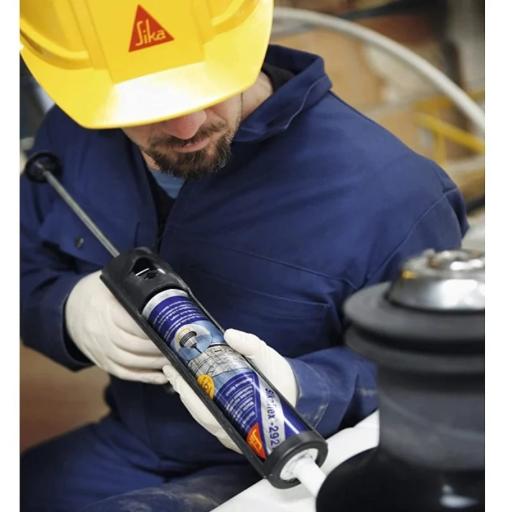
Sika adhesives for stronger marine bonding
Where the task requires more than sealing, Sikaflex 292i structural bonding adhesive should be positioned clearly. Sikaflex 292i is relevant for higher-strength adhesive bonding in marine construction and refit work. It has a paste-like, non-sag consistency and cures with atmospheric moisture, forming an elastic adhesive bond.
Typical users searching for “Sika 292i vs 291i” are usually trying to understand whether they need a sealant or an adhesive. The practical answer is simple: use 291i or 591 where the main task is elastic sealing; consider 292i where bond strength and dynamically loaded construction are central to the job. Surface preparation, bond-line thickness and clamping pressure are critical with adhesive bonding, so the product should be used according to Sika’s technical data and pretreatment guidance.
Sika for teak deck caulking and teak deck bedding
Teak deck work requires more precise product selection than general deck sealing. For traditional timber deck seams, the relevant product is Sikaflex 290 DC PRO teak deck caulking. Sika describes Sikaflex 290 DC PRO as a one-component polyurethane joint sealing compound specifically formulated for caulking joints in traditional timber marine decking, with weathering resistance for exposed maritime joints.
This should not be confused with teak deck bedding. Bedding timber planks or deck panels is a different task from caulking the visible seams. For bedding applications, Sikaflex 298FC teak deck bedding adhesive is the more relevant internal link. Sika’s teak decking guidance separates bedding with Sikaflex 298 from caulking the joints with Sikaflex 290 DC PRO and also highlights the role of suitable pretreatment such as Sika MultiPrimer Marine or Primer-290 DC.
Sika for acrylic, polycarbonate and marine glazing
Boat windows, hatches and glazing panels are another area where generic sealant selection can cause problems. For acrylic or polycarbonate windows, Sikaflex 295UV marine glazing adhesive should be the main internal link. Sika states that Sikaflex 295 UV was developed for the marine industry to bond and seal plastic glazing materials in boats and ships, and that it is suitable for organic glasses. It also advises testing and seeking manufacturer advice before use on materials prone to stress cracking.
Surface preparation: Sika Aktivator 205 and Sika MultiPrimer Marine
The performance of any Sika adhesive or sealant depends heavily on surface preparation. A failed joint is often caused by contamination, incorrect cleaning, unsuitable primer choice, insufficient flash-off time, incompatible substrate, or applying the product outside recommended temperature and humidity conditions.
For non-porous substrates such as metals, plastics, ceramic screen prints and painted surfaces, Sika Aktivator 205 is relevant. Sika describes Aktivator 205 as a treatment for bond faces before Sikaflex and Sikasil adhesives and sealants, used to improve adhesion on non-porous substrates.
For a broader marine primer option, Sika MultiPrimer Marine should be linked from a dedicated surface preparation section. Sika describes MultiPrimer Marine as a solvent-based primer that forms a thin layer acting as a link between substrates and adhesives. It is formulated for treatment before Sika one-component polyurethanes and is used to improve adhesion on many metals and woods, including teak, mahogany and Oregon pine.
Frequently asked questions about Sika marine products
Which Sika product should I use on a boat?
For general elastic sealing, consider Sikaflex 291i or Sikaflex 591. For stronger bonding, consider Sikaflex 292i. For teak deck seams, use Sikaflex 290 DC PRO. For plastic glazing, use Sikaflex 295UV.
What is the difference between Sikaflex 291i and 292i?
Sikaflex 291i is mainly a marine adhesive sealant for elastic, vibration-resistant sealing. Sikaflex 292i is a higher-strength marine adhesive used where bonding strength is more important.
Which Sika product is used for teak deck caulking?
Sikaflex 290 DC PRO is the relevant Sika product for caulking traditional timber deck seams.
Which Sika product should I use for boat windows?
For acrylic, polycarbonate and organic glass marine glazing, Sikaflex 295UV is the specialist product to consider.
Do I need primer before applying Sika?
It depends on the substrate and product. Metals, timber, plastics, painted surfaces and teak may require different preparation systems. Sika Aktivator 205 and Sika MultiPrimer Marine are common supporting products.
How long does Sika take to cure?
Cure time depends on product chemistry, bead size, temperature, humidity and joint design. Always check the relevant Sika product data sheet before application.
Why did my Sikaflex joint fail?
Common causes include poor cleaning, incorrect primer, contaminated surfaces, incompatible materials, insufficient cure time, excessive joint movement or choosing a sealant where a structural adhesive was required.

To install this Web App in your iPhone/iPad press
 and then Add to Home Screen.
