nke
nke sailing instruments are designed for sailors who need accurate data, reliable autopilot control and a well-integrated marine electronics system. The nke range covers autopilot components, marine displays, wind sensors, speed and depth sensors, GPS sensors, rudder angle sensors, compasses, connection boxes and NMEA interfaces. For cruising, regatta sailing or offshore racing, nke systems are built around calibrated data, system integration and practical control at sea. Read more below.
|
|
|
|
|
|
|
|
|
|
|
|
|
|
|
|
|
|
|
|
|
|
|
|
|
nke Marine Electronics for Integrated Sailing Systems
nke is a specialist marine electronics brand focused on sailing instrument systems rather than generic boat electronics. This makes the range particularly relevant for owners who want a connected system built around wind, speed, depth, heading, rudder angle, GPS, pilot control and performance data. On a sailing yacht, these values are not isolated numbers. They interact continuously: true wind angle depends on apparent wind and boat speed, pilot response depends on heading and rudder feedback, and tactical decisions depend on the reliability of the data shown at the helm, mast or navigation station.
For this reason, nke products are best understood as system components. A typical installation may include a display, masthead wind sensor, speed/depth sensor, compass, rudder angle sensor, autopilot processor, drive unit, wireless control and a connectivity interface. The aim is not simply to add more screens, but to create a data network where the pilot, displays and sensors are working from the same calibrated information.
nke Autopilot Systems: GyroPilot, Rudder Feedback and Drive Control
The nke autopilot range is one of the main reasons sailors look at the brand. A complete nke autopilot system is normally built around a pilot processor, heading source, rudder reference, drive unit and control interface. The processor calculates the steering corrections, while the actuator or hydraulic drive physically moves the rudder. The rudder angle sensor gives the system feedback on actual rudder position, which is important for accurate steering response and avoiding unnecessary overcorrection.
The GyroPilot 3 is relevant for cruising, regatta sailing and offshore use, while the GyroPilot 3 HR is aimed more specifically at performance and ocean racing applications. The choice between them should be based on the boat, steering system, sailing programme and expected pilot workload rather than brand preference alone. A short-handed offshore boat sailing under spinnaker or reaching in waves has very different autopilot demands from a coastal cruiser motoring between harbours.
When selecting an nke autopilot, it is important to consider the full control chain: pilot processor, compass or motion sensor, rudder reference, drive type, power supply, display and remote controls. The system also benefits from clean wind and speed data if the pilot is expected to steer accurately in wind mode.
nke Displays: Multigraphic II, Multidisplay and Pilot Control
nke marine displays are used to show instrument data and, depending on the installation, provide access to autopilot functions. The Multigraphic II is a multifunction display designed to show data from the nke Topline bus and provide access to navigation, pilot and tactical information. For sailors who want a more technical installation, this is important because it allows key values to be grouped into usable sailing pages rather than scattered across separate instruments.
A good display setup should prioritise readability and decision-making. At the helm, sailors normally need wind angle, boat speed, heading, depth, pilot mode and possibly target or navigation data. At the mast, larger repeaters or selected pages may be more useful for racing, where the helm and trimmers need the same reference data. At the chart table, the priority may be system diagnosis, route data, AIS information and pilot configuration.
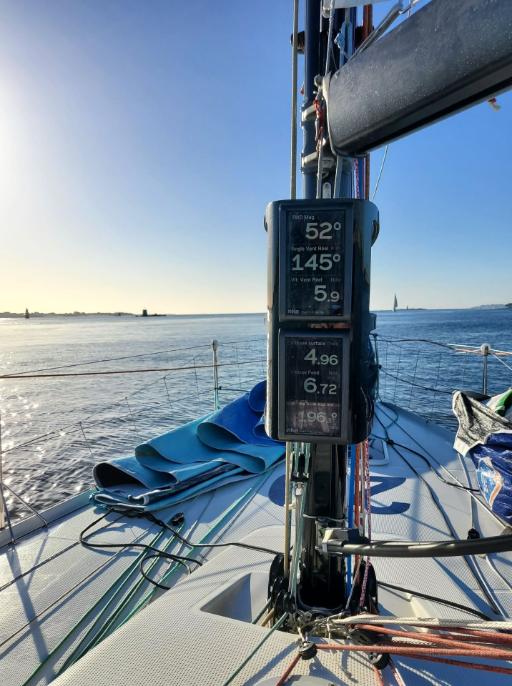
nke Sensors: Wind, Speed, Depth, GPS and Compass Data
The quality of an instrument system depends heavily on sensor accuracy and calibration. nke sensors cover wind, GPS, rudder angle, speed, depth and compass data. These values form the base layer for both performance sailing and safe navigation.
Wind sensors measure apparent wind angle and speed. Combined with boat speed and heading data, the system can calculate true wind angle and true wind speed. This matters for sail trim, reefing decisions, polar performance, layline judgement and autopilot wind steering. Speed sensors are equally important. Paddlewheel sensors are widely used and practical, while ultrasonic speed sensors avoid moving parts and can offer a different maintenance profile. The right choice depends on hull type, performance expectations, budget and whether the boat is being refitted or specified from new.
A rudder angle sensor is particularly important for autopilot systems because it tells the pilot where the rudder actually is, not just what the pilot has asked the drive to do. Compass and GPS sensors support heading, course over ground, speed over ground and navigation calculations. When these inputs are stable and correctly calibrated, the whole system becomes more useful.
Topline, NMEA 0183 and NMEA 2000 Integration
Modern yachts often use mixed electronics. A boat may already have NMEA 2000 equipment, older NMEA 0183 devices, plotters from another manufacturer or existing nke Topline instruments. This makes connectivity a key part of the buying decision.
The nke Box N2K is relevant because it acts as a communication gateway between Topline, NMEA 0183 and NMEA 2000. In practical terms, it helps make sensor data available across different parts of the installation. This is useful for refits, partial upgrades and boats where owners want to retain existing equipment while adding selected nke sensors, displays or pilot components.
Choosing an nke System for Cruising, Regatta or Offshore Sailing
For cruising yachts, the priority is usually reliable pilot control, clear display data, depth information, heading, GPS and a system that can be maintained without unnecessary complexity. A cruising installation may focus on a practical display, autopilot control, wind sensor, speed/depth sensor and essential connectivity.
For regatta sailing, the emphasis shifts towards accurate wind, speed and heading data. Repeatable calibration becomes more important because small errors in speed or wind angle can affect trim decisions, start-line judgement and tactical calls.
For offshore or short-handed sailing, the autopilot becomes a core sailing system rather than a convenience feature. In this use case, rudder feedback, pilot processor selection, drive sizing, power consumption, remote control and sensor quality all need to be considered together. A strong nke installation should be specified as a complete system, not as individual parts chosen in isolation.
Software, Diagnostics and Technical Support
nke also provides software and technical resources for configuration, diagnostics and system management. This is useful because sailing electronics often require more than physical installation. Sensors need calibration, data channels need checking, and pilot behaviour may need adjustment according to boat type and sailing conditions.
For owners upgrading an existing yacht, access to manuals, configuration tools and diagnostic functions can make a real difference. It helps identify whether data is being transmitted correctly, whether sensors are visible on the network, and whether the installation is ready for reliable use offshore.
nke FAQs
What is nke Marine Electronics?
nke is a marine electronics brand specialising in sailing instrument systems, including autopilots, displays, sensors, processors, interfaces and connectivity components.
Are nke instruments suitable for cruising yachts?
Yes. nke systems can be used for cruising yachts, particularly where the owner wants accurate sailing data, autopilot control and a more integrated instrument setup. The final specification should match the boat size, steering system and sailing programme.
What is the difference between GyroPilot 3 and GyroPilot 3 HR?
GyroPilot 3 is suited to cruising, regatta and offshore sailing. GyroPilot 3 HR is aimed more strongly at high-performance and offshore racing applications where pilot response, data quality and advanced sailing functions are critical.
Do I need a rudder angle sensor for an nke autopilot?
A rudder angle sensor is strongly recommended for a serious autopilot installation. It provides feedback on actual rudder position, helping the pilot steer more accurately and avoid inefficient rudder movement.
Can nke instruments connect to NMEA 2000?
Yes, with the correct interface. The nke Box N2K is designed to connect Topline, NMEA 0183 and NMEA 2000 data, making it useful for refits and mixed-brand electronics systems.
Which nke sensors are needed for accurate true wind data?
Accurate true wind normally depends on clean apparent wind data, boat speed, heading and calibration. A masthead wind sensor, speed sensor and reliable compass or heading source are central to the calculation.
Can an nke display control the autopilot?
Depending on the display and system configuration, nke multifunction displays can provide access to autopilot functions as well as instrument and navigation data.
Is nke only for racing yachts?
No. nke is widely associated with performance sailing, but the system architecture is also relevant for cruising yachts where accurate data, pilot control and reliable integration are priorities.

To install this Web App in your iPhone/iPad press
 and then Add to Home Screen.
