Navisafe
Navisafe navigation lights are compact, battery-powered LED lighting systems designed for portable and temporary installation on sailing yachts, tenders, and small craft. With defined visibility sectors and multiple mounting options, Navisafe lights provide flexible solutions for COLREG-compliant configurations in specific applications, as well as reliable backup lighting for offshore and coastal sailing. Read more below.
|
|
|
|
|
|
|
|
|
|
|
|
|
|
|
|
|
|
|
|
|
|
Understanding Navisafe Navigation Lights and Their Applications
Navisafe specialises in portable marine navigation lights designed to deliver defined light sectors (112.5°, 225°, and 360°) in accordance with COLREG requirements when correctly configured. Unlike fixed, hardwired navigation lights, Navisafe systems are typically battery-powered and modular, allowing sailors to deploy lighting where permanent installation is not practical.
Typical applications include:
- Tenders and dinghies requiring compliant lighting without fixed wiring
- Kayaks and small craft operating in coastal or inland waters
- Backup navigation lighting for offshore yachts
- Temporary installations during refit or electrical failure
For larger sailing yachts, Navisafe lights are most commonly used as redundant systems rather than primary navigation lighting, particularly where masthead or pulpit-mounted lights are already installed.
COLREG Compliance and Visibility Considerations
A key technical consideration when selecting Navisafe products is compliance with COLREG (International Regulations for Preventing Collisions at Sea).
Navisafe lights are designed to meet required arcs of visibility, including:
- 112.5° for port and starboard sidelights
- 135° for stern lights (via combined configurations)
- 360° all-round white lights for anchor or power-driven vessel use
However, compliance depends on:
- Correct mounting height and positioning
- Appropriate combination of lights (e.g. separate red/green plus stern vs tricolour)
- Achieving the required visibility range (typically 2NM for vessels under 12m)
Portable lights may not always meet installation height requirements for primary navigation lights on larger yachts, which is why they are typically specified for smaller vessels or backup use.
Navisafe Light Configurations
Navisafe systems are modular, allowing different configurations depending on vessel type:
Used for:
- Anchor lights
- Power-driven vessels under certain conditions
- Emergency visibility
Bi-Colour (Red/Green) Lights
Used as:
- Combined sidelights for sailing vessels
- Common on tenders and small boats
Combine red, green, and white sectors
Typically mounted at height (e.g. masthead equivalent)
Used on sailing vessels underway
Combined Systems
Multiple Navisafe units can be configured to replicate:
- Port/starboard + stern light setups
- Flexible temporary navigation systems
Mounting Systems and Installation
A defining feature of Navisafe products is their flexible mounting architecture, allowing rapid deployment without tools.
Common mounting options include:
- Magnetic mounts for steel structures
- Rail mounts for pushpits and pulpits
- Pole mounts for elevated positioning
- Suction mounts for smooth surfaces
From a technical standpoint, correct positioning is critical to:
- Maintain unobstructed visibility arcs
- Avoid interference from sails, rigging, or deck hardware
- Achieve appropriate height above deck level
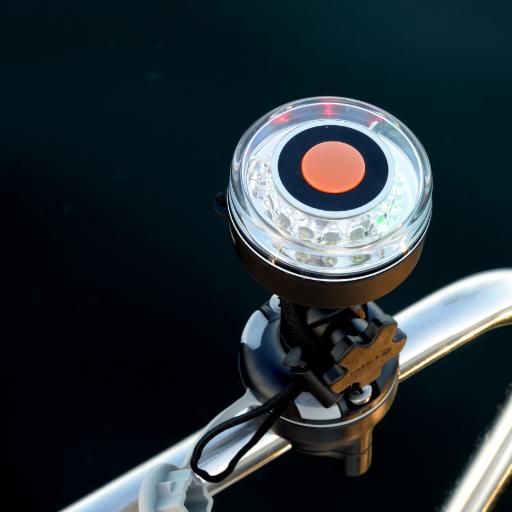
Navisafe Battery Nav Lights
Power Supply and Runtime Performance
Navisafe lights are typically powered by:
- Replaceable AA batteries or
- Rechargeable internal battery systems
Runtime varies depending on mode (steady vs flashing), but users should consider:
- Reduced runtime at maximum brightness
- Battery performance in low temperatures
- The need for redundancy on offshore passages
LED technology ensures low power consumption while maintaining consistent light output across the specified sector.
Typical Use Cases for Navisafe Lights
From a practical sailing perspective, Navisafe systems are most effective in the following roles:
- Primary navigation lighting for small craft (dinghies, tenders, kayaks)
- Backup navigation lights for offshore yachts
- Emergency lighting during electrical failure
- Temporary installations during refit or delivery
They are less commonly used as permanent primary lighting on larger yachts due to mounting and power limitations.
Frequently Asked Questions – Navisafe Navigation Lights
Are Navisafe lights COLREG compliant?
Navisafe lights are designed to meet COLREG visibility sectors and ranges, but compliance depends on correct configuration, positioning, and vessel type.
Can Navisafe lights replace fixed navigation lights?
For small vessels, they can be used as primary navigation lights. On larger yachts, they are generally used as backup or temporary solutions rather than permanent replacements.
What visibility range do Navisafe lights provide?
Most Navisafe models are rated for approximately 2 nautical miles, aligning with requirements for vessels under 12 metres.
Which Navisafe light do I need for my boat?
This depends on vessel size and use case:
- 360° white for anchoring or all-round visibility
- Bi-colour red/green for sidelights
- Combined systems for full navigation setups
- How are Navisafe lights mounted?
They use modular mounting systems including magnetic, rail, suction, and pole mounts, allowing flexible positioning without permanent installation.
Are Navisafe lights waterproof?
Navisafe lights are designed for marine environments and typically feature high IP ratings suitable for exposure to spray, rain, and temporary immersion.
Can Navisafe lights be used offshore?
Yes, primarily as backup navigation lighting, rather than as the sole primary system on offshore yachts.
What is the battery life of Navisafe lights?
Battery life varies by model and mode but typically ranges from several hours to extended multi-day use in low-power settings.

To install this Web App in your iPhone/iPad press
 and then Add to Home Screen.
