iWinch
The iWinch winch bit turns a cordless drill into a winch drive. One end fits the winch socket in place of a winch handle; the other goes into a drill with a 13 mm chuck. It adds powered hoisting and trimming to an existing manual winch, without rewiring or changing the winch. It is only as effective as the drill behind it: around 90 Nm of torque is the target. Read more below.
|
|
The iWinch winch bit: a drill drive for your winches
Hoisting a mainsail or grinding in a loaded sheet is the hardest manual work on most cruising yachts. Electric winches solve it, but they mean new winches, wiring and a battery bank sized for them. The iWinch is a simpler route: a socket shaped like the end of a winch handle, made to go into a drill's chuck. Put it in any winch with a standard handle socket and the drill turns the winch.
Choosing a drill for the iWinch winch bit
The drill does the work, so it decides what the bit can do. The chuck has to take 13 mm, and the torque has to match the load.
Torque and gearing
Aim for about 90 Nm. Less will hoist a small mainsail but stall on a loaded halyard or genoa sheet, and more is welcome on a larger yacht. Use the drill's low gear: it gives the torque, and the speed is still faster than winding by hand. A brushless drill with two batteries keeps a charged spare on board.
Drill mode, not the clutch
Set the drill to drilling, not to a torque or screwdriving setting. The clutch would slip under load, and the impact function of an impact driver hammers the winch gears. Hold the drill firmly with both hands: under load it reacts against you and can twist your wrist if the winch stops suddenly.
iWinch winch bit or electric winch handle?
| iWinch with a drill | Electric winch handle | Electric winch | |
|---|---|---|---|
| What changes on board | Nothing; uses a drill you may already have | Nothing; a self-contained motorised handle | The winch, plus wiring and a control switch |
| Fits | Any winch with a standard handle socket | Any winch with a standard handle socket | One winch position |
| Made for winching | No, a general-purpose drill | Yes | Yes |
| Stowage | Drill and bit | In a winch handle pocket | Fixed |
If you winch under power often, an electric winch handle is built for the job and easier to hold. For occasional hoisting, the iWinch makes use of a drill already on board. For a permanent solution, see electric winches.
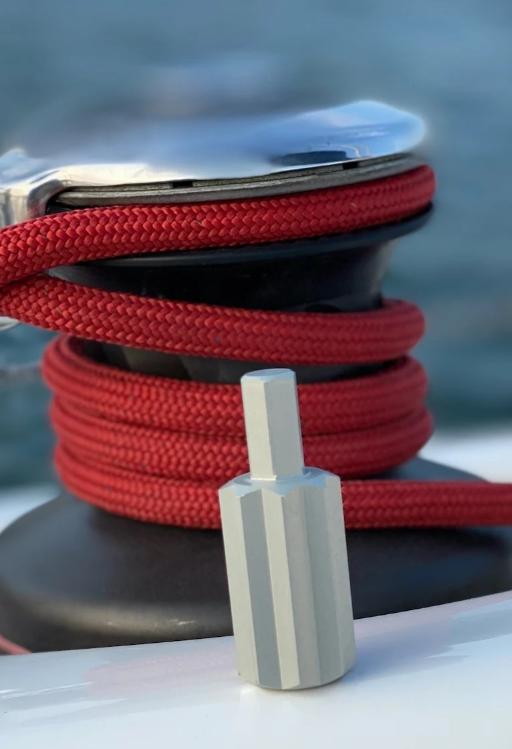
iWinch bit in a cordless drill
Using the iWinch winch bit safely
Keep the line tailed in the self-tailer, or with a crew member, before you start. Bring the power up gradually, and stop if the sail or line snags: a drill does not feel a jammed reef line the way a hand on a handle does. Take the last turns by hand with a normal winch handle, so you set the final tension yourself and do not overload the halyard or the sail. When you are not using it, take the bit out of the winch. For more on handles, read our blog post Getting to grips with winch handles.
iWinch FAQ
Does the iWinch fit my winch?
It fits winches with a standard winch handle socket, which covers most modern winches. Check the socket on older or unusual winches before use.
What drill do I need for the iWinch?
A drill with a 13 mm chuck and ideally around 90 Nm of torque, used in drill mode and low gear. A spare battery helps.
Can I use an impact driver?
No. The hammering action is not meant for winch gears. Use a drill.

To install this Web App in your iPhone/iPad press
 and then Add to Home Screen.
