
Before any serious passage, most sailors check their rig.
Tension looks right. Pins are secure. Turnbuckles are set.
But very few sailors carry out any form of rig load measurement under sail using rigging load cells.
That gap between assumption and reality is significant. And with the increasing availability of digital rigging load cells from companies such as Cyclops Marine, it is starting to change how we think about rig safety, performance, and long-term hardware design.
The Industry’s Blind Spot: No Rig Load Data from Rigging Load Cells
Sailing remains heavily dependent on approximation.
Typical rig setup is based on:
- Percentage of breaking load
- Manufacturer guidance
- Repeatable dockside tuning
These approaches are useful—but they do not reflect real sailing conditions.
In practice, rig loads vary continuously with:
- Gusts and wind shifts
- Sea state and wave impact
- Sail plan changes and reefing
- Helm and trim input
Despite this, most boats operate without any meaningful load data from rigging load cells.
That lack of data has shaped how rigs are designed, sized, and maintained for decades.
Why Cap Shrouds Are the Key Measurement Point for Rigging Load Cells
If the objective is to understand overall rig loading, the most relevant place to measure is the cap shrouds.
Cap shrouds carry the primary structural loads of the rig:
- They resist mast compression
- hey stabilise the mast laterally
- They reflect the global load state of the entire rig
In practical terms, cap shroud load is one of the clearest indicators of how hard the rig is being driven.
Forestay and backstay loads are important for sail shape and tuning. Sheet loads help quantify trimming forces. But rigging load cells installed on cap shrouds provide a direct window into the structural loading of the rig as a system.
For any meaningful measurement strategy, this is the logical starting point.
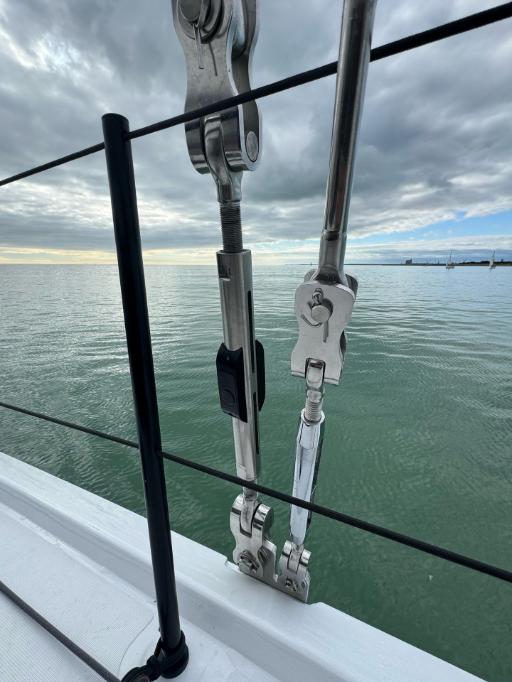
Cyclops Marine Smarttune Digital Load Cell
From Assumption to Measured Reality with Rigging Load Cells
Digital systems such as Cyclops Smartlink and Cyclops Smarttune are advanced rigging load cells designed specifically for sailing applications.
Installed inline within the rig, they provide continuous feedback on:
- Actual load levels
- Load variation through gust cycles
- Peak versus sustained loading
This fundamentally changes rig management.
Instead of relying on assumed values, sailors can:
- Verify rig loads under sail
- Identify when the rig is being over-driven
- Compare different sail configurations using real data
Rig setup becomes measurable, repeatable, and evidence-based.
Rigging Load Cells and Data Logging: From Measurement to Insight
Real-time measurement is valuable. But the real shift comes from data logging.
Modern rigging load cells are not just sensors—they are data collection tools.
By logging rig load data over time, it becomes possible to build a detailed picture of:
- Load cycles experienced by the rig
- Frequency and magnitude of peak loads
- Typical operating load ranges
This introduces something the sailing industry has historically lacked: real lifecycle load data.
Rigging Lifecycle and Service Life Based on Real Loads
Standing rigging is typically maintained using time-based schedules or visual inspection.
But neither approach reflects actual usage.
With data from rigging load cells, sailors and riggers can move towards:
- Load-based maintenance decisions
- Better understanding of fatigue exposure
- Identification of lightly vs heavily loaded rigs
For the first time, service life can be evaluated based on real loads rather than assumptions.
This is particularly relevant for cap shrouds, where cumulative load cycles directly influence fatigue life.
The Cost of Designing Without Data
The lack of real-world load data has historically led to conservative engineering.
Most hardware is designed around worst-case assumptions, resulting in:
- High safety factors
- Oversized components
- Additional weight throughout the rig system
This approach is safe—but not always efficient.
Excess weight in the rig contributes to:
- Increased heel
- Greater rolling inertia
- Higher dynamic loads in waves
While often discussed in racing terms, these effects also impact cruising yachts through reduced comfort and efficiency.
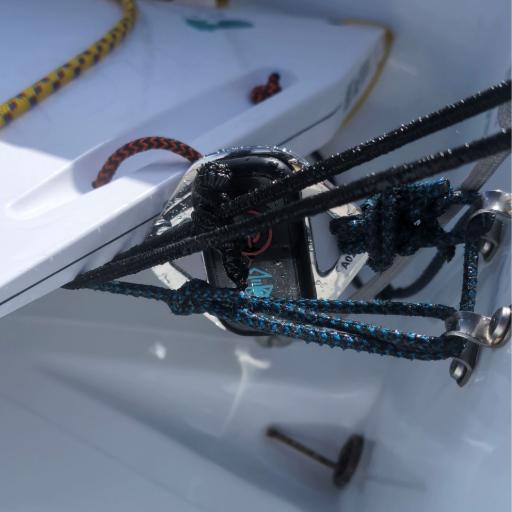
Cyclops Marine Smartlink Digital Load Cell
Towards Data-Driven Rig and Hardware Design
As rigging load cells become more widely adopted, the opportunity extends beyond individual boats.
They are beginning to generate real-world datasets across:
- Different boat types
- Sail plans
- Sailing conditions
Cap shroud data is particularly valuable because it:
- Represents overall rig loading
- Is comparable across platforms
- Provides a consistent design reference
With sufficient data, designers can:
- Size components more accurately
- Reduce unnecessary weight
- Improve efficiency without compromising safety
A Virtuous Cycle: Data, Design, Refinement
The long-term potential is a continuous feedback loop:
- Boats generate real-world data using rigging load cells
- Data is analysed across fleets and conditions
- Hardware design is refined based on actual usage
- Improved systems generate better performance and further data
This creates a virtuous cycle—something the marine industry has historically lacked.
The Role of AI in Interpreting Rig Load Data
As datasets grow, the challenge shifts from measurement to interpretation.
Data collected from rigging load cells enables:
- Pattern recognition
- Fatigue modelling
- Predictive maintenance
- Load optimisation
AI-driven analysis will allow future hardware to be designed around:
- Real load distributions
- Typical sailing behaviour
- Dynamic load patterns over time
This marks a shift from assumption-based engineering to evidence-based design.
Why Rigging Load Cells Are Becoming Essential in Modern Sailing
As sailing technology evolves, rigging load cells are becoming an essential tool for performance sailors, offshore cruisers, and rig designers. By providing accurate, real-time load data and long-term logging, they enable better rig tuning, improved safety margins, and more efficient hardware design. What was once guesswork is now measurable—and increasingly, expected.
A Practical Starting Point
For most sailors, the entry point is simple.
A single rigging load cell, ideally installed on the cap shrouds, provides a meaningful view of overall rig loading.
From there, systems such as Cyclops Smarttune and Smartlink allow both real-time monitoring and long-term data logging.
Even at this level, the shift is significant:
- You understand how your rig is actually loaded
- You build a record of load behaviour over time
- You move from estimation to evidence
Explore Rigging Load Cells for Sailing
For sailors looking to move beyond assumption, rigging load cells are now both practical and accessible.
Modern digital load cells—particularly inline systems from Cyclops Marine—can be installed at key points such as cap shrouds, forestays, or backstays.
They provide both real-time load measurement and long-term data logging, allowing you to:
- Quantify how your rig is actually loaded under sail
- Track load cycles over time
- Make informed decisions about rig setup and maintenance
At Upffront, we focus on rigging load cells that deliver accurate measurement and reliable performance in real sailing conditions. If you have questions anbout rigging load cells or require any assistance with you rigging project, please fell free to contact us and talk to one of our sailing experts.
👉 Explore the full range of digital load cells here:

 and then Add to Home Screen.

Rigging Load Cells: Why Measuring Rig Loads Is Changing Sailboat Rig Tuning