Stanchion fairleads
Stanchion fairleads are a key deck hardware component used to guide running rigging and control lines cleanly along the deck edge while maintaining safe, repeatable lead angles. Commonly fitted to lifeline stanchions or pushpit uprights, a stanchion fairlead allows furling lines, control lines, and reefing lines to be routed aft without introducing excessive friction, chafe, or trip hazards on deck. Read more...



On modern cruising and performance yachts, stanchion fairleads are most frequently used for headsail furling lines, Code Zero or gennaker furlers, and continuous line systems, particularly where the furling drum is positioned forward and the line must be guided aft to a cockpit winch or clutch. Correct selection and placement of a stanchion fairlead has a direct impact on line life, furling efficiency, and overall deck ergonomics.
What Is a Stanchion Fairlead?
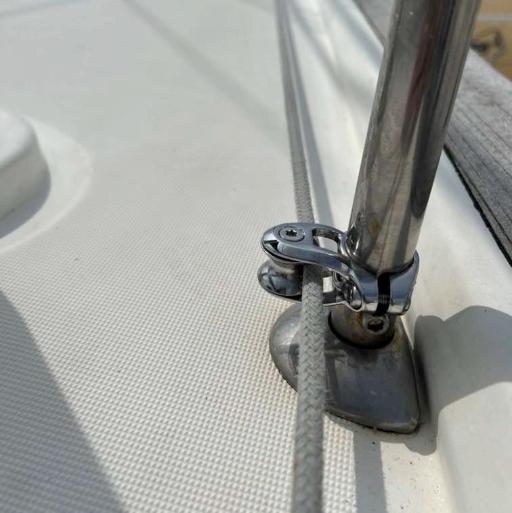
A stanchion fairlead is a low-profile line guide that clamps or bolts directly to a round or oval stanchion. Unlike deck-mounted fairleads, it keeps control lines elevated above the deck surface, reducing friction, water ingress into deck fittings, and interference with crew movement.
Most stanchion fairleads consist of:
- A smooth, low-friction guide surface (often polished stainless steel, hard-anodised aluminium, or composite)
- A stanchion clamp or split housing sized to match common stanchion diameters (typically 22–30 mm)
- A geometry designed to accommodate varying lead angles without point loading the line
High-quality stanchion fairleads are engineered to handle continuous line movement under moderate but sustained loads, rather than high static loads.
Stanchion fairlead Key Applications on Sailing Yachts
Furling Line Management
The most common application for a stanchion fairlead is guiding headsail furling lines aft from the furling drum. By maintaining a consistent lead height and lateral alignment, the fairlead prevents:
- Line riding up the drum
- Uneven wraps on continuous furling systems
- Abrasion against lifelines or toe rails
This is particularly important on yachts fitted with asymmetric or Code Zero furlers, where furling lines often run outside the shrouds.
Continuous Line Furlers
Modern continuous furling systems rely on consistent line geometry. Stanchion fairleads help maintain a stable line path along the rail, reducing torsional losses and improving furl/unfurl consistency under load.
Control Lines and Light-Load Systems
Stanchion fairleads are also used for:
- In-haulers and barber haulers
- Light reefing lines
- Lazy sheet guidance on narrow side decks
In these cases, the fairlead helps keep lines clear of deck hardware while reducing snag risk.
Key Design and Material Considerations
Material Selection
- Stainless steel (AISI 316) offers excellent corrosion resistance and durability, making it suitable for offshore and long-term installations.
- Anodised aluminium provides a good balance of weight and strength, often favoured on performance-oriented yachts.
- Composite fairleads are used where weight saving and electrical isolation are priorities.
Line Compatibility
Fairlead geometry must match the line diameter and construction. Undersized fairleads increase friction and heat build-up, while oversized fairleads can allow line twist or inconsistent tracking.
Lead Angle Tolerance
A well-designed stanchion fairlead allows for small vertical and horizontal lead deviations without creating sharp deflection points, reducing localised wear on modern low-stretch ropes.
Stanchion fairlead Key Brands and Engineering Approaches
Wichard
Wichard stanchion fairleads are typically manufactured from marine-grade stainless steel, with smooth radii and conservative load assumptions. They are widely used on cruising yachts where reliability and corrosion resistance are the primary requirements.
Selden
Selden integrates stanchion fairleads into a broader deck hardware ecosystem, ensuring compatibility with their furling systems and deck layouts. Their designs focus on controlled line geometry and clean integration with existing stanchions.
Harken
Harken stanchion fairleads often reflect performance-driven design principles, with attention paid to friction reduction and consistent line tracking. These are commonly specified on yachts running advanced furling and control systems.
Karver
Karver fairleads are typically aligned with their continuous furling systems, focusing on efficient torque transmission and line flow. Their solutions are often seen on performance cruisers and offshore-oriented yachts.
Spinlock
Spinlock’s approach prioritises ergonomics and safety, with compact designs that minimise snag hazards while maintaining effective line guidance. Spinlock fairleads are often selected where deck clutter reduction is a key concern.
Facnor
Facnor stanchion fairleads are designed to complement their furling systems, with emphasis on smooth furling line management and compatibility with continuous loop configurations.
Stanchion fairlead Installation and Layout Considerations
Correct placement of stanchion fairleads is critical:
- The fairlead should align naturally with the furling drum and the first aft turning block.
- Avoid excessive vertical deflection, which increases friction and uneven line wear.
- Ensure adequate clearance from lifelines, pulpits, and deck fittings under load.
Spacing multiple stanchion fairleads evenly along the rail helps maintain a fair lead and reduces cumulative friction losses, particularly on longer decks.
Summary on Stanchion fairleads
Stanchion fairleads play a small but technically significant role in modern deck layouts, particularly on yachts using furling systems and continuous control lines. Correct selection based on material, geometry, and line compatibility improves furling efficiency, reduces rope wear, and contributes to a safer, cleaner deck. When integrated properly with furling hardware from manufacturers such as Wichard, Selden, Harken, Karver, Spinlock, and Facnor, stanchion fairleads provide a durable and effective solution for managing running rigging along the deck edge.

To install this Web App in your iPhone/iPad press
 and then Add to Home Screen.
