Rope cleats and Boat cleats
Rope cleats are essential deck hardware for securing, trimming and releasing lines on sailing boats. From cam cleats for fast sail-control adjustments to horn cleats and V-cleats for simple line holding, the correct cleat depends on rope diameter, working load, lead angle, mounting position and release requirements. This category includes rope cleats, boat cleats and cleat accessories for dinghies, keelboats and yachts. Read more...



Rope cleats and boat cleats for sailing line control
Rope cleats are used wherever a line needs to be held securely but remain available for adjustment or release. On a sailing boat this can include jib sheets, mainsheets, traveller controls, vang or kicker systems, outhauls, cunninghams, downhauls, reefing lines, fender lines and general deck control lines. The term boat cleats is often used broadly, but for sailing hardware it is important to distinguish between mooring cleats, sail-control cleats and high-load rope holding devices such as clutches or jammers.
A well-selected rope cleat should match the rope diameter, expected load, rope construction, crew position and line entry angle. A rope cleat that is too small may overload or damage the rope; one that is too large may not grip smaller line diameters reliably. The correct installation is equally important. Even a high-quality cam cleat can perform poorly if the line enters at the wrong angle, if the cleat is mounted without sufficient backing, or if the rope diameter falls outside the intended working range.
Upffront’s rope cleats category covers cam cleats, fixed cam cleats, swivel cam cleats, cam cleat fairleads, wedges, risers, horn cleats and V-cleats, making it suitable for both replacement hardware and new deck layouts.
Cam cleats, horn cleats and V-cleats: technical differences
Cam cleats use two spring-loaded cams to grip the rope. They are commonly used for control lines that require frequent adjustment and quick release, such as dinghy sheets, vang systems, traveller controls and purchase systems on larger boats. Cam geometry, spring design and cam material affect how easily the rope enters, how securely it holds and how cleanly it releases. Ronstan, for example, describes cam geometry and spring torque as important factors in holding small lines while reducing rope abrasion and line-entry effort.
Swivel cam cleats are used where the crew trims from different positions or where the sheet angle changes significantly. They are common on mainsheet systems, jib sheet controls, dinghy vangs and some traveller arrangements. A swivel base allows the cleat to align with the trimmer, reducing friction and improving release.
V-cleats and clam-style cleats are simple, compact and lightweight. They grip the rope by wedging it into a shaped groove or toothed profile. They are well suited to lower-load control lines, dinghy systems, spar-mounted controls and secondary adjustments where a simple pull-to-lock action is preferred. Clamcleat lists sailing cleats for deck, spar, rigging and sail applications, with rope sizes across a wide range depending on model.
Horn cleats are traditional two-horn fittings used with a figure-eight turn or cleat hitch. They are often used for mooring lines, fender lines, tender painters, flag halyards, reefing tails and general-purpose securing. They are simple, robust and easy to inspect, but they are not as fast to release under active trimming loads as cam cleats.
| Application | Recommended cleat type | Why |
|---|---|---|
| Jib sheets | Cam cleat / swivel cam cleat | Fast trimming and release |
| Mainsheet on dinghy or small keelboat | Swivel cam cleat | Allows trimming from changing crew positions |
| Vang / kicker | Cam cleat or V-cleat | Depends on load and purchase ratio |
| Cunningham / downhaul | Small cam cleat or V-cleat | Compact and fast for fine control |
| Outhaul | Cam cleat / V-cleat | Suitable for adjustment systems |
| Traveller controls | Cam cleat | Fast adjustment under moderate load |
| Fender lines | Horn cleat | Simple and secure for static line holding |
| Mooring / dock lines | Horn cleat | Better suited to larger rope and cleat hitches |
| High-load halyards / reefing lines | Rope clutch or jammer, not usually a simple cleat | Better for sustained high loads |
Choosing rope cleats by application
For jib sheets and mainsheets, cam cleats or swivel cam cleats are usually the most practical option where the line is adjusted by hand and released frequently. The rope cleat must be positioned so the trimmer can both load and uncleat the sheet without lifting the line excessively or pulling at an awkward angle.
For vang, kicker, cunningham, downhaul and outhaul systems, small or medium cam cleats, V-cleats or clam-style cleats are commonly used, depending on purchase ratio and load. Higher purchase systems reduce hand load but can create long rope tails and fast-moving control lines, so clean entry and exit geometry are important.
For halyards, reefing lines and higher-load control lines, a rope cleat may not always be the correct primary holding device. On larger yachts or heavily loaded systems, a rope clutch or jammer may be more appropriate. Yachting Monthly notes that the choice between cleats, clutches and jammers depends on working load, line thickness and purpose, with high-load lines often requiring more secure rope-holding hardware.
For fender lines, dock lines and general securing, horn cleats remain a practical solution. They offer a simple mechanical hold, are tolerant of different rope constructions and allow the line to be secured with a conventional cleat hitch.
Rope diameter, working load and rope cleat size
The first sizing check is rope diameter. Most rope cleats are designed for a defined line range, and performance outside that range can be unreliable. A small-diameter Dyneema-cored control line with a hard, slippery cover will behave differently from a softer polyester braid of the same nominal diameter. The rope cover, weave, stiffness and condition all affect holding power.
As a guide, small rope cleats are commonly used for 2–6 mm control lines, while medium cam cleats are more typical for 6–10 mm ropes. Some larger cam cleats and deck cleats are designed for larger rope diameters, but once loads increase significantly, the selection should be based on safe working load and release behaviour, not diameter alone. Spinlock’s PXR range, for example, includes 2–6 mm versions with loads up to 140 kg and 8–10 mm versions with loads up to 200 kg, showing why rope size and load rating need to be considered together.
When comparing rope cleats, check:
- compatible rope diameter
- maximum working load or recommended load range
- cam or tooth material
- base material and fixing size
- hole centres for retrofit installations
- availability of fairleads, wedges, risers and service parts
- whether the cleat can be released cleanly under expected load
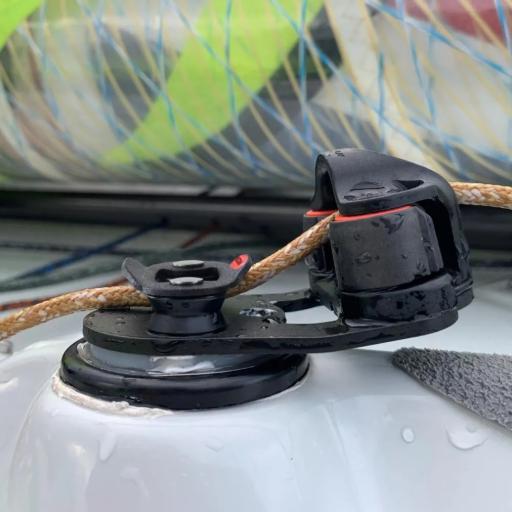
Ronstan Swivel Cam Cleat
Fairleads, wedges, risers and swivel bases
Rope cleat accessories are not cosmetic extras; they often determine whether the cleat works correctly. A fairlead keeps the rope aligned with the cleat and helps prevent accidental uncleating. This is useful where the line approaches from an offset angle or where crew movement may disturb the rope.
A wedge or angled riser changes the cleating angle. This can be important if the cleat is mounted on a cockpit coaming, centreboard case, deck edge, mast base or control pod. If the rope enters too high, it may be difficult to engage; if it exits at the wrong angle, it may be hard to release cleanly.
A swivel base allows the cleat to rotate towards the trimmer. This is useful for mainsheet and jib sheet systems where the crew position changes between tacks, wind angles or sailing modes. Some cleat systems also include retrofit hole centres, which can simplify replacement of older deck hardware without redrilling the boat. Spinlock’s PXR range, for example, includes retrofit versions with matched hole centres for replacing traditional cam cleats.
Rope cleats material selection: aluminium, stainless steel, composite and nylon
Material choice should be based on load, wear, corrosion environment and rope movement. Aluminium cam cleats are commonly selected for higher wear or higher load applications because hard-anodised aluminium provides good resistance to tooth wear and corrosion. Composite and reinforced polymer cleats reduce weight and avoid some corrosion issues, making them suitable for many dinghy and control-line applications.
Nylon cleats are economical, light and corrosion-resistant, but are usually better suited to lower loads or less abrasive use. Stainless steel horn cleats are often chosen for mooring, fender and deck securing applications where impact resistance and long-term durability are important.
Material compatibility also matters. When mounting aluminium cleats onto carbon spars, masts or booms, an isolation barrier and anti-corrosion compound should be used to reduce galvanic corrosion risk. Clamcleat specifically advises using a barrier between aluminium cleats and carbon fibre, and a barrier compound between aluminium cleats and stainless fixings.
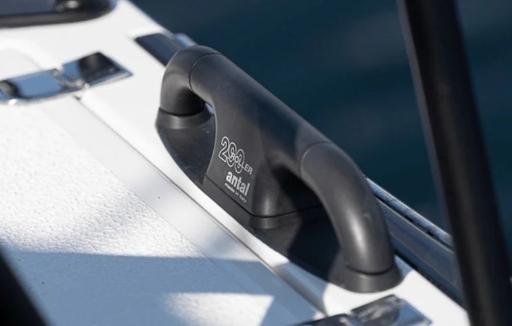
Antal Horn Cleat
Rope cleats Installation, maintenance and troubleshooting
A rope cleat should be mounted on a structure capable of taking the expected load, not simply screwed into a thin deck skin. For loaded applications, through-bolting with suitable washers or backing plates is normally preferable. Fastener size, countersink style, sealant choice and access for inspection should all be considered before drilling.
Common causes of rope slipping include incorrect rope diameter, worn cam teeth, poor rope cover condition, salt contamination, incorrect lead angle or using a cleat beyond its intended load range. If a control line slips even when the cleat appears undamaged, check the rope first. Clamcleat notes that rope quality, type and style play a major role in cleat performance, and that good-quality braided rope generally gives better holding performance.
Maintenance is simple but important. Rinse cleats with fresh water, inspect cams or teeth for wear, check springs and moving parts, and ensure fixings remain tight. Rope cleats used in high-salt, sandy or high-load environments should be inspected more frequently, especially on racing boats or offshore yachts where control-line reliability affects sail handling and safety.
FAQ: rope cleats
What are rope cleats used for on a sailing boat?
Rope cleats secure control lines, sheets, fender lines, mooring lines and adjustment systems so that the line can be held without constant hand tension.
What is the difference between a cam cleat and a horn cleat?
A cam cleat grips the rope between spring-loaded cams for fast adjustment and release. A horn cleat secures the rope with turns or a cleat hitch and is better suited to mooring, fender lines and general securing.
When should I use a rope clutch instead of a cleat?
Use a rope clutch or jammer when the line load is too high for a cleat, when the line must be held for long periods, or where accidental release would create a safety or handling issue.
Do I need a fairlead on a cam cleat?
A fairlead is recommended when the rope needs to be guided into the cleat, when the lead angle is variable, or when accidental uncleating is possible.
Why does my rope cleat slip?
The usual causes are wrong rope diameter, worn cleat teeth, poor rope cover condition, incorrect lead angle, salt or dirt contamination, or using the cleat above its intended working load.

To install this Web App in your iPhone/iPad press
 and then Add to Home Screen.
