Electric furler
Electric furler join the growing list of sailing hardware that thanks to modern electrification onboard reshapes our navigation at sea. Modern solar panels and lithium-ion batteries propel a new era of electrification, offering sailors new dimensions of power supply for boats. Then, the addition of electric furler will make sail management a walk in the park! Imagine the freedom of sailing without physical demand, where electric furlers easily deploy large sails and furl them quickly when needed. What a game changer for single-handed offshore sailors who just want to enjoy the ride and not run to the bow dropping a large sail into a small hatch. Read more...
-
Code zero furling sets
-
Electric furlers
-
Furling accessories
-
Top Down furler sets
|
|
|
|
|
|
|
|
|
|
|
|
|
|
|
|
|
|
|
|
  |
 |
What is an electric furler and how does it work?
An electric furler is a motor-driven sail handling system that allows sails to be furled and unfurled under load with minimal manual effort. The electric motor is integrated into a furling drum or mandrel, which rotates to roll the sail around either a structural forestay or a torsional cable. Operation is typically controlled via a deck-mounted switch or remote control, enabling precise and controlled sail deployment. Electric furlers are particularly well suited to short-handed sailing, performance cruising, and yachts carrying high-load reaching sails.
Advantages of electric furlers compared to manual systems
Electric furlers significantly reduce physical effort on deck, making them a practical solution for older crews or yachts sailed with limited manpower. A common approach is to hoist the sail while the furler is already attached to the stay in the marina, leaving it furled and ready for use. Once installed, the sail can remain rigged throughout the day and be furled or unfurled as required in a matter of minutes. This improves safety, reduces time spent on the foredeck, and allows better sail control in changing conditions.
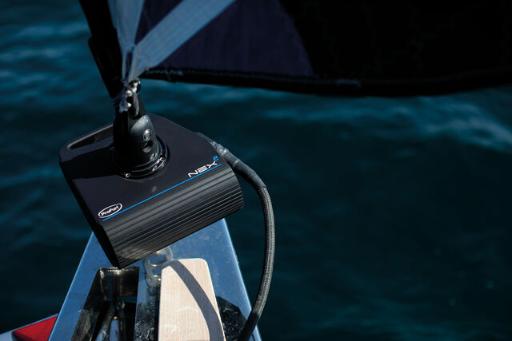
Profurl NEXe Electric Furler
Converting a manual furler to an electric furler
In some cases, an existing manual furler can be upgraded to an electric furler. Compatibility depends on the original system’s design, load capacity, and bearing arrangement. Certain manufacturers offer electric retrofit solutions, although structural reinforcement and electrical installation work may be required. A professional rigging assessment is recommended to confirm suitability and ensure correct integration with the yacht’s rig and electrical system.
Installation and setup considerations
Installation requirements vary depending on the electric furler design. Some systems are intended as permanent installations, while others are designed to be easily mounted and removed.
For example, Bamar electric furlers, such as the BWSE range, are typically permanently installed into a dedicated or custom bowsprit. These systems are designed to handle high torsional loads and are commonly specified on larger yachts or where sails are carried rigged for extended periods.
By contrast, electric furlers from Facnor and Profurl, such as the Facnor FXe and Profurl NEXe, are designed for straightforward installation and removal. These units use snap shackles for attachment to the bowsprit and waterproof quick-release electrical connectors, allowing the furler to be removed from the foredeck when not in use. In many cases, the existing swivel can be retained, with only the manual drum replaced by an electric unit. The only permanent modification is usually a power socket installed near the bow.
| Sail Type | Typical Furling Method | Electric Furler Suitability | Key Technical Notes |
|---|---|---|---|
| Code Zero | Bottom-up furling | Highly suitable | Requires high SWL and good torsional stiffness; primary use case for electric furlers |
| Gennaker | Top-down furling | Limited suitability | Electric furlers may be slow for clean top-down furling; sail size and cloth stiffness critical |
| Asymmetric spinnaker | Top-down furling | Conditional | Requires top-down adapter; best on smaller or flatter sails |
| Jib / Genoa (free-flying) | Bottom-up furling | Suitable | Depends on sail load and luff construction |
| Structural forestay sail | Bottom-up furling | System dependent | Requires furler designed for forestay loads |
Electric Furler Selection & Application Table
Sail compatibility
Electric furlers are commonly used for headsails such as jibs and genoas, as well as flying sails including Code Zero sails, gennakers, and asymmetric spinnakers. Some electric furlers are designed to work on structural forestays, while others are optimised for use with torsional cables on free-flying sails. Correct system selection depends on sail size, luff construction, and the yacht’s rig geometry.
Use with Code Zero and asymmetric sails
Most electric furlers are primarily designed for Code Zero sails, where bottom-up furling is required under relatively high luff tension. Electric furlers can also be used for asymmetric sails when fitted with a top-down furling adapter. However, electric furlers generally operate at lower rotational speeds than manual systems, which can make them less effective for top-down furling where rapid rotation is critical to achieve a clean furl. For this reason, electric furlers are most commonly specified for Code Zero and similar reaching sails.
Yacht compatibility and load requirements
Electric furlers are available in a range of sizes and power ratings to suit different yacht types. Compatibility is influenced by sail loads, rig configuration, and the yacht’s electrical capacity. Larger yachts and higher-load sails require electric furlers with higher Safe Working Load (SWL) ratings and increased motor torque. Correct sizing is essential to ensure reliable operation and long service life.
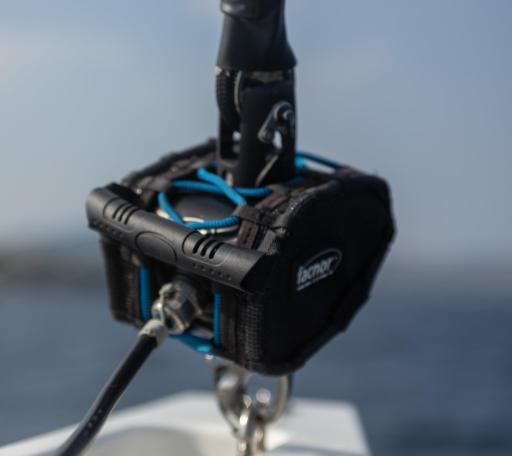
Facnor FXe Electric Furler
Electrical power and system integration
Electric furlers typically operate on the yacht’s 12V or 24V DC electrical system. Installation requires adequate battery capacity, correctly sized cabling, and secure waterproof connections. For offshore and long-distance cruising yachts, energy consumption should be considered as part of the overall onboard power management strategy.
Safety features
Modern electric furlers incorporate multiple safety features, including overload protection, torque-limiting control, and emergency manual operation. Some systems monitor load to reduce drive force if resistance increases unexpectedly. Correct installation and adherence to recommended load limits are essential for safe and predictable operation.
Maintenance requirements
Maintenance of an electric furler is generally low. Routine tasks include rinsing components with fresh water to remove salt, inspecting electrical connections for corrosion, and checking bearings and mechanical parts for wear. Some systems require periodic lubrication. Proper sail handling and correct halyard tension help reduce unnecessary loads and extend service life.
Performance under load and in strong conditions
Electric furlers are engineered to handle significant sail loads in demanding conditions. Features such as controlled motor start-up and torque regulation help prevent shock loading during furling. As with all furling systems, good sail handling practices—such as easing halyard tension and controlling furling speed—remain critical to prevent excessive loads.
Waterproofing
Electric furlers used on sailing yachts are fully waterproof. Motors, housings, and electrical connectors are sealed to withstand the exposed bow environment and prolonged exposure to spray and weather.
Key performance criteria when selecting an electric furler
The most important parameter when selecting an electric furler is the Safe Working Load (SWL) appropriate to the yacht and sail. Once the correct SWL is established, furling speed (RPM) and available motor power become the main performance factors to compare. System weight, installation method, and serviceability should also be considered.
Selecting an electric furler requires evaluating sail type and size, load capacity, electrical integration, and installation constraints. Control options (wired or wireless), long-term service support, and spare parts availability should also be taken into account. Electric furlers for Code Zero and asymmetric sails are designed to improve sail handling, onboard safety, and overall comfort, particularly for yachts sailed short-handed. The category includes technically proven solutions from manufacturers such as Facnor, Profurl, and Bamar, covering a wide range of yacht sizes and sailing applications.

To install this Web App in your iPhone/iPad press
 and then Add to Home Screen.
