Padeyes
Explore our Padeyes category, offering a wide selection of fixed, folding, soft attachment, and removable pad eyes in various materials for secure line attachments. Choose from top brands like Harken, Ronstan, Antal, and Wichard to ensure strong, reliable connections for all your sailing needs. Read more...


Pad eyes are essential hardware used in sailing and marine applications for securing lines, blocks, or other components to the deck, mast, or bulkheads. They provide a solid anchor point and are widely used for a variety of tasks, from attaching running rigging to securing equipment. In this category, you’ll find an extensive range of padeyes designed to meet different needs and preferences, including fixed, folding, soft attachment, and removable padeyes. Each type has specific applications, making it important to choose the right one for your yacht or sailing system.
Types of Padeyes
These are the most common type of padeye and are permanently installed onto the deck or other surfaces. They are typically used where high loads are expected, such as attaching jib sheets, halyard leads, or securing safety equipment. Fixed padeyes are made from durable materials like stainless steel to withstand significant forces over time. They offer great strength but are immovable, making them ideal for applications where flexibility is not required.
Folding padeyes provide versatility by allowing the eye to fold down when not in use, reducing trip hazards on deck and minimizing snagging risks. They are useful for applications where the padeye isn't required constantly, such as securing dinghies or lifelines. When folded down, they present a flat profile, making them suitable for areas of the deck with regular foot traffic.
These padeyes are specifically designed for use with soft shackles or other soft attachment methods. They are becoming increasingly popular in modern sailing setups because they are lightweight and reduce metal-to-metal contact, which can help to prevent damage to deck hardware and lines. Soft attachment padeyes are often used in performance sailing setups where weight savings and reduced friction are essential.
Removable padeyes are designed for temporary installations. They are typically used in applications where the padeye may need to be relocated or removed entirely, such as for adjusting anchor points for running rigging or when needing temporary mooring options. These padeyes offer the flexibility to set up your rigging according to changing conditions. They are also often used on superyachts where a “flush deck” aesthetic is required, when not sailing
Key Considerations When Choosing Padeyes
When selecting the right pad eyes for your sailing application, consider the following factors:
- Material: Stainless steel is the most common choice for high load padeyes due to its corrosion resistance and strength, particularly in marine environments. However hard anodized aluminium is becoming increasingly popular for connection with soft attachments. In very low load applications stick-on padeyes, made from composite materials and Dyneema, can also be used.
- Load Capacity: Ensure the padeye you choose can handle the load it will be subjected to. Each padeye will have a specified Safe Working Load (SWL), so it’s important to choose one rated for the forces it will need to withstand.
- Size: Pad eyes come in various sizes, and it’s crucial to choose the correct one based on the intended application. The diameter of the eye and the base size should fit the hardware and line sizes you are using.
Our selection of pad eyes includes top-quality options from leading brands like Harken, Ronstan, Antal, and Wichard, known for their strength and reliability in marine hardware. Use our online filters to narrow your search by Style and Safe working load, ensuring you find the perfect padeye for your sailing needs.
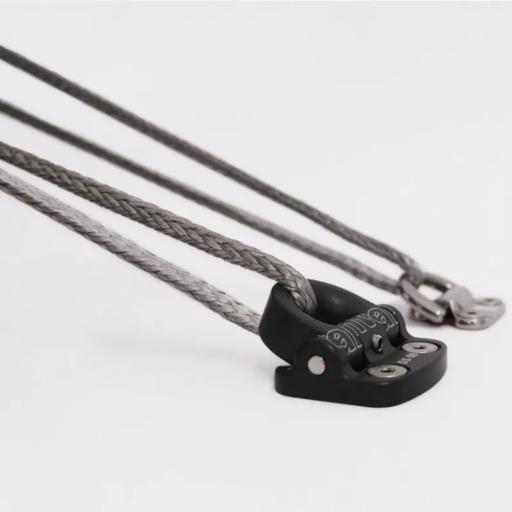
Antal Folding Padeye
Frequently Asked Questions – Padeyes for Sailing
What size padeye do I need for my sailing application?
Padeye sizing should be based on the maximum expected load in the system, not just line diameter. Consider both static and dynamic loads (e.g. shock loading from flogging sails). As a guideline, the padeye Safe Working Load (SWL) should exceed the estimated working load by an appropriate safety factor, typically 4:1 or higher depending on the application.
What is the difference between Safe Working Load (SWL) and breaking load?
The breaking load is the force at which the padeye will fail under test conditions, while the Safe Working Load (SWL) is the maximum load recommended in service. SWL is derived by applying a safety factor to the breaking load. For critical applications such as jacklines or harness attachment points, relying on SWL rather than breaking load is essential.
How strong should a padeye be for jacklines or safety harness attachment?
Padeyes used for jacklines and tether points must be specified conservatively, as they are part of a safety system. Loads can be highly dynamic in a fall scenario. It is standard practice to select padeyes with high SWL ratings and ensure they are through-bolted with adequate backing plates to distribute loads into the deck structure.
How do you install a padeye correctly on a boat deck?
Correct installation is critical to achieving the rated strength of a padeye. Best practice includes:
- Through-bolting rather than screwing
- Using backing plates or large load-spreading washers
- Ensuring proper sealing to prevent water ingress into the deck core
- On cored (sandwich) decks, the core material should be locally reinforced or isolated to prevent compression or water damage.
- Do padeyes require backing plates?
Yes, for most structural applications. Backing plates help distribute loads over a larger surface area, reducing the risk of pull-through or localized deck failure. This is especially important on GRP sandwich decks, where the core material alone cannot handle concentrated loads.
Can padeyes be installed on fiberglass, aluminium, or carbon decks?
Padeyes can be installed on all common yacht construction materials, but installation methods vary:
- GRP / sandwich decks: require core protection and load spreading
- Aluminium decks: require isolation to prevent galvanic corrosion
- Carbon structures: require careful load distribution to avoid point loading
Material compatibility and correct fastening methods are essential.
What is the difference between a padeye and a U-bolt?
A padeye is typically a surface-mounted fitting with a defined load direction, while a U-bolt passes through the structure and can handle multi-directional loads more effectively. U-bolts are often preferred for very high-load applications, while padeyes are more versatile for deck hardware layouts.
When should I choose a folding or low-profile padeye?
Folding or low-profile padeyes are preferred in areas with frequent foot traffic or where snagging must be minimized. They are commonly used on coachroofs, side decks, or cockpit areas where protruding hardware could create a hazard.
Are padeyes suitable for use with soft shackles and Dyneema loops?
Yes, but geometry is important. Padeyes designed for soft attachments typically feature:
- Rounded edges to reduce abrasion
- Adequate internal clearance
- Hard anodised aluminium padeyes are often used in these setups to reduce weight and avoid metal-to-metal contact.
What are common failure points for padeyes?
In most cases, failures occur due to:
- Incorrect installation (no backing plate or undersized fasteners)
- Deck structure failure rather than padeye failure
- Corrosion or fatigue over time
- Regular inspection of both the padeye and the surrounding structure is recommended, particularly in high-load applications.
How do I inspect and maintain padeyes?
Routine inspection should include:
- Checking for corrosion, cracking, or deformation
- Inspecting fasteners and backing plates
- Ensuring there is no movement or water ingress around the fitting
- Any signs of elongation or stress should be investigated, and fittings replaced if necessary.
Where should padeyes be positioned on deck?
Placement depends on application, but should always consider:
- Load direction and alignment
- Structural support beneath the deck
- Safe lead angles for lines or tethers
- Incorrect positioning can introduce side loads, significantly reducing effective strength.

To install this Web App in your iPhone/iPad press
 and then Add to Home Screen.
