Runner blocks
Runner blocks are critical load-bearing components used in high-load running backstay and checkstay systems on performance sailing yachts. Designed to manage dynamic rig loads with minimal friction, modern runner blocks from brands such as Karver, Ronstan, Harken, Morfrac, and Wichard incorporate advanced bearing systems and high-strength materials to ensure reliable load transfer, precise trimming, and long service life in demanding offshore and racing environments. Read more...



Runner Blocks for High-Load Backstay and Rig Control Systems
Runner blocks are a specialised subset of high-load sailing hardware engineered specifically for running backstay, checkstay, and occasionally barber hauler systems where dynamic loads and rapid trimming are required. Unlike general-purpose blocks, runner blocks must accommodate highly variable loads, shock loading, and frequent adjustments under tension, making efficiency, strength, and reliability critical selection criteria.
In modern rig configurations—particularly on performance cruising yachts, race boats, and offshore designs—running backstays are used to control forestay tension, mast bend, and overall rig stability. The runner blocks used in these systems are typically positioned at the deck or cockpit, where they redirect high-load control lines to winches. As such, runner blocks must combine high safe working loads (SWL) with low friction to ensure efficient trimming without excessive winch effort.
Runner Blocks Load Management and Bearing Systems
A defining characteristic of runner blocks is their ability to handle extreme and often cyclic loads. Depending on vessel size and rig geometry, loads can easily exceed several tonnes. To address this, manufacturers utilise a combination of bearing technologies, including low-friction ball bearing systems for active trimming and plain bearing or composite solutions for sustained high-load applications.
Karver, Ronstan, and Harken runner blocks typically focus on optimising friction efficiency and weight, while Morfrac and Wichard designs prioritise load capacity and structural durability in more conservative configurations.
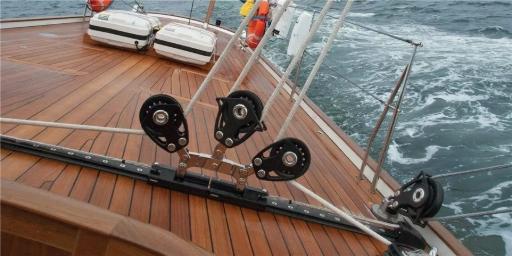
Harken Runner Block
Materials Used in Runner Block Construction
Runner blocks are typically constructed using high-strength, corrosion-resistant materials to ensure long-term durability in marine environments. Hard anodised aluminium, stainless steel load components, and fibre-reinforced composites are widely used across the category.
Composite and hybrid constructions, as seen in Karver and Ronstan runner block ranges, reduce weight and inertia in dynamic systems. In contrast, Morfrac and Wichard runner blocks utilise stainless steel structures, offering increased robustness for offshore or heavy-duty applications where long-term reliability is critical.
Runner Blocks Sheave Design and Rope Compatibility
Runner block must be compatible with modern high-performance lines such as Dyneema and other HMPE constructions. Sheave geometry plays a key role in reducing friction and preserving rope integrity.
Larger sheave diameters relative to rope size reduce bending fatigue, while optimised groove profiles minimise compression under load. This is particularly relevant in running backstay systems where loads are high and adjustment cycles are frequent.
Runner Block Attachment and Deck Integration
Runner blocks are integrated into deck layouts using swivel heads, fixed connections, or increasingly, soft attachment systems. Correct alignment with the load path is essential to minimise side loading and maintain efficiency.
Soft attachments, including Dyneema lashings, are commonly used in performance setups to reduce weight and allow articulation. Stainless steel shackles remain widely used in offshore systems where durability and resistance to chafe are prioritised.
Runner Blocks by Leading Sailing Hardware Brands
Karver: Focuses on lightweight, high-load blocks with composite materials and simplified internal structures. Often used in racing and high-performance cruising setups where weight and compactness are critical.
Ronstan: Offers a broad range including Orbit blocks, combining composite construction with efficient bearing systems. Well suited to both racing and performance cruising.
Harken: Known for precision-engineered bearing systems and consistent manufacturing tolerances. Widely used in both grand prix racing and high-end cruising yachts.
Morfrac: Prioritises durability and high load capacity with traditional stainless steel construction. Common in offshore and commercial-grade applications.
Wichard: Emphasises forged stainless components and reliability under extreme conditions, often selected for safety-critical rigging systems.
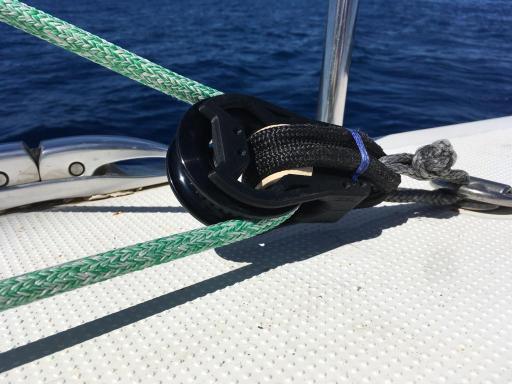
Morfrac Runner Block
Selecting the Right Runner Block for Your Rig
Selecting appropriate runner block requires consideration of load, system geometry, and trimming frequency. Safe working load should exceed expected rig loads with an appropriate margin, while bearing type should reflect whether the system is adjusted frequently or remains under sustained tension.
Compatibility with rope type, particularly high-modulus fibres, is also essential. Correct specification ensures efficient load transfer, reduced wear, and long-term reliability within the rig control system.
Frequently Asked Questions
What are runner blocks used for on a sailboat?
Runner blocks are used in running backstay and checkstay systems to redirect high-load control lines from the rig to the cockpit or winches. They enable controlled adjustment of forestay tension and mast bend, particularly on fractional rigs and performance-oriented yachts.
How do I choose the right runner block?
Runner block should be selected based on safe working load, rope compatibility, and bearing type. Systems requiring frequent trimming benefit from low-friction bearing blocks, while offshore applications typically prioritise higher load capacity and durability.
What size runner block do I need?
Sizing should be based on maximum expected rig loads rather than rope diameter alone. The block’s SWL must exceed working loads with an appropriate safety factor, and sheave diameter should be suitable for the rope construction used.
What SWL should runner blocks have?
Runner block should have a safe working load above the maximum dynamic loads expected in the system. High-load applications often require blocks rated for several tonnes to ensure reliability under peak and shock loads.
Ball bearing vs plain bearing runner block– which is better?
Ball bearing runner blocks provide lower friction and are suited to active trimming. Plain bearing designs offer higher load tolerance and durability, making them more suitable for offshore or static high-load applications.
Are runner blocks suitable for Dyneema lines?
Runner blocks are commonly designed for Dyneema and HMPE lines. Correct sheave size and profile are important to reduce wear and maintain efficiency under high loads.
Can I use soft shackles with runner block?
Soft shackles and lashings are widely used with runner blocks, particularly in performance setups. For higher-load or offshore systems, stainless steel shackles may still be preferred for durability.
Where should runner blocks be positioned on deck?
Runner blocks are typically positioned to provide a fair lead from the running backstay to the winch, often near the cockpit. Proper alignment reduces friction and prevents side loading.
What are the main differences between runner block brands?
Karver, Ronstan, and Harken focus on low-friction and lightweight designs, while Morfrac and Wichard prioritise strength and durability through stainless steel construction. Selection depends on performance requirements and load conditions.
Are runner blocks only used for running backstays?
While primarily used for running backstay and checkstay systems, runner blocks can also be applied in other high-load control line setups where similar load characteristics are present.

To install this Web App in your iPhone/iPad press
 and then Add to Home Screen.
